
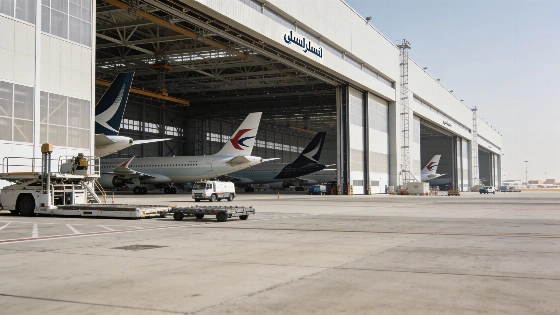
A major Emirates NBD loan will help build one of the Middle East's largest independent aircraft maintenance centers at Dubai's Al Maktoum International Airport. The project targets faster turnaround, more skilled jobs, and stronger technical capacity for the UAE.
Construction is about to change the landscape at Al Maktoum International Airport. Team Aerospace, an independent aircraft maintenance specialist, has secured a capital expenditure loan from Emirates NBD. The money will go toward building one of the region's biggest independent MRO (maintenance, repair, and overhaul) centers. This is not just another expansion. The United Arab Emirates dirham (AED) remains pegged to the US dollar, giving investors and airlines currency stability for big projects. The Central Bank of the UAE keeps this policy in place. The International Monetary Fund (IMF) tracks it closely.
The new facility will rise inside the Mohammed bin Rashid Aerospace Hub in Dubai South. This fits Dubai's long-term plans for Al Maktoum International. The center will boost the UAE's technical skills in aircraft servicing. Airlines and engineering firms will have a new reason to choose Dubai South. The Central Bank's steady base rate, which follows the US Federal Reserve, has kept inflation in check. That helps big sectors like aviation plan ahead. The latest monetary statistics from the Central Bank of the UAE show private sector lending is still growing. Interbank rates remain stable.
Facility details and operational impact
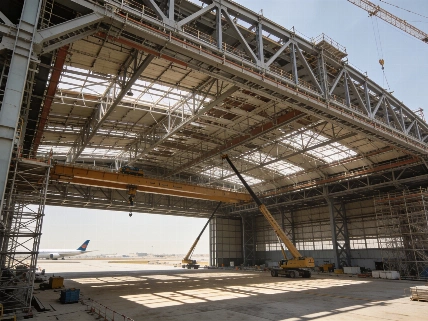
The main hangar will cover 18,000 square meters in one stretch. The total built-up area will reach almost 26,000 square meters. The hangar can fit up to 12 single-aisle planes or five wide-body jets at the same time. Both Boeing and Airbus models will be serviced. The site will also have 8,000 square meters for workshops, warehouses, and offices. There will be 12 hangar doors, four overhead cranes, and seven ground service pits. These features are designed to speed up maintenance. The UAE wants technical excellence and scale. The Bank for International Settlements (BIS) has called for more infrastructure investment in emerging markets. Dubai is answering that call.
When the center opens, airlines will be able to cut scheduled maintenance downtime. Demand for technical services in the region is rising. The project will create skilled jobs. It will also strengthen the aviation supply chain as Al Maktoum International gets busier. The UAE's Consumer Price Index (CPI) has stayed steady in recent quarters. That means labor and imported aviation parts cost about the same. The IMF and regional central banks track these numbers.
Strategic rationale and industry context
Ahmed Al Qassim, Emirates NBD's business banking chief, says Dubai's aviation sector is growing fast. Airlines need advanced maintenance and engineering to keep up. The bank's loan to Team Aerospace shows its support for big industrial projects that match Dubai's vision as a global aviation center. The UAE's sovereign bond yields are still competitive. Investors trust the country's stable economy and careful fiscal management. The Federal Reserve and IMF have both noted this in recent reports on Gulf economies.
Team Aerospace's chairman, Timur Shah Shihab, calls the deal the start of a long partnership. He says the goal is to deliver world-class MRO services at Al Maktoum International. Emirates NBD's strong reputation in the UAE and abroad helped seal the agreement.
Emirates NBD says the new MRO hub will grow the UAE's maintenance capacity. Airlines in the region will be able to cut turnaround times and meet new technical demands. The project's size and technical features are meant to keep Dubai ahead in aviation services. The Central Bank of the UAE, in its policy meeting minutes, has named aviation and logistics as top sectors for non-oil GDP growth.
Measurable expansion in aviation infrastructure
The hangar's 18,000 square meters and 8,000 square meters of workshops and offices will add real muscle to the UAE's aviation infrastructure. The center can handle up to 12 narrow-body or five wide-body aircraft at once. That's a big share of the region's maintenance needs. Specialized features like 12 hangar doors and multiple cranes show the focus on efficiency and technical skill. The UAE's stable exchange rate has protected the aviation sector from global currency swings. The IMF country overview discusses this in detail.
Emirates NBD has a track record with strategic projects. The bank was recognized for its sustainability work, as reported earlier. This new move keeps the focus on economic diversification and skilled jobs in the UAE.
Understanding aircraft maintenance hubs
MRO facilities keep commercial aviation safe and running. They handle scheduled checks, repairs, and upgrades. This keeps planes airworthy and up to international safety standards. MRO centers need special infrastructure. That means climate-controlled hangars, heavy cranes, and advanced diagnostic tools. They must handle many types of aircraft and tasks. As airlines add more planes and flights, local high-capacity MRO centers become vital. They cut downtime, control costs, and support the whole aviation ecosystem. The UAE's monetary authorities, working with global regulators like the Federal Reserve and BIS, keep an eye on financial conditions. Their goal is to make sure big projects like this get steady funding and stable currency support.