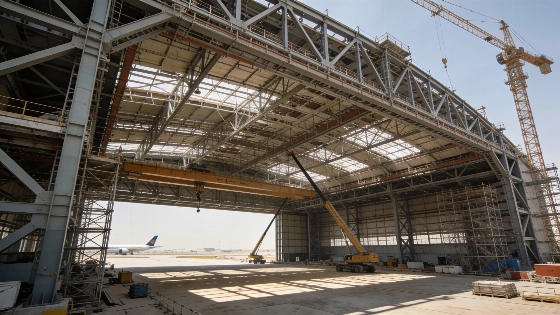
Emirates NBD is funding a massive independent aircraft maintenance center at Dubai South. The project will boost the UAE's ability to service Boeing and Airbus fleets and support the country's aviation growth.
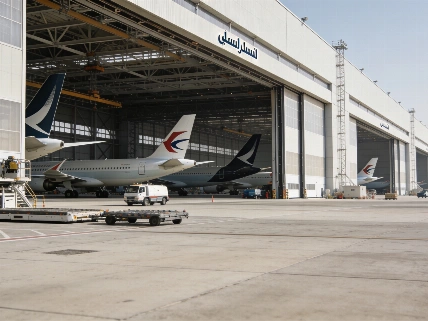
Construction crews are breaking ground at Al Maktoum International Airport. Team AeroSpace is building a huge new maintenance facility, thanks to a capital expenditure loan from Emirates NBD. This is not a small upgrade. The new site will cover nearly 26,000 square meters. The hangar alone will span 18,000 square meters and will be fully air-conditioned. That's big. Dubai is aiming to grab a bigger slice of the region's aviation services market. The facility is set up to handle both narrow-body and wide-body aircraft from top manufacturers. Independent confirmation of the project's scale comes from GDN Online.
The design allows for up to 12 narrow-body or five wide-body planes at once. There will be 8,000 square meters for workshops, warehouses, and offices. The technical setup includes 12 hangar doors, four overhead cranes, and seven ground service pits. These features are meant to speed up maintenance and keep operations smooth. The UAE's aviation sector has been growing fast. Both passenger and cargo flights are up, as the International Monetary Fund (IMF) has noted in its regional outlooks.
Dubai South's big plans
Dubai wants Al Maktoum International and the wider Dubai South area to become a core hub for aviation, engineering, and logistics. Dubai South is already a master-planned cluster focused on cargo and passenger traffic. Investments keep pouring in to expand its capacity and infrastructure. Propsearch confirms this ongoing growth. By supporting Team AeroSpace's independent maintenance, repair, and overhaul (MRO) center, Emirates NBD is betting on more demand for advanced technical services from airlines in the region and beyond.
Emirates NBD's group head of business banking says Dubai's aviation boom is pushing the need for better maintenance and engineering. The bank's loan is part of its push to back big industrial projects that strengthen the UAE's capabilities. Dubai wants to be a global aviation leader. Team AeroSpace's chairman called the deal the start of a long-term partnership to deliver top-tier MRO services at Al Maktoum International. He pointed to Emirates NBD's strong reputation and market presence as key reasons for the agreement. The UAE dirham (AED) is still pegged to the US dollar. The Central Bank of the UAE keeps this policy in place. It helps keep currency stable and makes financing big projects more predictable.
Boosting capacity and jobs
Once the new center opens, the UAE's aircraft maintenance capacity will jump. Airlines will be able to cut turnaround times for scheduled work. Demand for technical services is rising. The project will also create skilled jobs and strengthen the local aviation supply chain. Al Maktoum International Airport itself is in the middle of a $35 billion expansion. The first phase aims for 150 million passengers a year. The final goal is over 260 million. That would make it one of the world's biggest airport projects, according to Emirates247 and the IMF country profile.
The UAE keeps investing in aviation infrastructure and services. Emirates NBD has already been recognized for supporting responsible banking and climate efforts, as reported earlier. The new MRO facility is another step in building the technical backbone for the country's airlines and aviation businesses. The Federal Reserve's interest rate moves have pushed up global funding costs. But the UAE's currency peg and careful monetary policy have helped shield local financing from US dollar market swings.
Numbers and specs
The Team AeroSpace project will have a single-span, fully air-conditioned hangar of 18,000 square meters. It can handle up to 12 narrow-body or five wide-body aircraft at once. The total built-up area will be close to 26,000 square meters. There will be 8,000 square meters for workshops, storage, and offices. The site will have 12 hangar doors, four overhead cranes, and seven ground service pits. All of this is meant to make maintenance faster and safer for Boeing and Airbus planes. These investments fit the UAE's plan to attract international carriers and cement its place as a global aviation hub. The Bank for International Settlements (BIS) has analyzed how infrastructure-led growth is shaping emerging markets.
Large, independent MRO centers are now key for the UAE's aviation sector. They help airlines avoid maintenance delays and attract international carriers looking for reliable technical support. The Emirates NBD-Team AeroSpace partnership shows Dubai South's intent to become a top spot for aviation engineering and maintenance in the Middle East. The Central Bank of the UAE's monetary policy, which tracks the US Federal Reserve because of the currency peg, keeps financing stable for long-term projects like this.
MRO facilities keep commercial aircraft safe, efficient, and up to international standards. Unlike airline-owned centers, independent MROs can serve many carriers. That means more flexibility and better prices. Having advanced MRO infrastructure at a major airport like Al Maktoum International cuts downtime for airlines. It also helps build a skilled workforce and a strong supply chain. As global air traffic keeps growing, airports and aviation clusters that offer full maintenance services gain a real edge. Airlines and host economies both benefit.