
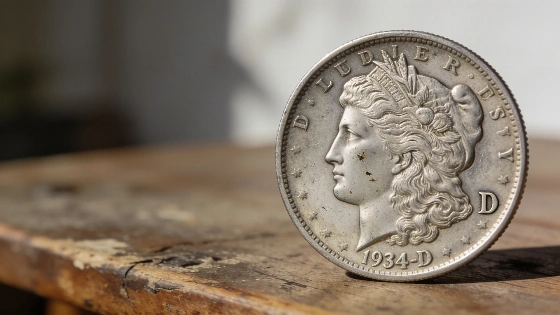
A dramatic doubled die on the 1934-D Peace Dollar has turned a Depression-era silver coin into a high-stakes target. Scarcity in top grades and market opacity keep collectors on edge.
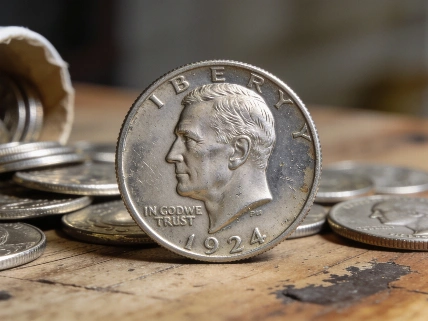
Denver's coin presses in 1934 left behind more than routine silver dollars. The VAM-3 Doubled Die Obverse, with its unmistakable doubling on Liberty's face and the motto, has pushed the 1934-D Peace Dollar into the spotlight. This isn't a faint error-separation in the tiara rays and facial features stands out even to the naked eye, setting the coin apart in a series already shaped by economic turmoil and shifting US silver policy.
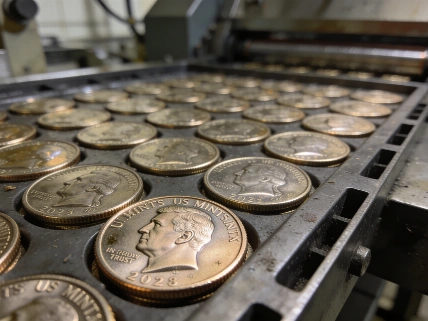
San Francisco's 1934-S Peace Dollar may headline business-strike rarities, but the Denver issue draws attention for its scarcity in pristine Mint State and the visual punch of the doubled die. The Denver Mint struck 1,569,500 coins that year, outpacing the other two mints. Yet, unlike other Peace dollars, the 1934-D rarely appeared in large, untouched bags. Most coins trickled out through rolls or single finds, leaving few untouched examples for modern collectors. Auction records and databases such as acsearch.info auction archive and Heritage Auctions haven't produced fresh, independently verified updates or official statements on the VAM-3 or VAM-4, keeping the market for these coins opaque and unpredictable.
The VAM-3 Doubled Die Obverse isn't a minor footnote. Doubling jumps out across Liberty's forehead, nose, eyelids, lips, chin, and the lower tiara rays. Even the motto, especially around IN GOD WE, shows clear separation. This variety made the Top 50 Peace dollar VAM list and commands a premium in major auctions. Heritage Auctions reported a PCGS MS66+ CAC VAM-3 selling for $12,350.43 in August 2013, but that price can't be independently confirmed in current records or official guides. Thin trading and patchy reporting make it tough to pin down high-end sales in this niche Heritage Auctions search.
Collectors face two main doubled die pairings: VAM-3, with a Medium D mintmark below ONE on the reverse, and VAM-4, which uses the same obverse die but a smaller Micro D mintmark set higher, closer to the O in ONE. The Micro D is harder to find. Specialists check both sides of any coin with strong obverse doubling, since mintmark size and placement are key diagnostics.
The Peace dollar's story started in 1921, designed by Anthony de Francisci to mark the end of World War I. Production stopped after 1928 when the Pittman Act's silver quotas were met and demand for heavy silver coins dried up. The Great Depression only deepened the slump, but Western mining interests and falling silver prices pushed Congress and the Roosevelt administration to act. The Silver Purchase Act of June 18, 1934, brought silver dollars back, with Denver leading the charge. This move was part of a broader monetary response to deflation and contraction, as the Federal Reserve kept policy rates low and the dollar's value shifted with domestic silver buys and international gold flows, as shown in the Federal Reserve monetary policy archive.
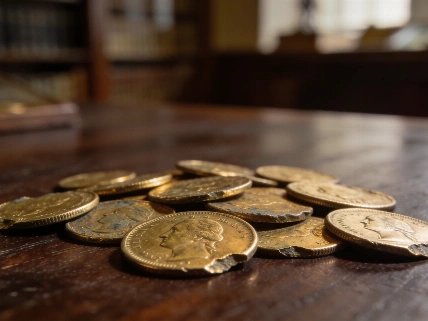
Most Peace dollars sat in Treasury vaults for years, but the 1934-D stands out for its absence from big bag releases. That explains why circulated coins are still around, while Mint State pieces-especially those with strong luster and few bagmarks-are much harder to find. Stack's Bowers Galleries spotlighted a 1934-D Peace Dollar, VAM-3, graded MS-65 by PCGS and CAC, as one of only 12 in that grade, with just three finer. The coin's original surfaces and satin luster make it a standout in a series where bagmarks are the norm.
Prices for the 1934-D Peace Dollar swing widely by grade and variety. Circulated coins in Very Good to Fine condition usually sell for $85 to $130. Extremely Fine pieces can hit $150 or more. Mint State coins start in the several-hundred-dollar range, with MS-63 examples often listed around $440 and up. The VAM-3 Doubled Die Obverse brings a premium, especially in Mint State and with CAC approval. Top auction results, like the Heritage MS66+ PCGS CAC VAM-3, highlight the gulf between ordinary Peace dollars and elite varieties. Still, recent auction catalogs and price databases haven't confirmed new records or official guidance for these coins, leaving the market murky.
The 1934-D Peace Dollar's specs matter for authentication and value: 90% silver, 10% copper, 26.73 grams, 38.10 mm diameter, reeded edge, and 0.7734 troy ounce of silver. The mintmark sits on the reverse, below ONE in ONE DOLLAR. Collectors scrutinize every detail, since small differences can mean big jumps in price.
Distribution quirks and dramatic varieties shape the 1934-D's market profile. Unlike earlier US coins where a single die flaw or letter tweak sets a coin apart-as seen in the reported earlier 1832 Large Letters Half Dollar-the 1934-D's doubled die is a major design event, visible without magnification. The VAM-3 and VAM-4 have become benchmarks for Peace dollar specialists, with the Micro D mintmark adding another layer of scarcity.
The 1934-D VAM-3 isn't a minor footnote for Peace dollar collectors. It captures the end of an era, the impact of Roosevelt-era silver policy, and the quirks of Denver Mint production during economic crisis. The doubled die stands as a physical record of how politics, policy, and minting collided in a single year. High-grade 1934-D VAM-3 coins continue to draw attention and premium prices.
The Peace dollar's 1934 revival came straight from the Silver Purchase Act, which aimed to prop up silver prices and Western mining during the Depression. This policy brought back a denomination that had been dormant for six years, showing how political and economic forces can reshape the currency landscape. The 1934-D Peace Dollar, especially in its doubled die forms, remains a tangible marker of how a single year's coinage can reflect bigger shifts in US monetary history. The Federal Reserve's policy stance, including its management of the money supply and discount rate, shaped the environment in which these coins were minted and distributed, as documented in FOMC minutes and IMF country reports.