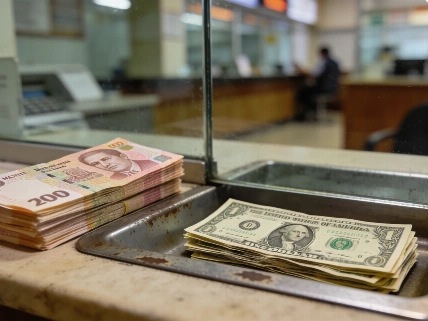

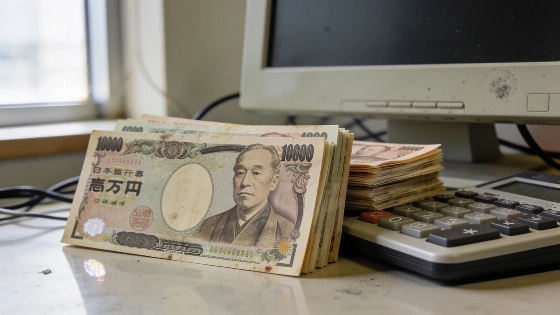
The U.S. dollar's recent decline and the yen's sharp rebound highlight the impact of coordinated intervention and shifting rate expectations, leaving both currencies at a pivotal moment for global markets
The U.S. dollar and Japanese yen are both under intense scrutiny as recent coordinated intervention and changing interest-rate expectations have unsettled the world's most traded currency pair. The U.S. Dollar Index, which tracks the dollar against a basket of major currencies, has slipped to its lowest level in seven weeks, while the yen has staged a dramatic recovery after authorities stepped in to halt its slide.
In late July, Japanese and South Korean officials intervened in currency markets, prompting a rapid appreciation of the yen and a retreat in the dollar's value against it. The USD/JPY exchange rate, which had reached a 40-year high of 163.99, quickly reversed course and settled near 159-160. This intervention, possibly supported by U.S. authorities, was aimed at curbing excessive volatility and restoring some stability to the yen, which had been the weakest major currency in the months prior.
Yen's Rebound and Policy Uncertainty
The Bank of Japan's decision to keep its policy rate unchanged has not ended speculation about future moves. Market participants now see a greater than 50% probability that the Bank of Japan could raise rates in the coming months, a shift that has injected new volatility into the yen's outlook. The 155 level in USD/JPY is widely viewed as a critical threshold for further intervention, while 160 remains a psychological barrier for traders and policymakers alike.
Technical analysis reflects this uncertainty. On shorter timeframes, USD/JPY signals a strong buy, but daily charts have turned neutral, suggesting indecision following the intervention. Other major currency pairs, such as EUR/USD and GBP/USD, have shown less direction, with the euro trading sideways and the pound drifting slightly higher but not enough to challenge the dollar's overall position.
Dollar's Momentum and Market Risks
The dollar's recent weakness is partly driven by shifting expectations for U.S. monetary policy. Markets currently assign only a 25-30% chance of another Federal Reserve rate hike this year. If the Fed adopts a more dovish stance, the dollar could face further downward pressure. At the same time, the risk of renewed intervention in the yen remains high, especially if USD/JPY approaches the 160-163 range again.
For context, the U.S. Dollar Index's decline to a seven-week low marks a notable shift from its earlier strength, while the yen's rebound from 163.99 to around 159-160 in late July was one of the sharpest moves in recent years. These developments echo patterns seen in other Asian currencies, as highlighted in a recent analysis of the South Korean won's reaction to dollar and yen volatility, available here.
What Lies Ahead
Short-term momentum still favors the dollar in some technical models, but cracks are appearing in the medium-term outlook. The yen, meanwhile, has become the most headline-driven and volatile major currency, with intervention risk looming over every move near key levels. Both currencies remain central to global trade and finance, but their immediate paths are now shaped by a mix of policy uncertainty, intervention risk, and shifting market sentiment.
For travelers, businesses, and anyone making international payments, these swings can affect the cost of exchanging money, the timing of transfers, and the risk of further volatility. While the dollar retains its status as the world's primary reserve and settlement currency, recent events show that even the most dominant currencies are not immune to coordinated central-bank action and changing policy expectations.
Central-bank intervention in currency markets is a tool used to counteract what authorities see as excessive or destabilizing moves in exchange rates. Such interventions can take the form of direct buying or selling of currencies, verbal signals, or coordinated action among several countries. While intervention can temporarily stabilize a currency, its effects often depend on underlying economic fundamentals and market expectations. In the case of the yen, repeated intervention has highlighted both the limits and the potential impact of official action, especially when combined with shifts in monetary policy outlook.