A rare 1936 Delaware Tercentenary Half Dollar, notable for its three distinct dates and complex history, has achieved a record $19,200 sale, highlighting the enduring appeal and layered story behind this commemorative U.S. coin
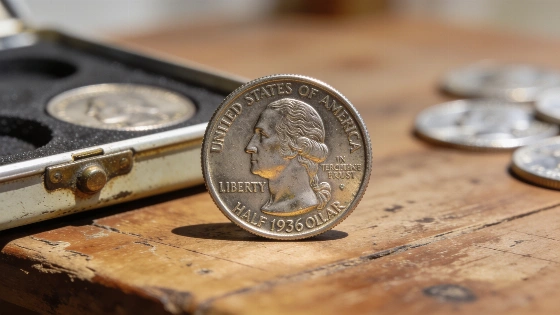
Few U.S. coins compress as much history and intrigue into a single piece as the 1936 Delaware Tercentenary Half Dollar. This commemorative coin, issued to mark the 300th anniversary of Swedish settlement in Delaware, stands out for its unusual combination of three different dates: the obverse reads 1936, the coin was actually struck in 1937, and the reverse commemorates an event in 1938. This chronological puzzle is just the beginning of the coin's layered story, which recently added a new chapter when a PCGS MS68 example sold for $19,200 at Heritage Auctions, setting a new record for the issue.
Three Dates, One Coin
The Delaware Half Dollar's design is a direct reflection of the state's colonial past and the commemorative coin boom of the 1930s. The obverse features Old Swedes Church, built by Swedish and Finnish settlers in Wilmington in 1698-1699, and still in use today. The date 1936 appears below, as mandated by Congress, even though the Philadelphia Mint did not strike the coins until March 1937. On the reverse, the Kalmar Nyckel-a Swedish ship that brought settlers to the Delaware Valley in 1638-sails above the dates 1638-1938, marking the tercentenary celebrated two years after the coin's official date. The three small diamonds on the reverse reference Delaware's "Diamond State" nickname and its three counties.
The coin's creation was the result of a $500 design competition organized by the Delaware Swedish Tercentenary Commission. Carl L. Schmitz, a French-born artist with German-American roots, won the contest. His design was reviewed by Mint Chief Engraver John R. Sinnock and Dr. R. Tait McKenzie, a Canadian-born sculptor and physician. The commission's approach reflected a broader effort by Congress to rein in abuses in commemorative coin programs, which had previously seen sponsors exploit multiple mints, dates, and limited releases to drive up collector demand.
Production, Distribution, and Survival
Congress authorized the Delaware Half Dollar with a minimum mintage of 25,000 coins, all to be struck at a single mint and bearing the 1936 date. In March 1937, the Philadelphia Mint produced 25,015 coins, including 15 for assay. The Equitable Trust Company of Wilmington handled sales, offering the coins at $1.75 each. However, demand fell short: only 20,978 coins were distributed to collectors, while 4,022 unsold pieces were returned and melted. Standard references list a net mintage of 20,993, counting the 15 assay coins.
Today, PCGS estimates that around 17,000 Delaware Half Dollars survive in all grades, with approximately 13,500 in Mint State (MS60 or better) and 6,500 at MS65 or higher. Most coins remain in high grade because they were purchased as collectibles rather than for circulation. However, the coin's broad, flat surfaces-especially the church roof and the ship's sails-are prone to visible contact marks, making top-grade examples especially desirable among collectors.
Record Auction and Market Dynamics
The Delaware Half Dollar's auction record was long held by a PCGS MS67 example, which sold for $18,400 in 2012. In August 2025, a PCGS MS68 coin from the Gregg Bingham Collection surpassed this, realizing $19,200 at Heritage Auctions. The coin was described as having brilliant centers with subtle champagne, amber, plum, and emerald toning on the obverse, and softer gold hues on the reverse. At the time of sale, only two PCGS coins were graded MS68+ and none finer. This sharp price jump at the highest grades illustrates how the market for classic U.S. commemoratives can change rapidly at the top end of the grading scale. For comparison, MS64 and MS65 examples often traded for less than $300 in 2020, while MS67 coins were available for around $700, though these figures reflect past market conditions rather than current values.
One unresolved question is whether any Delaware Half Dollars were struck as Matte Proofs. While some specialists have suggested the possibility, no confirmed Proof examples have been authenticated by major grading services, and PCGS continues to list all known coins as regular strikes.
International Connections and Historical Layers
The Delaware Tercentenary was not only marked in the United States. In 1938, Sweden issued its own 2 Kronor coin to commemorate the same anniversary, featuring King Gustaf V and the Calmare Nyckel. The Swedish coin, designed by Erik Lindberg and struck in .800 fine silver, had a mintage of 508,815 pieces. Both coins serve as tangible reminders of the transatlantic connections that shaped early American history.
For collectors and historians, the Delaware Half Dollar's appeal lies in its ability to encapsulate multiple eras: the 17th-century Swedish settlement, the colonial church, the commemorative coin boom of the 1930s, and the modern collector market. Its three-date design is unique among U.S. coins, and its journey from a $1.75 souvenir to a $19,200 auction highlight underscores the unpredictable paths of numismatic value. The coin's story also echoes the broader fascination with rare American issues, such as the 1933 Double Eagles, which have drawn global attention at major events like the World's Fair of Money.
According to PCGS, the Delaware Half Dollar's net mintage stands at 20,993, with about 17,000 estimated to survive today. The original issue price was $1.75, and the current auction record is $19,200 for a PCGS MS68 example sold in August 2025. The coin's specifications include a weight of 12.50 grams, a diameter of 30.60 mm, and a composition of 90% silver and 10% copper.
Commemorative coins like the Delaware Half Dollar highlight the intersection of monetary history, national identity, and collector demand. Unlike circulating currency, these coins are issued for specific events or anniversaries, often with limited mintages and unique designs. Their value can fluctuate dramatically based on condition, rarity, and market trends, making them both historical artifacts and dynamic collectibles within the broader world of currency.