
The 2026 World's Fair of Money in Pittsburgh will unite all 11 government-owned 1933 Double Eagles for the first time, alongside over $100 million in rare coins and currency, offering collectors a unique look at American monetary history
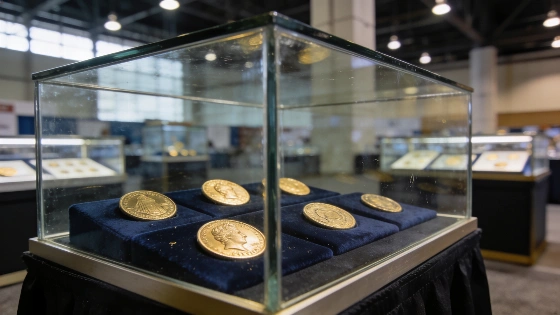
For the first time, all 11 government-owned 1933 Saint-Gaudens Double Eagles will be displayed together in public, forming the centerpiece of the 2026 World's Fair of Money in Pittsburgh. This unprecedented gathering, organized by the American Numismatic Association (ANA), will take place at the David L. Lawrence Convention Center from August 25 to 29, transforming the venue into a temporary museum and marketplace for collectors and the public alike.
The event will feature more than $100 million in historic coins, paper money, and related artifacts. Among the highlights are a 1792 Half Disme, a 1913 Liberty Head Nickel, and an 1804 Draped Bust Dollar-each with its own complex backstory and significance in U.S. monetary history. Over 500 dealers are expected to fill the sold-out bourse floor, offering coins, currency, gold, silver, and collectibles, while experts provide free informal evaluations for items brought by visitors.
Historic Coins and Their Stories
The 1933 Double Eagle occupies a unique place in American numismatics. Although the Philadelphia Mint struck 445,500 of these $20 gold coins, nearly all were melted following President Franklin D. Roosevelt's gold policy changes. Only two coins were officially released to the Smithsonian Institution, while others surfaced through unauthorized channels. After decades of legal battles and investigations, the U.S. government recovered or destroyed most examples, but 11 government-owned coins remain. On August 28, these will be displayed together for the first time, offering collectors a rare opportunity to see the full group side by side.
Other notable exhibits include the 1792 Half Disme, the first federal coinage produced after the Coinage Act of 1792, and the 1913 Liberty Head Nickel, one of only five known to exist and valued at around $3 million. The 1804 Draped Bust Dollar, often called "The King of U.S. Coins," will also be on display, with only 15 known examples and a value estimated at $4 million. These coins not only represent monetary milestones but also reflect the political and economic shifts that shaped the United States.
America's 250th Anniversary and Broader Themes
The 2026 convention coincides with the 250th anniversary of American independence, giving the event a strong historical focus. The ANA's Money Museum Showcase will trace the evolution of American money from colonial times through the early republic, using coins, tokens, medals, and paper currency to illustrate broader stories of commerce, politics, and daily life. The Colonial Coin Collectors Club will contribute with an "America 250 Display," following the nation's monetary journey from pre-Revolution to the formation of a federal government.
Beyond U.S. rarities, the event will feature ancient coinage from the Achaemenid Persian Empire and World War II-era Hawaii emergency currency, highlighting the global and wartime dimensions of money. Visitors can also view an 1848 Peter Force engraved copy of the Declaration of Independence and an 1820 facsimile of Thomas Jefferson's original rough draft, connecting the evolution of currency to foundational American documents.
Facts, Figures, and Practical Details
The 2026 World's Fair of Money will run from August 25 to 29 at 1000 Fort Duquesne Blvd., Pittsburgh. Public hours are 1 p.m. to 5:30 p.m. Tuesday, 10 a.m. to 5:30 p.m. Wednesday through Friday, and 10 a.m. to 3:30 p.m. Saturday. General admission is $10 per day (Tuesday-Friday), with a $25 full-week pass. Admission is free for ANA members, children under 12, and all visitors on Saturday, August 29. The ANA will also offer educational presentations and family activities, including numismatic games for younger attendees.
Among the rarest coins on display, the 1933 Double Eagle set an auction record when a privately owned specimen sold for $18.9 million at Sotheby's in June 2021. The 1913 Liberty Head Nickel is valued at approximately $3 million, and the 1804 Draped Bust Dollar at $4 million, according to ANA press materials. The 1792 Half Disme, struck before the Philadelphia Mint began regular operations, is considered the first federal coinage and carries significant historical weight.
Numismatic Context and Collector Value
Collectors and historians often debate the origins and legal status of the 1933 Double Eagles. While most were melted, a handful escaped official channels, leading to decades of litigation and investigation. The government's decision to display all 11 surviving official examples together marks a milestone in the ongoing story of American gold coins. For those interested in the broader context of rare U.S. coinage, the story of the 1887 Liberty Head Half Eagle-America's only proof-only $5 gold coin-offers another perspective on how monetary policy and minting decisions have shaped the collector market. For more on this, see the analysis at how the 1887 Half Eagle became a unique proof-only issue.
While the World's Fair of Money is best known for its million-dollar rarities, it also serves as a practical resource for everyday collectors. The event's combination of historical exhibits, expert evaluations, and educational programming makes it a focal point for anyone interested in the intersection of currency, history, and collecting.
The legal and historical status of the 1933 Double Eagle highlights the complex relationship between government policy, monetary law, and collector value. Unlike most U.S. coins, the Double Eagle's journey from production to destruction, and then to legal disputes and eventual display, underscores how monetary decisions can have lasting effects on both the physical currency supply and the collector market. The coin's story also illustrates the challenges of enforcing currency laws and the unique status of certain numismatic rarities within the broader framework of U.S. monetary history.