From rare Buffalo nickels to elusive Morgan dollars, collectors open up about the coins they let slip away-and what those moments taught them about the real value of collecting.
Regret in coin collecting is rarely just about money. For many, the real sting comes from watching a special coin slip away-sometimes for a few dollars, sometimes for tens of thousands. The emotional hit can be bigger than any lost profit. Collectors remember the coins they wish they had kept or bought when they had the chance.
One collector still thinks about passing up an 1895-P proof Morgan dollar, graded PR-63 or better, that was offered for $35,000. They hesitated, tried to team up with a partner, and lost the coin to someone else. Five years later, it was worth twice as much. But the real pain was missing a rare shot that might never come again. Another collector sold a 1909-S VDB cent in fine condition more than fifty years ago. That decision still bothers them-not because of the price, but because the coin was a key piece in their set. The 1909-S VDB is one of the most famous key dates in the Lincoln cent series. It was minted in San Francisco, with fewer than 500,000 made. Its short run and instant demand have kept it at the top of collectors' lists, as noted by Tangible Investments Inc. and MSN market review. The U.S. Mint stopped making it after people called for the removal of designer Victor David Brenner's initials, which only made the coin more important in U.S. coin history.
Missed chances and lasting impact
Regret isn't just for big-ticket coins. One collector remembers a love token made from an 1892 Columbian Exposition half dollar, engraved as a first-place award for an Atlanta bicycle club in 1901. It was just $5 in the early 1990s. They hesitated, and someone else bought it. Another collector watched a 1914-D cent at a local auction in the mid-1990s-damaged by the elements but still a key date-go to another bidder for $25. That hole in the collection is still there, decades later.
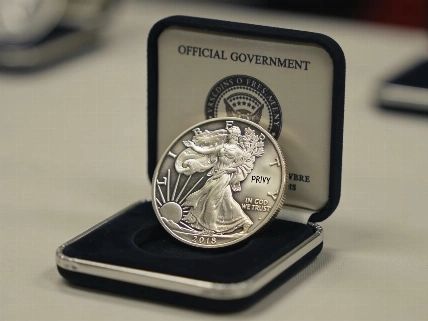
Sometimes, it's about timing. One reader wishes they had bought more American Silver Eagles when premiums were low. Another missed a mid-grade original 1916-D Mercury dime at a dealer price in the early 1970s. The 1916-D Mercury dime is the clear key date of its series, with only 264,000 made. Its value jumps sharply with grade and condition, as shown by Coast to Coast Coins & Currency. Low mintage and collector demand push prices up, a pattern seen in other key dates according to independent numismatic sources. The chance to grab a rare date at a good price often becomes obvious only after the fact, especially as the market can shift fast with changes in U.S. Federal Reserve interest rates or inflation expectations.
When helping others means missing out
Sometimes, regret comes from helping someone else. At a coin show in Ann Arbor, a collector spotted a sharp AU58 1916 Standing Liberty Quarter-the exact coin a friend needed to finish a set. The collector helped make the sale happen. Years later, they realized that was the very coin and grade now missing from their own set. Prices have gone up, and nothing since has matched that lost coin. The U.S. dollar's buying power, tracked by the Consumer Price Index (CPI) from the Federal Reserve, has dropped over the years. That makes it sting even more when rare coins rise faster than inflation.
Not all regrets are about coins you didn't buy. One collector got every coin they wanted, but now wishes they hadn't sold their Morgan, Peace, and Walking Liberty half dollar sets, along with three Barber sets. The loss isn't just about money. It's about the sense of completeness and the stories those sets held.
Numbers behind the stories
The feelings in these stories are strong, but the numbers are just as telling. The 1895-P proof Morgan dollar was offered at $35,000 and reportedly doubled in value in five years. A 1918/7 Buffalo nickel bought for $145 in the mid-1980s is now a prized rarity. Even coins that sold for $5 or $25 years ago are now hard to find, both in price and in the market. These numbers show how fast things can change, and how a quick decision can have a long shadow. The premium on key dates like the 1909-S VDB and 1916-D Mercury dime isn't just about rarity. It's about their status and the demand from collectors, as confirmed by several independent sources.
For collectors, the lesson isn't just about chasing profit. As shown in a previous investigation, grading and surface details can swing both value and satisfaction. These stories make it clear: regret in coin collecting is as much about personal ties and the hunt for a complete set as it is about money. Collector feelings and bigger economic trends-like changes in U.S. Treasury yields or foreign exchange rates tracked by the European Central Bank-can also move the rare coin market.
Understanding collector value
Collector value is about more than rarity or price. Provenance, condition, and timing all matter. Coins like the 1916-D Mercury dime or the 1914-D cent aren't just rare-they're milestones for people building full sets. The bond with a coin, especially one tied to a memory or a personal win, can mean more than any catalog price. For many, the regret of letting a coin go or missing a chance to buy is a reminder that collecting is about the journey, not just the end goal.
In coin collecting, every choice to buy, sell, or pass on a coin brings risk and possible reward. The stories here show that regret is part of the hobby, but also proof of real passion. For newcomers, these stories send a clear message: think carefully, but don't overlook how much a single decision can matter in the long run. The real value of a collection often lives in the memories and meaning behind each coin, not just its price tag.
Coin grading is a key part of what makes a coin valuable to both the market and collectors. Grading looks at a coin's condition-wear, shine, and marks-and is usually done by professionals using set standards. Even a one-grade difference can mean a big jump in value, especially for rare or key-date coins. Collectors should know that grading isn't always exact; personal judgment and changing standards can affect results. Knowing how grading works and how it shapes value is crucial for anyone who wants to build or keep a meaningful collection.