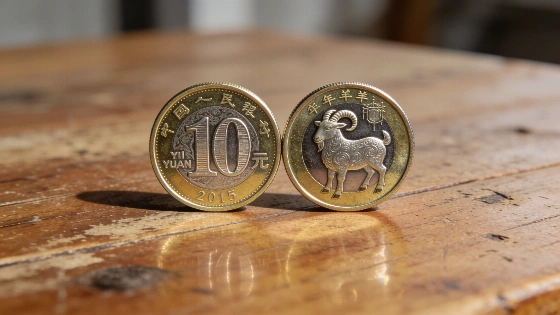
China's 2015 Year of the Goat 10 yuan coin, the first in a bimetallic lunar series, remains popular with collectors but has become a target for counterfeiters. Understanding its security features is essential for buyers and hobbyists
China's 2015 Year of the Goat 10 yuan coin marked the launch of a new bimetallic lunar series, drawing significant attention from collectors. With a mintage in the tens of millions, its numismatic premium remains modest, but the coin's popularity has made it a frequent subject of authentication concerns. The coin features a copper-nickel center encircled by a brass ring, and more than 60,000 examples have been certified by Numismatic Guaranty Company (NGC), reflecting sustained collector demand.
Despite its relatively low intrinsic value, the combination of high interest and broad circulation has attracted counterfeiters. NGC recently identified a fraudulent submission of the 2015 Year of the Goat 10 yuan, highlighting the ongoing risks in the collectible coin market. For collectors, the ability to distinguish genuine coins from counterfeits is increasingly important, especially as forgeries become more sophisticated and harder to detect without specialized knowledge or equipment.
Identifying Genuine and Counterfeit Coins
One of the first steps in authenticating a coin is to check its weight. The official 2015 Year of the Goat 10 yuan should weigh approximately 9.18 grams. However, a counterfeit example submitted to NGC weighed 9.7 grams-about 5 percent heavier than expected. Such discrepancies can be an early warning sign, but are not always conclusive, as some fakes are produced with more precise specifications.
Visual inspection under magnification can reveal further clues. On the genuine coin, microtext reading "RMB 10 YUAN" appears at the base of the numeral 1. Counterfeit versions often fail to reproduce this detail accurately, with the microtext appearing as indistinct blobs. Additionally, the background design near the denomination on authentic coins includes fine horizontal lines, which are typically missing or poorly rendered on fakes.
Another key security feature is the lenticular effect embedded within the denomination. On genuine coins, the letters "RMB" shift to display three "10"s when viewed from different angles. This optical feature is absent on known counterfeits, making it a reliable indicator for collectors with access to the coin in hand.
Market Impact and Collector Guidance
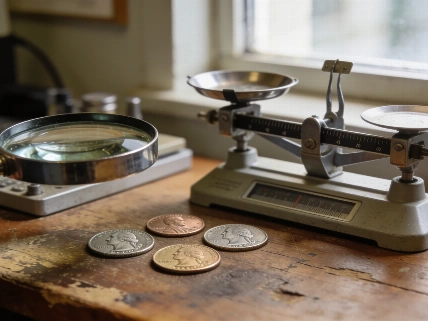
According to NGC, the widespread certification of the 2015 Year of the Goat 10 yuan reflects both its popularity and the need for authentication in a market where counterfeits circulate. While the coin's face value and modest premium may not attract high-value fraud, the sheer volume of interest creates incentives for counterfeiters to target less experienced buyers. Collectors are advised to use basic tools such as a scale and magnifying glass to check for discrepancies in weight and fine details, and to be cautious when purchasing coins from unverified sources.
For more advanced or convincing counterfeits, professional grading and authentication services remain the most reliable safeguard. NGC's guarantee of authenticity and grade provides additional assurance for buyers, especially as counterfeit techniques continue to evolve. The risks associated with counterfeit coins are not unique to China; similar challenges have been observed in other markets, as seen with commemorative issues like the ANA's 2026 World's Fair of Money medal, which also attracted significant collector attention and rapid sellouts (see coverage of the ANA's commemorative medal).
Facts and Figures
The 2015 Year of the Goat 10 yuan coin was issued with a mintage in the tens of millions, making it widely available in China and among international collectors. NGC has certified over 60,000 examples as of 2026, underscoring the coin's enduring appeal. The official weight is 9.18 grams, and deviations from this standard can indicate a counterfeit. The coin's bimetallic structure and security features, including microtext and a lenticular effect, are designed to deter forgery but require careful inspection to verify.
Understanding the security features of modern coins is essential for collectors and buyers. Bimetallic coins, such as China's lunar series, often incorporate advanced anti-counterfeiting measures like microtext, latent images, and optical effects. While these features increase production complexity and cost for counterfeiters, they also demand greater awareness from collectors. As counterfeit techniques improve, the role of professional authentication services and collector education becomes even more critical in maintaining trust and value in the numismatic market.