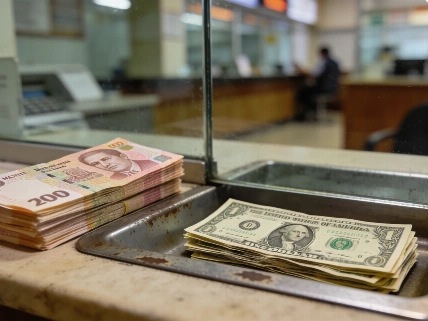

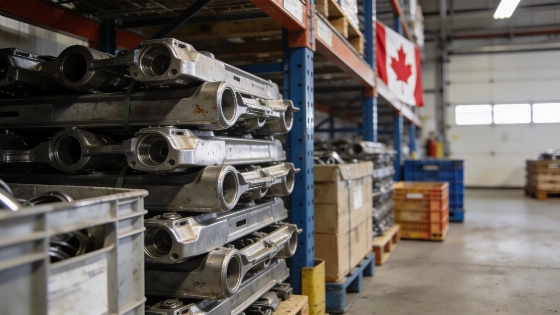
The Canadian dollar lost ground against the US dollar after new US tariff threats on Canadian autos and steel, raising concerns for exporters and cross-border supply chains as trade negotiations falter
The Canadian dollar weakened sharply against the US dollar on Monday, as renewed trade tensions between Canada and the United States unsettled currency markets. The loonie, which had recently touched its strongest level in over two months, fell by about 0.6% during the session. This move followed a warning from US President Donald Trump that tariffs on Canadian automobiles, car parts, and steel could rise to 50% starting January 2027, after bilateral trade talks collapsed late last week.
At the start of the week, the Canadian dollar was trading near 72.24 US cents, down roughly 0.4% on the day, while the US dollar was quoted at around C$1.385. The abrupt shift in sentiment came as investors digested the breakdown in negotiations and the prospect of higher costs for Canadian exporters. The Canadian government responded by pledging to match US tariffs dollar for dollar, with new levies on US steel, dairy, appliances, agricultural equipment, pulp and paper, and electronics scheduled to take effect in early September.
Tariffs and Market Reaction
The escalation in trade measures has immediate implications for Canadian businesses with significant cross-border operations. Exporters in sectors ranging from wine and dairy to furniture and hockey equipment now face higher costs and increased uncertainty. Companies listed on the Toronto Stock Exchange and NYSE with exposure to Canadian exports are reassessing their risk as the trade relationship deteriorates. According to analysts at City Index, the recent rebound in the USD/CAD exchange rate was partly driven by technical factors, including a short squeeze, rather than a fundamental shift in economic outlook.
Canada's Prime Minister Mark Carney described the situation in stark terms, emphasizing the seriousness of the trade dispute. Ottawa's commitment to retaliate has raised the risk of a prolonged standoff, with both sides preparing for a new round of tariffs. The Canadian government's measures are set to begin on September 8, targeting a broad range of US goods in response to Washington's actions.
Economic Data and Broader Currency Moves
Despite the political headwinds, some factors have provided partial support for the loonie. Higher global crude oil prices, which typically benefit Canada as a major energy exporter, have helped cushion the currency's decline. Gold prices also firmed, rising 0.9% to $4,643 an ounce on Monday, reflecting broader market anxiety and some softness in the US dollar. Karl Schamotta of Corpay Cross-Border Solutions noted that the US Treasury's recent bond buyback announcement had been a key driver of Canadian dollar strength earlier in August.
Canada's economy had shown resilience prior to the latest trade developments, with a 3.4% annualized GDP expansion in the second quarter and a 75,000-job gain in July. However, the renewed tariff risk has begun to unwind those earlier gains. The US Dollar Index rose 0.2% to 98.981 on Monday, while the euro and Japanese yen also saw modest moves against the dollar, according to Reuters. Incremental US dollar strength has added to the loonie's challenges, but the Canada-specific tariff story remains the primary driver of the latest exchange-rate movement.
Trade Tensions and Currency Volatility
The current standoff between Canada and the United States highlights the vulnerability of currencies to political and trade developments. As seen in other recent episodes, such as when the British pound held steady after UK inflation data matched expectations (see our coverage of sterling's response to inflation figures), currency markets often react quickly to shifts in policy, negotiations, or economic data. For the Canadian dollar, the risk of further volatility remains elevated as both governments prepare for additional measures and businesses adjust to a more uncertain trading environment.
While higher commodity prices can offer some support, the loonie's direction in the coming weeks will likely depend on the evolution of trade policy and the willingness of both sides to return to the negotiating table. For now, Canadian exporters and importers face a more challenging landscape, with exchange-rate risk and tariff costs adding new layers of complexity to cross-border commerce.
Trade disputes often have a direct impact on currency values, especially when tariffs target sectors central to a country's export economy. In floating exchange-rate systems like Canada's, market participants weigh not only the immediate cost of tariffs but also the broader implications for growth, inflation, and monetary policy. While central banks can respond to currency weakness with interest-rate adjustments or other measures, political shocks and trade actions can introduce volatility that is difficult to offset through policy alone. Understanding these dynamics is essential for businesses and individuals managing cross-border payments or exposure to foreign currencies.