

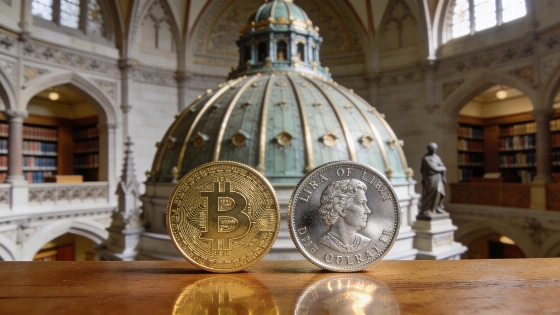
The Royal Canadian Mint has released two limited-edition coins to honor the 150th anniversary of the Library of Parliament, highlighting the building's survival through disaster and its unique architectural legacy
Surviving a devastating fire that destroyed much of Parliament in 1916, the Library of Parliament stands as a rare architectural survivor-and now, its endurance is being honored in precious metal. The Royal Canadian Mint has launched two commemorative coins to mark the library's 150th anniversary, offering collectors a tangible link to a defining chapter in Canada's monetary and political history.
Both coins-one gold, one silver-are strictly limited. The $200 gold coin, priced at US$2,969, is capped at 800 pieces. The $20 silver coin, with a mintage of 4,500, is offered at US$180. Each design draws directly from the library's distinctive features: the gold coin, by John Mantha, captures the domed interior and the statue of Queen Victoria, while Tony Bianco's silver coin frames the building's exterior in autumn foliage, with an open book displaying the dual dates 1876 and 2026. Both coins feature Steven Rosati's effigy of King Charles III on the obverse.
Architectural Rivalry and Survival
The Library of Parliament's story began with an international design competition in 1859, attracting architects from Britain, Europe, the United States, and Canada. Toronto's Thomas Fuller and Chilion Jones prevailed with a neo-gothic vision, but it was the intervention of the first parliamentary librarian, Alpheus Todd, that proved decisive. Todd insisted the library be separated from the main Centre Block by heavy iron doors-a modification that would later save the library from the 1916 fire that gutted the rest of Parliament's core.
That survival is not just a matter of architectural pride. The library's continued existence has allowed it to serve as a living archive and a symbol of institutional memory, even as the rest of Parliament was rebuilt around it. The new coins do more than commemorate a building; they recognize the role of design, foresight, and luck in preserving a national landmark.
Commemorative Coins and Collector Demand
Canada's commemorative coin market has a history of blending national milestones with numismatic artistry. The Royal Canadian Mint's latest issues follow a pattern seen in other countries, such as Australia's recent release of a historic dollar coin, as reported earlier. These coins are not intended for circulation; their value lies in their limited mintage, precious metal content, and the stories they encapsulate.
For collectors, the Library of Parliament coins offer a direct connection to a pivotal moment in Canadian history. The dual dates-1876 and 2026-underscore the building's endurance and the Mint's intent to anchor the anniversary in physical currency. The use of King Charles III's effigy also signals a new era for Canadian coinage, following the transition from Queen Elizabeth II.
Key Figures and Practical Details
The $200 gold coin and $20 silver coin are available exclusively through the Royal Canadian Mint's official website. Purchasers should note the strict mintage limits: 800 for the gold, 4,500 for the silver. Both coins are legal tender, though their face values are far below their sale prices, reflecting their status as collectibles rather than circulating money. The coins' designs were selected to highlight both the library's architectural grandeur and its historical significance, with each artist drawing on different aspects of the building's legacy.
Commemorative coins like these are typically exempt from GST/HST when purchased in Canada, provided they meet purity requirements for precious metals. However, international buyers may face import duties or taxes depending on their jurisdiction. The Mint's website provides full specifications, including weight, diameter, and metal content, for prospective buyers.
Design Choices and Historical Context
The decision to feature the library's interior and exterior on separate coins reflects a broader trend in commemorative coin design: using physical space to tell a layered story. The inclusion of autumn foliage on the silver coin situates the building in its Ottawa setting, while the open book motif nods to the library's function as a repository of knowledge. The gold coin's focus on Queen Victoria's statue connects the present to the era of the library's founding, reinforcing the continuity of Canada's parliamentary tradition.
In the world of numismatics, commemorative issues often serve as both historical documents and investment vehicles. While the face value of these coins is symbolic, their market value is driven by metal content, design, and scarcity. Collectors should be aware that secondary market prices can fluctuate, especially for low-mintage issues tied to major anniversaries.
The Library of Parliament's survival during the 1916 fire was not a matter of chance alone. Alpheus Todd's insistence on architectural safeguards-specifically, the separation from the Centre Block and the installation of iron doors-demonstrates how individual decisions can have lasting national consequences. The new coins are a reminder that currency is more than a medium of exchange; it is also a vessel for memory, identity, and institutional resilience.
Commemorative coins are distinct from circulating currency in both purpose and legal status. While they are issued by the same authority and bear official denominations, their primary function is to mark events, honor institutions, or celebrate milestones. Their legal-tender status means they could technically be used for payment, but their sale price and collector value far exceed their face value. In practice, these coins circulate only among collectors and investors, serving as tangible artifacts of national history rather than everyday money.