
Australia's Royal Mint unveils a $1 coin with a real hole at its center, reviving the 1813 Holey Dollar and highlighting the unexpected role of a convicted forger in the nation's monetary history
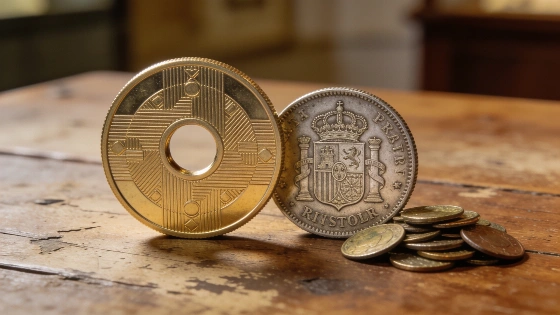
A convicted counterfeiter once exiled to New South Wales is now at the center of Australia's latest numismatic headline. The Royal Australian Mint has launched the 2026 $1 Holey Dollar Uncirculated Coin, a direct tribute to the country's first locally minted currency and a symbol of the enduring, if unlikely, connection between Australia and Mexico.
Few coins have a backstory as improbable as the Holey Dollar. In 1813, Governor Lachlan Macquarie faced a cash crisis so severe that he turned to William Henshall-a man transported for forgery-to solve it. Henshall's task: transform 40,000 Spanish silver dollars, many struck in colonial Mexico, into a new currency that could not easily be spirited out of the colony.
From Forger to Mintmaster
Henshall's solution was as practical as it was radical. By punching out the center of each Spanish eight-reales coin, he created two new coins from one: the outer ring became the Holey Dollar, valued at five shillings, while the inner plug became the Dump, worth 15 pence. This doubled the number of coins in circulation and made them uniquely identifiable as New South Wales currency, discouraging their export and cementing their place in Australian monetary history.
The 2026 commemorative coin revives this design with a genuine central hole and features imagery inspired by the original 1813 issue. Designed by Elyssa Waterford, the new coin is limited to 35,000 pieces and priced at AU$35. The Royal Australian Mint's decision to mark 60 years of diplomatic relations with Mexico is no accident: the original Spanish dollars were minted in Mexico City, and Mexican silver was a global trade staple long before formal ties began in 1966.
Historic Silver and Modern Diplomacy
Mexican Ambassador Ernesto Céspedes Oropeza has emphasized the historical trade routes that brought Mexican silver to Australia, predating official diplomatic relations by more than a century. The 1813 Holey Dollar itself often began life as an 1804 Spanish dollar from the Mexico City Mint, a fact that underlines the deep, if sometimes overlooked, monetary links between the two countries.
In total, Henshall produced 39,910 Holey Dollars and Dumps, each marked with New South Wales designs to prevent re-export. The coins' unusual appearance and colonial markings made them instantly recognizable, and their survival today is a testament to both their ingenuity and scarcity. For collectors, the Holey Dollar is a prized artifact, with surviving examples fetching high prices at auction.
Numismatic Legacy and Collector Demand
The Royal Australian Mint's new issue is not the first time a historic coin has been revived for modern collectors. As reported earlier, rare coins with unusual origins often command attention and value, especially when they reflect pivotal moments in a nation's monetary evolution. The 2026 Holey Dollar stands out for its direct physical link to both Australian and Mexican currency history, as well as its nod to the role of global trade in shaping local economies.
For context, the original shipment of 40,000 Spanish dollars arrived in New South Wales from Madras in 1812, at a time when reliable coinage was scarce and barter was common. By converting these into nearly 80,000 new coins, the colonial administration not only increased the money supply but also created a uniquely Australian currency that could not be easily used elsewhere. Today, only a small fraction of the original Holey Dollars and Dumps survive, making them among the rarest and most sought-after pieces in Australian numismatics.
Transforming a convicted forger into a mintmaster was a gamble that paid off for Governor Macquarie. The Holey Dollar's legacy is not just a story of monetary improvisation but a reminder that currency systems are shaped as much by necessity and ingenuity as by official policy. The Royal Australian Mint's 2026 release is more than a commemorative gesture-it is a calculated move to reinforce Australia's numismatic identity and its historical ties to Mexico, while offering collectors a tangible piece of that shared past.
The creation of the Holey Dollar illustrates how colonial authorities adapted foreign coinage to local needs, using physical alteration to assert monetary control and prevent capital flight. By marking and modifying imported coins, New South Wales established a distinct currency system without the resources to mint entirely new coins from scratch. This approach was not unique to Australia, but the Holey Dollar remains one of the most recognizable examples of such monetary innovation, and its legacy continues to influence how nations respond to shortages and external dependencies in their currency systems.