A unit of Abu Dhabi Investment Authority is joining a $2.34 billion deal for Slate Grocery REIT, moving 115 US grocery-anchored shopping centers into new hands and drawing global attention to American retail property.
Slate Grocery REIT, which owns 115 US shopping centers anchored by grocery stores, is about to get new owners. A $2.34 billion buyout is in motion. A subsidiary of Abu Dhabi Investment Authority (ADIA) is stepping in as a key investor. The deal is led by Brixmor Property Group and Everview Partners, both based in the US. They confirmed the agreement in a press release on September 28, 2026. This is a big cross-border move for American retail property. Details are in the Brixmor announcement. The Federal Reserve has kept its benchmark rate at a multi-decade high. That keeps the US dollar strong and draws in foreign capital.
Brixmor will buy 23 grocery-focused centers outright for $636 million. These centers cover about 3 million square feet. The other 92 properties will go to a new joint venture between Brixmor and Everview Partners' affiliates. That part of the deal is worth $1.71 billion. SEC filings show the joint venture will own all of 22 centers and half of one more. The exact size of ADIA's investment is not public. But ADIA's involvement shows global investors still want US retail real estate. The US Consumer Price Index (CPI) is still above the Federal Reserve's 2% target. That keeps demand high for assets that can hedge against inflation.
New hands on US retail property
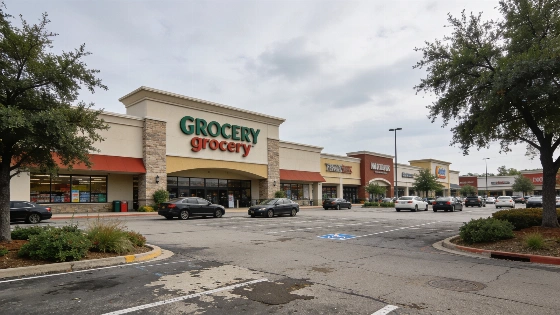
Slate Grocery REIT is listed in Canada. Its business is simple: own and manage US shopping centers with grocery stores as main tenants. These centers serve local neighborhoods and bring in steady rent. That makes them popular with investors who want predictable income. Now, Brixmor and its partners will run a portfolio that stretches across many US regions and customer groups. The deal was signed on September 27, 2026, according to official documents. Both Brixmor and Slate Grocery REIT boards have approved it. Closing is expected in the first quarter of 2027. Unitholders still need to give the green light, and standard closing steps remain.
International money has been flowing back into US retail property. Big investors are looking for assets that can stand up to e-commerce. Grocery-anchored centers are seen as a safe bet. People need food, even when other retail struggles. This thinking matches what other global investors are doing. Federal Reserve policy keeps shaping where money goes and how currencies move.
Deal breakdown and numbers
The buyout splits into two main parts. Brixmor will take 23 centers for $636 million. That gives it direct control over a big chunk of the portfolio. The other 92 properties, worth $1.71 billion, will be managed by the joint venture. This setup lets Brixmor and Everview Partners share risk and stay flexible. In total, the deal covers 115 shopping centers, all focused on grocery retail. The directly acquired centers add up to about 3 million square feet. The deal does not spell out ADIA's exact stake. But its presence signals trust in these assets. US Treasury yields are still high. That makes real estate look good for investors chasing yield.
Slate Grocery REIT has carved out a niche. It sticks to US grocery-anchored centers, which have held up well even when retail markets get rough. Most of its properties sit in established neighborhoods and serve daily needs. That has helped keep tenants and rents steady, even as other retail spaces have struggled. The Bank of Canada has pointed out that big US property deals can affect the Canadian dollar. Large cross-border investments can shift currency demand and hedging.
What this means for global investors
ADIA's role in this deal shows how real estate capital is moving across borders. For the US, foreign institutional investors bring in cash and help keep property values up. This is especially true for stable or counter-cyclical sectors. For ADIA and similar funds, US retail property offers a way to diversify and earn dollar-based income. Central bank decisions, especially from the Federal Reserve, keep shaping these flows.
Cross-border deals have gotten more complex. Joint ventures and layered ownership are now common. They help balance risk, meet rules, and tap into local know-how. The Slate Grocery REIT deal is a clear example. Brixmor and Everview Partners set up both direct and shared ownership. The European Central Bank (ECB) has also noted that foreign direct investment helps support both euro and dollar liquidity worldwide.
Here are the numbers again. The $2.34 billion price covers 115 US shopping centers. Brixmor gets 23 centers outright for $636 million. The other 92 assets, worth $1.71 billion, go into the joint venture. The directly acquired properties total about 3 million square feet, all with grocery anchors. The deal should close in early 2027, if unitholders approve and all conditions are met.
REITs like Slate Grocery REIT let investors pool money to buy income-producing property. In the US, REITs must follow strict rules. They have to pay out most of their earnings and face limits on what they can do operationally. The Securities and Exchange Commission (SEC) oversees these rules. Grocery-anchored shopping centers are seen as a safe part of retail real estate. They meet basic needs and keep people coming, even in tough times. This deal, with both direct buys and joint ventures, shows how big investors are changing their strategies. They want to balance yield, risk, and control as the market shifts.