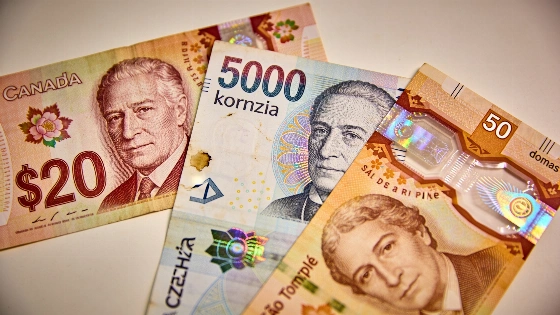
Three countries have rolled out new banknotes that mix history with cutting-edge security. Canada puts King Charles III on its $20 bill, Czechia marks 100 years of central banking, and São Tomé and Príncipe celebrates independence.
Banknotes do more than pay for goods. They show national identity and how far a country has come with technology. This year, Canada, Czechia, and São Tomé and Príncipe each launched new notes. Each one breaks with old designs and shows how countries use cash to mark big moments and assert their place in the world. These launches come as central banks everywhere try to balance the rise of digital payments with the need to keep public trust in cash. The Bank for International Settlements (BIS) has pointed to this challenge in recent policy talks.
Canada's new $20 note will start circulating in late February 2027. For the first time, it features King Charles III. The government has kept its promise to show the current monarch on Canadian money. This is the first time in over seventy years that Canada has changed the monarch on its currency, after the death of Queen Elizabeth II. The note is vertical. King Charles's portrait sits above a background of leaves and flowers. These plants come from every Canadian province and territory and nod to his environmental work. The back shows the Canadian National Vimy Memorial in France, a reminder of Canada's military history. Both sides include plant designs important to Indigenous Canadian communities. This is part of a wider effort to recognize Indigenous heritage in national symbols. The note also brings in new security features, like a violet security stripe and effects that change when tilted. The Bank of Canada has confirmed these updates.
Commemorative issues and security upgrades
Czechia's central bank is marking its 100th year with a special 5,000 koruna note. Only 200,000 have been made. The note features a "100 let NBČ" logo by Jan Solpera, shown in holographic foil with nano-effects. This is the first time Czech currency has used these effects. There is also a QR code that links straight to the Czech National Bank's website. The note carries a portrait of Tomáš Garrigue Masaryk, the first president of Czechoslovakia. These touches mix respect for history with digital tools, showing how physical money is changing in a digital world. The Czech National Bank says this note is both a tribute to its founding in 1926 and a sign of its ongoing role.
São Tomé and Príncipe's Central Bank, working with Royal Joh. Enschedé, has released a 50 dobras note for the country's 50th year of independence. The design brings together the nation's history, nature, and culture. It uses a nine-color offset print and a clear window for security. For the first time, Royal Joh. Enschedé has added serial numbers digitally, not with old printing plates. This step aims to fight counterfeiting and make tracking easier. Unlike the Canadian and Czech notes, there is little independent confirmation of the exact issue date, print run, or official statements from São Tomé and Príncipe's Central Bank. This shows why direct checks with central banks matter.
History and practical details
Canada's $20 note will be the first to show King Charles III, ending more than seventy years of Queen Elizabeth II's image. The note is set to enter circulation in late February 2027. Its design keeps some old elements but also brings in new ones. This is only the second vertical note in the Bank of Canada's lineup, after the $10 note with Viola Desmond from 2018. The Bank of Canada has repeated its rule of showing the current monarch, in line with Commonwealth tradition. Czechia's 5,000 koruna note marks the 100th anniversary of the Czech National Bank, which has been around since 1916 under different names. The QR code is a new way to link digital info with cash. The limited run of 200,000 notes has drawn crowds to major branches. São Tomé and Príncipe's 50 dobras note is both a commemorative and a technical first, as it brings digital numbering to the country's cash for the first time.
These new notes are rooted in national history, but they also show a global move toward stronger banknote security. Holographic foils, clear windows, and digital serial numbers are now common as central banks try to stop counterfeiting and keep trust in cash. The European Central Bank (ECB) and the Federal Reserve have both stressed the need for strong security in their new currency designs. This is especially true as inflation and exchange rate swings keep shaping monetary policy. As reported earlier, the way physical money changes is closely tied to better authentication and the changing role of cash in society.
Numbers and milestones
The Canadian $20 note with King Charles III is due out in late February 2027. This is the first time in over seventy years that a new monarch will appear on Canadian money. The Bank of Canada's move comes as it reviews its policy rate, with inflation still above the 2% target. Czechia's 5,000 koruna note honors the central bank's centenary, with only 200,000 made. This reflects both collector interest and the note's symbolic value. São Tomé and Príncipe's 50 dobras note marks 50 years of independence. It uses a nine-color offset print and, for the first time, digital numbering by Royal Joh. Enschedé.
Commemorative banknotes and national identity
Commemorative banknotes are more than collector's items. They are legal tender and circulate with regular notes, often for a short time or in small numbers. Their designs usually show key moments, leaders, or cultural symbols. Their security features must match those of everyday cash. Adding digital touches like QR codes and digital numbering shows a move toward currency that blends the physical and digital. As countries keep updating their notes, the line between commemorative and regular banknotes may blur. New issues can work as both money and as a way to tell a nation's story. The International Monetary Fund (IMF) has said these changes can boost public trust in national currencies, especially in emerging markets.
The latest notes from Canada, Czechia, and São Tomé and Príncipe show that even as digital payments grow, physical cash still matters. Banknotes remain a canvas for national memory and new technology. Central banks are not giving up on cash. Instead, they are rethinking what it can be. These new notes do more than pay for things-they show how each country sees itself and what it values now.
Commemorative notes differ from regular ones in why and how they are made. Standard notes are for daily use. Commemorative notes mark anniversaries, historic events, or big national achievements. They may circulate with regular notes or be made in small numbers, but they must still be secure and durable. Using holographic foils, clear windows, and digital numbering shows how designers are trying to balance tradition with new ideas. As digital payments spread, the future of physical cash will depend on how well it can stay secure, useful, and meaningful for both users and collectors.