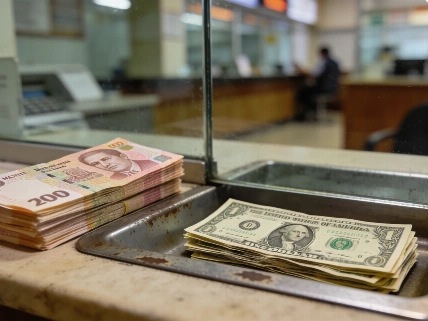


Australia's dollar climbed to a near three-month high after inflation data exceeded forecasts, prompting speculation about further rate hikes. Meanwhile, the US dollar remained stable as markets awaited key US inflation figures and central bank signals
The Australian dollar advanced to its highest level since early June 2026 after new inflation data exceeded expectations, prompting investors to reassess the likelihood of further interest rate increases by the Reserve Bank of Australia (RBA). The move contrasted with a largely unchanged US dollar, as global currency markets paused ahead of critical US inflation data and upcoming central bank guidance.
On Wednesday, the Australian dollar (AUD) strengthened by 0.3% against the US dollar (USD), reaching its strongest point since June 3, 2026. The catalyst was July's monthly consumer price index, which showed a 1% rise compared to consensus forecasts of 0.8%. While the annual headline inflation rate eased to 3.5%, the RBA's preferred trimmed mean measure accelerated by 0.5% month-on-month, keeping annual core inflation at 3.6%. These persistent core inflation figures led many analysts to bring forward expectations for a possible fourth RBA rate hike before the end of the year.
US Dollar Awaits Inflation Data
In contrast to the AUD's gains, most major currencies traded within narrow ranges against the US dollar. The Dollar Spot Index edged up just 0.1% to 98.98, remaining close to last week's three-month low. Market participants are holding back from major moves ahead of the July Personal Consumption Expenditures (PCE) price index release, the Federal Reserve's preferred inflation gauge. This data, due Wednesday, is seen as the final significant economic indicator before Federal Reserve Chair Kevin Warsh's first keynote address at the Jackson Hole Economic Policy Symposium on Friday.
While recent US Treasury buybacks of longer-term debt have helped reduce volatility in government bond markets, underlying concerns about the US's $40 trillion federal debt and rising debt service costs continue to weigh on the dollar's outlook. As discussed in our recent analysis of euro-dollar dynamics amid US debt concerns, these structural issues remain a key factor limiting the greenback's ability to rebound decisively.
Yen, Euro, and Canadian Dollar Diverge
The Japanese yen (JPY) edged up 0.1% to 158.97 per US dollar, staying below levels that previously triggered joint intervention by US and Japanese authorities. The yen found support after a Reuters survey indicated that most economists now expect the Bank of Japan to raise its policy rate as soon as September. Meanwhile, the euro (EUR) traded flat near $1.1600, as market participants weighed recent comments from European Central Bank Executive Board member Isabel Schnabel, who signaled that further rate hikes may still be needed despite falling energy prices.
The Canadian dollar (CAD) continued to weaken, slipping 0.2% to C$1.3900 per US dollar. The loonie has come under pressure following the breakdown of US-Canada trade talks and the imposition of 50% US tariffs on $20 billion worth of Canadian exports. Ottawa has announced retaliatory tariffs set to take effect on September 8, adding to uncertainty for Canadian businesses and consumers.
Middle East Tensions Ease, Supporting Risk Appetite
Elsewhere, Asian and emerging market currencies benefited from a modest improvement in risk sentiment as geopolitical tensions in the Middle East showed signs of easing. Brent crude oil prices fell by more than 2% to around $87 per barrel after reports that Iran and Oman had resumed talks to manage commercial transit through the Strait of Hormuz. The prospect of more stable energy flows helped reduce inflation fears for net energy-importing Asian economies, providing some support for regional currencies ahead of this week's key economic releases.
For July 2026, the Australian dollar's 0.3% appreciation against the US dollar followed a monthly inflation reading of 1%, compared to the expected 0.8%. The RBA's trimmed mean inflation measure rose 0.5% month-on-month, keeping annual core inflation at 3.6%. The US Dollar Spot Index remained nearly flat at 98.98, while the Japanese yen traded at 158.97 per US dollar and the Canadian dollar weakened to C$1.3900 per US dollar. Brent crude's decline to $87 per barrel reflected easing supply concerns in the Middle East.
Central banks play a critical role in shaping currency values through their policy decisions, particularly when inflation data diverges from expectations. The Reserve Bank of Australia's focus on core inflation, rather than just headline figures, reflects a broader trend among major central banks to target underlying price pressures that are less affected by volatile items like energy and food. This approach aims to provide a clearer signal of persistent inflation trends, which in turn influences expectations for future interest rate moves and currency performance. However, as seen in the US and Canada, structural factors such as government debt levels and trade policy can also exert a powerful influence on currency markets, sometimes offsetting or amplifying the effects of monetary policy.