
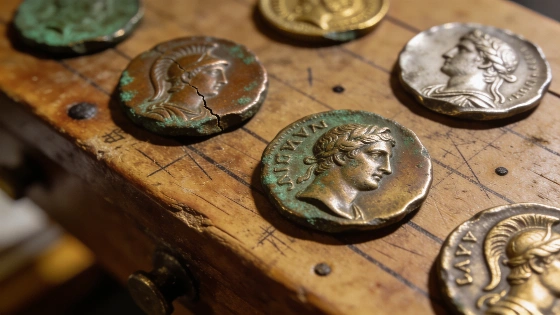
Rare ancient coins from Greece and Rome drew fierce competition at major August auctions, with standout pieces selling well above estimates and confirming the enduring appeal of historical currency among collectors
When a gold solidus from the Western Roman Empire sold for $12,200 at Heritage Auction's August event, it was not just another high bid-it was a clear signal that demand for ancient coins is not fading. The coin, featuring Galla Placidia, outpaced every other lot in the Dr. Charles Jay Deur Collection sale, eclipsing its peers and setting the tone for a month where ancient currency commanded the spotlight.
Collectors and dealers have long tracked the market for ancient coins, but August's results showed a new level of intensity. At Doyle's August 12 "Coins, Stamps, Paper Money & Sports Memorabilia" auction, a silver tetradrachm from Gela, Sicily, minted around 450-440 BCE, drew attention for its artistry and rarity. The coin's depiction of a quadriga and the bull-headed river god of Sicily helped it soar past its $1,000-$1,250 estimate, ultimately selling for $1,694. These figures are not outliers-they reflect a broader surge in interest for coins with deep historical roots and strong provenance.
Ancient Coins Outperform Modern Issues
While modern commemoratives and bullion coins often dominate headlines, it is the ancient pieces that have recently delivered the most dramatic results. The Gela tetradrachm's performance at Doyle's, and the gold solidus at Heritage, both demonstrate that collectors are willing to pay a premium for coins that offer a tangible link to the ancient world. According to Doyle's consultant appraiser Christopher Bulfinch, the diversity of property and the strength of bidding across categories confirm the resilience of the collectibles market, even as economic conditions fluctuate.
Roman coins, in particular, have become a focal point for high-end buyers. The Galla Placidia solidus, graded NGC Choice AU 5/5-4/5, features the empress with a double beaded necklace and diadem, while the reverse shows the goddess Victory. Its final price was nearly ten times that of the standout Greek coin, underscoring the premium attached to imperial Roman gold. These results are publicly available at doyle.com and coins.ha.com, providing transparency for both seasoned collectors and newcomers.
Market Data and Collector Trends
In August 2026, ancient coins at major US auctions consistently exceeded pre-sale estimates. The Gela tetradrachm's $1,694 sale price represented a 35% increase over its high estimate, while the Galla Placidia solidus's $12,200 result set a new benchmark for Western Roman gold coins of the period. These outcomes reflect a pattern seen in other recent sales, such as the Grundy Collection of Latin American and Spanish Coins and the Stanley Gibbons Baldwin's July auction, where museum-grade rarities have drawn global attention.
For collectors, the stakes are not limited to headline prices. Condition, provenance, and historical significance all play a role in determining value. As reported earlier, even minor alterations or cleaning can dramatically reduce a coin's desirability and price. This makes the authentication and grading process critical, especially as more buyers enter the market seeking investment-grade pieces.
Why Ancient Coins Remain in Demand
The persistent appeal of ancient coins is rooted in their ability to connect collectors with history in a way that modern currency cannot. Each coin is a physical artifact from a specific time and place, often bearing the marks of rulers, cities, and events that shaped the ancient Mediterranean world. For many buyers, owning such an object is not just a financial decision but a personal link to the past.
Yet the market is not without risks. Fakes, forgeries, and over-cleaned coins remain a concern, and the premium for top-condition, authenticated pieces continues to rise. Auction houses have responded by tightening their vetting processes and providing more detailed provenance information, but buyers must remain vigilant. The recent auction results suggest that, for now, the appetite for ancient coins is robust, but the market's long-term health will depend on continued transparency and education.
Ancient coins occupy a unique position in the world of collectibles. Unlike modern commemoratives or bullion, their value is shaped by a combination of historical context, rarity, and condition. The process of authentication-often involving expert grading and provenance research-serves as a safeguard against counterfeits and alterations. For collectors, understanding these mechanisms is essential, as even a small change in a coin's surface or history can have a disproportionate impact on its market value. This dynamic helps explain why auction results for ancient coins can vary so widely, and why expertise remains at a premium in this specialized field.