Cleaning or altering coins can permanently reduce their value and grade. Yet for some collectors, problem coins offer a way to fill gaps at a lower cost. Here is what every collector needs to know before making a decision
When a coin is cleaned, tooled, or otherwise altered, the damage is often irreversible. Collectors hoping to boost a coin's appearance or market value by removing dirt or smoothing surfaces may instead find themselves with a piece that is permanently downgraded by grading services and shunned by serious buyers.
Third-party certification services routinely flag coins that have been cleaned or manipulated, assigning them a "genuine, cleaned" label and a detail grade such as "AU Detail." This signals that the coin's condition has been compromised, and its value is typically reduced-sometimes dramatically. There is no universal formula for how much value is lost, but the market consistently penalizes coins with visible signs of cleaning or surface work.
What Happens When Coins Are Altered
Surface alterations go beyond simple cleaning. Tooling, smoothing, and even adding metal are all considered invasive. These actions are usually attempts to mask wear, scratches, or other flaws, but they rarely fool experienced graders. Instead, such coins are often net graded, meaning their technical grade is adjusted downward to reflect the manipulation. In some cases, certification services may refuse to encapsulate the coin at all, especially if the alteration is severe or the coin is deemed damaged.
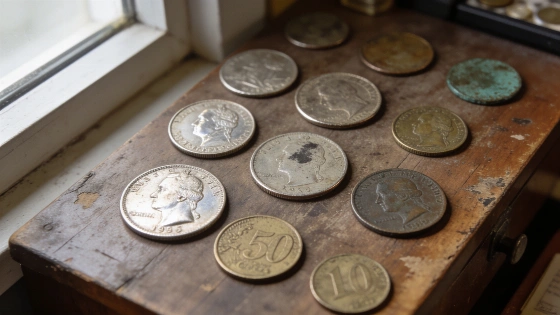
Ancient coins present a special case. Many are unearthed from the ground, often encrusted with dirt or minerals. While some level of cleaning is necessary to reveal details, the line between acceptable conservation and damaging enhancement is thin. Not every ancient coin has been aggressively cleaned, but collectors should be alert to unnatural surfaces or colors, especially on copper and silver pieces where re-toning can be obvious.
Market Impact and Collector Choices
For collectors on a budget, coins identified as cleaned or altered can offer a way to acquire rarities at a lower price. The trade-off is clear: these coins are less likely to appreciate in value and may be harder to resell. Eye appeal becomes critical-if a cleaned coin still looks attractive and the alteration is subtle, it may fill a gap in a collection without drawing immediate attention. However, coins that show harsh cleaning, unnatural shine, or wire-brush marks are often avoided even at a discount.
There are other reasons a coin might receive a net grade. Dipping, smoothing, retooling, or outright damage can all trigger a lower grade or a refusal to encapsulate. Certification services typically note the specific issue on the slab insert, but buyers should always review both the coin and the grading notes before making a purchase.
According to earlier breakdown, even modern coins can suffer from surface flaws and minting defects, which are carefully documented by grading services. The same scrutiny applies to any coin suspected of post-mint alteration.
Facts and Figures
Industry data shows that coins labeled as "cleaned" or "altered" by major grading services can sell for 30% to 70% less than comparable problem-free examples, depending on rarity and eye appeal. For high-value coins, this discount can mean a difference of hundreds or even thousands of dollars. The lack of a fixed rule means buyers and sellers must assess each coin individually, weighing the severity of the alteration and the overall market demand.
Understanding Conservation Versus Alteration
Professional conservation is distinct from amateur cleaning. Conservation aims to stabilize and preserve a coin without altering its original surfaces, and coins treated by reputable conservators are often accepted by grading services without penalty. In contrast, aggressive cleaning or tooling is seen as an attempt to deceive or artificially enhance value, and is penalized accordingly. Collectors should seek out coins with original surfaces whenever possible, as these are most likely to retain or increase their value over time.
Surface manipulation is a permanent mark against a coin's integrity. While problem coins may have a place in some collections, especially for those priced out of pristine examples, the long-term risks are real. The market's preference for originality is not just a matter of taste-it is a reflection of trust, transparency, and the enduring value of authenticity.
Coins and banknotes are graded not only on their technical condition but also on the integrity of their surfaces. The distinction between conservation and alteration is critical: conservation preserves, while alteration deceives. For collectors, understanding this difference is essential to making informed decisions and protecting the value of their collections.