
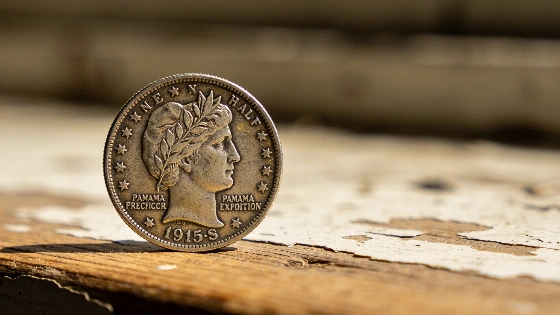
A rare 1915-S Panama-Pacific Exposition Half Dollar graded MS-68 by PCGS is set for auction, highlighting the coin's historical significance and scarcity after most of the original mintage was melted due to low demand.
One of the finest surviving examples of early US commemorative coinage will soon be offered to collectors, as a 1915-S Panama-Pacific Exposition Half Dollar graded MS-68 by PCGS and approved by CAC is scheduled for auction on September 6, 2026. This coin, notable for its exceptional preservation and toning, stands out as one of the highest-graded pieces from a series that marked a pivotal moment in both American history and numismatics.
The Panama-Pacific Exposition Half Dollar was issued to commemorate two major achievements: the completion of the Panama Canal in 1914 and San Francisco's recovery from the devastating 1906 earthquake. The exposition itself, held in San Francisco in 1915, drew over 18 million visitors and covered more than 600 acres along the city's waterfront. The coin's design was a collaboration between Chief Engraver Charles E. Barber, who created the obverse, and George T. Morgan, who designed the reverse. Barber's obverse features Columbia scattering flowers with a child and a cornucopia, symbolizing abundance and renewal, while Morgan's reverse depicts an eagle with outstretched wings, flanked by oak and olive branches representing strength and peace.
Commemorative Coinage and Historical Context
The 1915-S Panama-Pacific Half Dollar was part of an unprecedented five-coin commemorative program authorized by Congress, which also included a gold dollar, a gold quarter eagle, and two $50 gold coins (one round, one octagonal). All were struck at the San Francisco Mint, making these the first US commemorative coins produced at a branch mint rather than in Philadelphia. The half dollar also became the first commemorative coin to feature the motto IN GOD WE TRUST, a detail that set a new standard for future issues.
Despite the fair's popularity, coin sales lagged. Of the 200,000 half dollars authorized, only 60,030 were minted. After reserving 30 coins for assay and distributing 27,134 to buyers, the US government melted 32,866 unsold pieces. The relatively low net distribution has made surviving examples, especially in high grades, highly sought after by collectors. According to PCGS, most surviving coins are found in grades MS-63 or MS-64, with only a handful reaching the MS-68 level. The coin now offered by GreatCollections is one of just two known at this grade, with only a single example graded higher.
Quality, Rarity, and Market Value
Coins graded MS-68 must meet strict criteria: a sharp strike, full original luster, outstanding eye appeal, and virtually no visible imperfections. For the Panama-Pacific Half Dollar, this means not only technical excellence but also attractive toning and strong visual impact. The coin's rarity at this level is underscored by auction records; in April 2015, a similar MS-68 example realized $30,550, reflecting robust demand for top-tier commemorative issues.
Collectors are advised to pay close attention to strike quality, especially on the eagle's breast feathers and other fine details, as well as the coin's toning. The offered coin, from the JFM57 Collection of Silver Commemoratives, has been approved by CAC with a green sticker, further confirming its quality. Bidding for this piece will close at approximately 6:44 p.m. Pacific Time (9:44 p.m. Eastern) on September 6, 2026, with GreatCollections recommending that bidders check the live auction page for final timing.
Facts and Figures: Mintage and Distribution
The 1915-S Panama-Pacific Half Dollar was struck in 90% silver and 10% copper, with a weight of 12.5 grams and a diameter of 30.6 mm. Of the 60,030 coins produced, only 27,134 were distributed to collectors, making this one of the lowest-mintage US commemorative half dollars. The coin's PCGS number is 9357, and the GreatCollections item number is 2201016. The maximum authorized mintage was 200,000, but the majority of coins were melted after the exposition due to weak sales.
San Francisco's role in US currency history extends beyond coins. The city's mints have produced some of the most notable American banknotes and coins, including the rare 1918 $500 Federal Reserve Note from San Francisco, which has also drawn attention at auction for its scarcity and condition, as detailed in this recent coverage of high-denomination US currency.
Design Legacy and Numismatic Significance
The Panama-Pacific Exposition Half Dollar is more than a collectible; it is a tangible artifact of American resilience and ambition. Its design captures the optimism of a city rebuilt and a nation connected by a new canal. The collaboration between Barber and Morgan, two of the most influential US Mint engravers, resulted in a coin that remains a benchmark for commemorative issues. The inclusion of the IN GOD WE TRUST motto and the use of the San Francisco Mint both marked important firsts in US coinage history.
For collectors, the coin's appeal lies in its combination of historical context, artistic merit, and rarity. The destruction of unsold coins has ensured that only a fraction of the original mintage survives, and examples in MS-68 condition are exceptionally rare. The upcoming auction is expected to draw significant interest from numismatists and investors alike.
Commemorative coins like the 1915-S Panama-Pacific Half Dollar illustrate how currency can serve as a record of national milestones and cultural shifts. Unlike circulating coins, commemoratives are often produced in limited numbers and sold at a premium, with their value shaped by both historical events and collector demand. The fate of unsold coins-often melted or withdrawn-can dramatically affect their long-term scarcity and market value. As a result, high-grade survivors from early programs remain among the most coveted pieces in US numismatics.