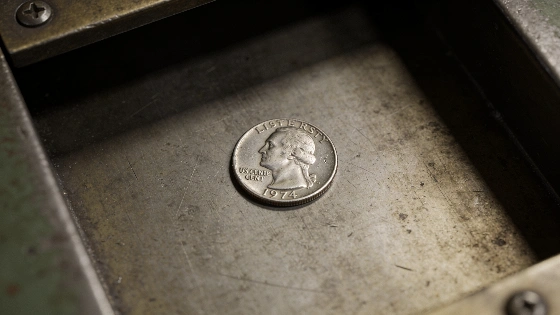
The US Mint made over 1.5 million aluminum cents in 1974, then ordered almost all of them destroyed. Decades later, the few that survived are stuck in legal limbo, with the government insisting collectors can't own them.
Picture a US coin so rare that even a multimillion-dollar auction can't bring it to market. The government says it was never supposed to leave its vaults. That's the story of the 1974 aluminum cent. The Mint made more than a million of these coins, but now they're banned from private hands by the same institution that created them. The Federal Reserve, which handles US currency, has not changed its stance. These experimental coins are still off limits, and the Mint's old position stands.
In 2014, a 1974-D aluminum cent turned up. It could have sold for as much as $2 million. Randy Lawrence inherited it from his father, who worked at the Denver Mint. The coin was authenticated and set for auction. But before bidding could start, the US Mint stepped in. They demanded the coin back and started a legal fight. In the end, the coin went back to federal custody. This case locked in the aluminum cent's strange status: a mass-produced coin that collectors can't legally own. No new statements from the US Mint or Treasury have changed this, as shown by recent searches and the lack of new rules or releases from official sources like Federal Reserve policy resources.
The experiment that never became currency
The aluminum cent came out of economic pressure. In 1973, copper prices shot up. Making the usual bronze cent was getting too expensive. The Mint tried other metals and settled on an alloy that was 96% aluminum. From October 1973 to May 1974, the Philadelphia Mint struck 1,571,167 aluminum cents. That's a huge number for a coin that never went into circulation. This happened during a time of wild swings in commodity prices and rising inflation, tracked by the Consumer Price Index (CPI) from the Bureau of Labor Statistics and watched closely by the Federal Reserve for policy decisions.
But Congress saw problems that lab tests missed. The vending machine industry warned that the lighter coins would jam machines. Pediatricians and radiologists said aluminum coins would be hard to spot on X-rays if swallowed. As copper prices dropped and complaints grew, Congress said no to the aluminum cent. Instead, they changed the copper-zinc mix for future cents. The aluminum project ended before it started. This all played out in the 1970s, when the US dollar was unstable after the Bretton Woods system collapsed. The Treasury and Federal Reserve worked together to keep the currency steady and fight inflation.
Destruction and disappearance
Once the project was canceled, the Mint ordered almost all aluminum cents destroyed. Audit records show only 59 coins from the first run and 67 from the second survived at first. Some were handed out as samples to Congress members and officials. Later, the Mint asked for them back, but not everyone returned theirs. No one knows exactly how many survived. Estimates say maybe five to fourteen Philadelphia coins escaped destruction. Numismatic catalogs and auction listings show collectors are interested, but they don't confirm how many are left or if they're legal to own (numismatic catalog data).
One Philadelphia aluminum cent is now in the Smithsonian's National Numismatic Collection. Its history is clear. Another, graded MS62 by PCGS, is linked to a former Capitol Police officer, but its full story is still debated. The government's view is simple: these coins were never officially released and are still federal property, no matter how they got out. The US Mint's approach matches what other central banks do. The European Central Bank (ECB) and Bank of England (BoE) also keep tight control over experimental or unissued coins.
Legal battles and the government's stance
The 1974-D aluminum cent had its moment in the news, but not because it sold for millions. Instead, it led to a lawsuit and a settlement. After the Mint blocked the auction, Lawrence and coin dealer Michael McConnell sued to sell the coin. The court let the case move forward but never decided who owned it. In the end, both sides agreed to give the coin back to the Mint and dropped their claims. The government said Denver was never allowed to make aluminum cents, and any that left official hands were taken unlawfully. No new court rulings or policy updates have come out since then. The Mint's legal reasoning hasn't changed, as shown by the lack of updates in official regulatory news.
This logic also covers the Philadelphia test coins. In 2009, the Mint's Chief Counsel said the aluminum cents were prototypes, never issued or legally given away. The Mint says no private person can own, sell, or even hold one. Grading services might certify these coins, but the government's claim overrides any numismatic paperwork. This fits with the Federal Reserve's job to protect US currency and stop unauthorized coins from getting out.
One exception and a market without a market
There is one 1974-dated aluminum cent that collectors can legally own: a 1974-S error coin from San Francisco, struck on an aluminum blank meant for a Philippine sentimo. This coin, graded MS61, sold for $19,200 in 2023. Its legal status is clear because it was a mint error on foreign coin stock, not part of the aluminum-cent experiment. The Philadelphia and Denver aluminum cents are still off limits, no matter how they're authenticated or where they came from.
The Mint's rules for rare and experimental coins are much stricter than for other US currency rarities. For example, as reported earlier, some ultra-rare high-denomination notes have come back to the market through auctions, with clear legal ways for collectors to own them. The aluminum cent is different. Its rarity isn't just about how few exist, but about the government refusing to give up ownership. Other central banks, like the Bank of Japan (BoJ), have similar rules for experimental or demonetized coins.
Facts and figures
The Philadelphia Mint made 1,571,167 aluminum cents in 1974, split into two runs. Almost all were destroyed. Only a handful-maybe five to fourteen-escaped recall. The only legally auctioned 1974-dated aluminum cent, a San Francisco error, sold for $19,200 in January 2023. The 1974-D aluminum cent, once thought to be worth up to $2 million, was never sold and went back to the Mint in 2016. The US Mint and Treasury have not released new data on surviving coins or market values. Recent auction records show no new legal sales.
Why ownership remains impossible
The 1974 aluminum cent keeps collectors interested because of its strange story. It was made in huge numbers, then almost wiped out, and now sits in a legal gray area. You can prove a coin is real, but you can't legally own it. The Mint's hard line means that even if a coin turns up, collectors risk having it taken back by the government. The aluminum cent's legend is about the government's effort to reclaim what it sees as its property. This fits with the Federal Reserve's and Treasury's push to keep trust in the US dollar and stop unauthorized coins from getting out.
Experimental coins like the 1974 aluminum cent show the gap between proving a coin is real and having the right to own it. Grading services can check a coin's details and history, but only the Mint can say if it was legally released or is still government property. For the aluminum cent, the Mint's refusal to allow private ownership has made it a rarity defined as much by law as by scarcity. For collectors, the message is simple: some legendary coins can't be chased, no matter how tempting the story or the price.