If only a Lincoln cent survived from the United States, what would future archaeologists deduce about its economy, technology, and society by examining this small copper coin
Picture a future where the United States has disappeared, and all that remains is a single Lincoln cent. For an archaeologist who finds this coin centuries later, it would be a rare clue: evidence of a society with advanced industry, organized resource networks, and a formal monetary system. The coin's survival would also suggest that the US used durable forms of money, a topic often discussed in Federal Reserve policy reviews.
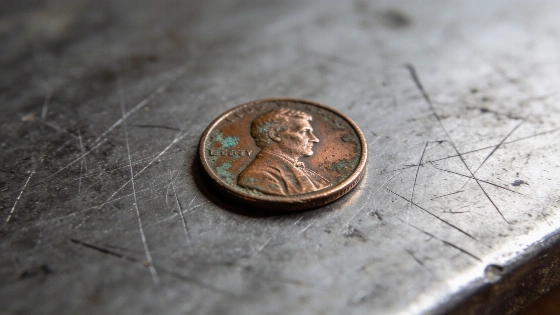
The Lincoln cent, first minted in 1909 and produced for circulation until 2025, is more than just a bit of metal. Its makeup-95% copper with tin and zinc until 1982, then a zinc core with copper plating at a standard 2.50 grams-shows both metallurgical skill and a willingness to adapt to changing metal prices (U.S. Mint coin specifications). Making this alloy takes mining, transport, smelting, and precise manufacturing. Its round shape and sharp designs make it clear this is a manufactured object, not something found in nature.
What the coin quietly tells us
The Lincoln cent carries more than just its metal. Letters and numbers, even if their meaning is lost, point to a written language and a way to record dates or values. The portrait of Abraham Lincoln-the first US president to appear on a circulating coin-suggests that honoring historical figures was part of national identity, even if the name means nothing to future finders. The fact that Lincoln's image stayed on the coin for over a century shows how coins can help shape collective memory, a pattern also seen in the euro area when the ECB chose designs for euro coins.
Looking at the coin's surface, an archaeologist could tell the designs were struck, not cast, hinting at mass production and a central minting authority. The uniformity would suggest that millions, maybe billions, of these coins once circulated, pointing to a large economy and a population used to standardized money. The word "cent," from the Latin "centum" for one hundred, reveals a decimal currency system, with the coin worth one-hundredth of a larger unit. This fits with global trends toward decimalization, tracked by the IMF in its currency surveys.
Material clues from a small coin
In the late 1960s, when the cent was still mostly copper, the US Mint made billions each year. In 1969 alone, over 5.4 billion Lincoln cents were struck. This required huge amounts of raw material and a national system to distribute coins across a vast country. The alloy-copper, tin, and zinc-shows the US had access to several minerals, either from its own land or through trade, and the means to combine them efficiently. Federal Reserve reports on coin demand and distribution highlight the scale and complexity behind this.
But the Lincoln cent is more than a technical product. Its continued use, even as inflation shrank its buying power, shows how physical money can linger for symbolic reasons. The cent survived as a denomination despite debates over its cost and usefulness, much like the 1982 No-P Roosevelt dime, where a small minting change created a rarity. In November 2025, the US Mint stopped making pennies for general circulation, but all earlier coins remain legal tender, as confirmed by the Treasury. In places like the US Virgin Islands, officials made clear that businesses could not refuse cash or round up payments just because of a penny shortage, keeping transactions fair even after the coin left active production.
What the coin can't answer
Even with all these clues, a single coin leaves questions. Would future archaeologists recognize it as money, or mistake it for a token or medal? Without context, the date, the portrait, or the coin's purpose might stay a mystery. Still, the technology and organization needed to make it would be obvious. The US Mint's 2026 output included large batches of special cent issues, showing the scale and standardization of American coinage even after regular penny production ended.
For numismatists and historians, the Lincoln cent is a snapshot of American economic and social history. Its design, metal, and survival reflect shifting priorities, new technology, and the pull of tradition. The Latin name and the cent sign (¢) tie it to a wider story of decimalization and monetary reform, themes that still shape currency systems around the world. The Federal Reserve's policy minutes and the IMF's currency reports both note the lasting effects of these reforms.
While the cent's face value stayed at one-hundredth of a dollar, its real buying power dropped sharply over time. In 1969, a cent could buy candy or a few minutes at a parking meter; by 2026, it was rarely used in daily transactions, and making it often cost more than its value. Yet the coin persisted, both as small change and as a symbol of continuity in US money. The Mint and Treasury kept issuing commemorative and special coins, including cent pieces for the 250th anniversary of the United States, sometimes featuring living presidents as part of special programs, reflecting changing policies on national symbols.
The Lincoln cent's story shows the tension between tradition and practicality in currency. Some countries have dropped low-value coins to simplify cash use, but the US debated and only recently ended the cent's production for circulation. This slow change comes from public sentiment, lobbying, and the symbolic weight of old denominations. The coin's survival, even as its usefulness faded, shows how money is shaped as much by culture and politics as by economics or technology. For more on global coin withdrawal and decimalization, see the IMF working paper on coin withdrawal.