The 1913 Liberty Head nickel and 1933 double eagle sit at the heart of a legal and historical puzzle, as unauthorized US Mint strikes continue to test what truly counts as a coin.
Few items in American numismatic history generate as much debate as the 1913 Liberty Head nickel and the 1933 $20 double eagle. Produced without official authorization, these coins have compelled collectors, legal authorities, and the US Mint to confront a fundamental question: when does a stamped piece of metal become a coin, and who has the authority to decide?
Despite their origins in secrecy and, at times, open defiance of mint protocols, these pieces have not been confiscated by the Secret Service nor subjected to definitive court rulings-at least in the case of the 1913 Liberty nickel. Their ambiguous status has allowed them to circulate among elite collectors, often commanding extraordinary prices and fueling legal disputes that have lingered for decades. The 1913 Liberty Head nickel, for instance, is recognized by the professional numismatic community as one of the rarest American coins, with only five known examples according to NGC and CoinHubMedia. The Eliasberg specimen, in particular, stands as a public benchmark in auction history, reflecting the ongoing commercial relevance of these coins at the highest levels of the collector market.
Legal status and unresolved ownership
The 1913 Liberty Head nickel was never officially issued by the US Mint, yet it was struck using genuine dies. This places it in the same category as coins clandestinely produced by mint night watchman Theodore Eckfeldt in the late 1850s. In both cases, the coins were made with official equipment but without authorization. No court has definitively ruled on whether these pieces are legal tender or simply stamped metal, and the Secret Service has not seized them. As a result, collectors and institutions continue to treat them as coins. The Buffalo nickel, which replaced the Liberty Head nickel in 1913, was produced in two types (Type 1 and Type 2), but these distinctions apply only to regular issues, not to the unauthorized 1913 Liberty Head nickels, underscoring the unique circumstances of their creation.
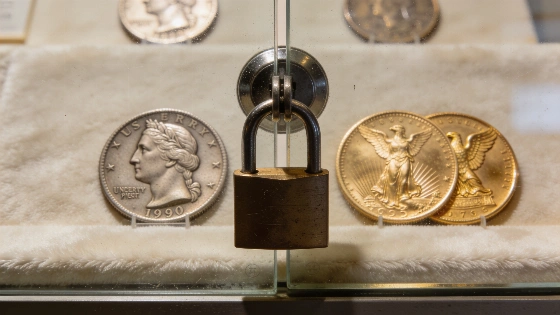
The 1933 $20 double eagle presents a more complex legal history. The King Farouk specimen was ruled to have been legally exported in 1944 and later sold at public auction in 2002. However, a 2016 court decision determined that ten additional examples held by the Israel Switt family in Philadelphia are government property. These coins were seized and remain in government custody. In 2026, eleven 1933 Double Eagles were publicly displayed at the ANA World's Fair of Money in Pittsburgh, with all specimens confirmed as federal property of the United States, according to CoinWeek. Persistent rumors suggest other specimens may be hidden in Europe, but no concrete evidence has emerged to confirm their existence.
Clandestine minting and family ties
Theodore Eckfeldt's activities at the US Mint are legendary among numismatists. He is credited with producing unauthorized restrikes of the 1804 Plain Edge, Draped Bust silver dollar and the 1827/3 Capped Bust proof quarter. The quarters were struck using an old, rusted 1819 reverse die, setting them apart from officially sanctioned coins. The full extent of Eckfeldt's clandestine minting remains uncertain, but his family's 130-year tenure at the Mint left a significant mark, culminating in the auction of the Eckfeldt Collection in 2017.
Not all 1804 silver dollars share the same origin. The so-called Class I "original" dollars were struck in the 1830s under Department of State authorization as diplomatic gifts. In contrast, Class II and Class III restrikes-attributed to Eckfeldt and others-were produced without official approval and sold privately to collectors. Class II coins are notable for their smooth edges, while Class III examples vary in edge lettering. The legal and collector context for these rare unauthorized issues is further detailed by the precedent set by the 1804 silver dollar restrikes, as outlined in modern numismatic histories and the GOVMINT historical review.
Unauthorized coin production and its consequences
Unauthorized use of mint equipment to produce coins is a federal crime, carrying penalties of up to 15 years in prison. While some error coins may result from accidental processes, others-such as coins struck on oversized planchets or the 2007 two-headed nickel-are clearly the result of deliberate action. The 1974 aluminum cent, though a legitimate pattern, left the Mint under questionable circumstances, further complicating the distinction between official issue and unauthorized escape. In numismatic forums, it is often noted that coins not lawfully released into circulation but struck at the Mint remain the property of the United States, as demonstrated by the confiscation of unauthorized aluminum cent trial strikes.
Despite the legal risks, inconsistent enforcement and the absence of clear judicial decisions have allowed many of these pieces to survive and even flourish in the collector market. Their status remains ambiguous, shaped as much by tradition and collector demand as by law. The Federal Reserve, as the central bank of the United States, does not recognize unauthorized strikes as legal tender, but the practical market treatment of these coins often diverges from official policy, reflecting the complex intersection of law, history, and collector sentiment.
Facts and figures
The 1913 Liberty Head nickel was never officially issued, yet five examples are known to exist, making it one of the rarest and most valuable US coins. The 1933 $20 double eagle saw one specimen legally exported and auctioned in 2002, while ten others were seized from the Israel Switt family and are held by the US government. Two additional specimens are housed in the Smithsonian Institution. The Class I 1804 silver dollars were struck in the 1830s for diplomatic purposes, while Class II and III restrikes appeared in the late 1850s and early 1860s, respectively. The ongoing rarity and auction performance of these coins are closely monitored by collectors and financial analysts, with some sales reaching into the millions of US dollars-a figure that can influence the broader collectibles market and even draw attention from financial regulators such as the US Treasury and the Internal Revenue Service.
Defining a coin in practice
The question of what constitutes a coin is not merely academic. As reported earlier, the definition of a coin continues to evolve, especially as technology and collector interests shift. In the United States, the absence of legal action against certain unauthorized strikes has allowed them to be treated as coins in practice, even if their legal status remains unresolved. This ambiguity has real consequences for collectors, museums, and the broader numismatic market. The European Central Bank (ECB) and the Bank of England (BoE) have both issued guidance on the legal status of currency and collector coins, emphasizing the importance of statutory authority and official issuance in determining legal tender status.
For collectors and institutions, the stakes are high. Owning an unauthorized coin can mean the difference between a prized asset and a potential legal liability. The market value of these pieces is driven not only by rarity and historical intrigue but also by the ongoing uncertainty surrounding their legitimacy. Until courts or lawmakers provide definitive answers, the boundary between coin and collectible will remain contested territory.
In numismatics, the distinction between legal tender and stamped metal is not always clear. The cases of the 1913 Liberty Head nickel, the 1933 double eagle, and the Eckfeldt restrikes show that official dies and minting equipment do not guarantee legitimacy. Instead, a combination of legal ambiguity, collector demand, and institutional inertia has allowed these pieces to occupy a unique place in currency history. For now, their status is defined as much by what has not happened-no seizures, no definitive court rulings-as by what has. This unresolved tension continues to shape the rare coin market and challenges anyone seeking a simple answer to what makes a coin a coin.
Within US coinage, legal tender status is determined by statutory authority, official issuance, and practical acceptance. While most coins are clearly defined by law and produced under strict controls, unauthorized strikes occupy a legal gray zone. The lack of enforcement or judicial clarity does not confer legitimacy, but it does create space for these pieces to circulate as de facto coins. For collectors, provenance, documentation, and institutional recognition are as important as the physical characteristics of the coin itself. As the numismatic landscape evolves, the debate over what truly counts as a coin is likely to persist, shaped by both legal developments and the shifting priorities of collectors and institutions.