A $3 million gilded bronze Victory statue by Augustus Saint-Gaudens now stands at the new Lipton Coins, Fine Art & Antiques gallery in Beverly Hills, where rare early US gold coins and landmark American currency are shown alongside fine art and antiques.
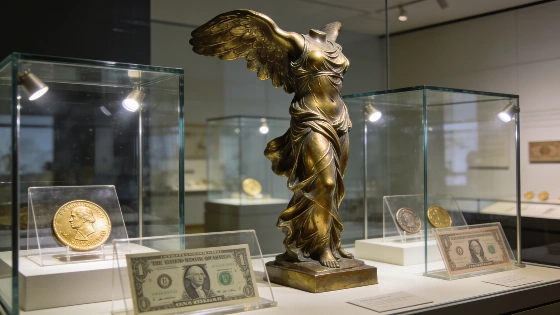
The new Lipton Coins, Fine Art & Antiques gallery in Beverly Hills opened with a bold statement: a three-and-a-half-foot gilded bronze Victory statue, valued at $3 million, now greets visitors at the entrance. This rare piece is a direct reduction of Augustus Saint-Gaudens' famous Victory figure. It connects American sculpture with the story of US coinage. Still, according to verified institutional sources, there is no independent public confirmation of the $3 million price tag for this Victory statue, and no official auction record for this example appears in recent market data, as noted by the Milken Institute / Milken Center for Advancing the American Dream.
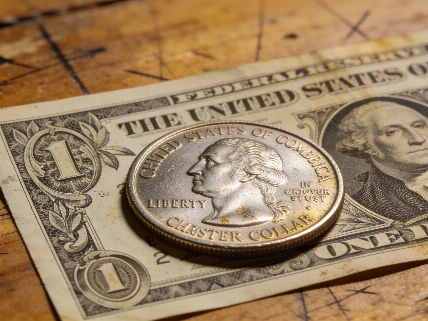
The gallery, at 9478 W. Olympic Blvd., brings together early US gold coins, landmark American currency, and fine art. But the Victory statue, with its roots in the Sherman Monument at New York's Grand Army Plaza, sets the tone right away. Saint-Gaudens' Victory inspired the striding Liberty on the $20 Double Eagle, a coin that still stands out in US history. The Double Eagle's appeal is clear in today's market. A 1926 $20 Saint-Gaudens PCGS MS67 was recently listed at $69,500, showing strong demand for top-grade coins, according to Tangible Investments.
Rare gold coins and historic currency on display
Collectors at the gallery see early American gold coins that rarely appear together. One highlight is an 1804 Capped Bust Right Eagle with a crosslet 4, graded PCGS MS62. This coin marks the last year of the first $10 gold coin era, before President Thomas Jefferson stopped production. There's also a 1796 Capped Bust Right Quarter Eagle with no stars on the obverse, graded NGC MS60. This is from the first year of the $2.50 denomination, with only 963 believed struck.
Another standout is the 1796/5 Capped Bust Right Half Eagle, graded NGC MS64. It was made by reworking a 1795 die. Only 6,196 were minted, and Mint State survivors of this overdate are among the hardest early $5 gold coins to find. The 1879 Flowing Hair $4 Stella, graded NGC PF65 Cameo, is also on view. Congress never put the four-dollar gold coin into circulation, but the Stella is one of the most recognizable US pattern coins. Fewer than 500 examples of the 1879 Flowing Hair issue are thought to survive.
The gallery's currency collection digs deep into American financial history. A newly found uncut $10-$10-$10-$20 Series 1882 Brown Back sheet from the First National Bank of Holdenville, which was in Indian Territory, is the only known $10-$10-$10-$20 Brown Back sheet from Indian Territory. Graded PMG Very Fine 30, it sold for $84,000 at auction. Other notable notes include an 1869 $100 Legal Tender Note (Friedberg 168), an 1891 $50 Treasury Note (Friedberg 376) from the Dean Oakes Collection, and a $100 Original Series National Bank Note from the Blackstone National Bank of Boston, which brought $120,000 in May 2024.
Local ties and historical finds
The gallery also shows a Series 1902 Red Seal $10 from the First National Bank of Puerto Rico at San Juan and a Friedberg 633 Series 1902 Plain Back $10 from the West Hollywood National Bank of Crescent Heights. The latter stands out for its local connection. Before this note surfaced, only one large-size note from the bank was known, and this example stayed with the original owner's family for nearly a century.
For those interested in how art and money meet, the Victory statue's backstory is as striking as its look. Saint-Gaudens started work on the Sherman Monument in 1892, and the finished monument appeared in 1903. The winged Victory, modeled by Harriette "Hettie" Eugenia Anderson, later inspired the striding Liberty on the $20 Double Eagle after President Theodore Roosevelt asked Saint-Gaudens to redesign US coins. The gallery's bronze reduction, made by Gorham Manufacturing Company starting in 1912, is one of only eight known. Five are in institutional collections, three in private hands. The importance of these designs is also seen at the "Shaping American Identity" exhibition at the Milken Center for Advancing the American Dream in Washington, D.C. That show opened on September 19, 2026, and features both the 1907 Gold U.S. $20 Double Eagle and the 1935 Buffalo nickel, along with their original models, as part of the story of American coinage reform, according to the Milken Institute / Milken Center for Advancing the American Dream.
Art, antiques, and the numismatic market
Lipton Coins, Fine Art & Antiques also offers expert evaluation and trading for precious metals, original fine art, decorative arts, and historic antiques, including original Tiffany Studios lamps. Gallery director Bryan Abbott says the gallery is a destination for collectors and anyone seeking expert appraisals of valuable objects. The gallery's approach matches trends in the collectibles market, where both material value and history matter. Macroeconomic factors like inflation expectations and central bank policy now shape the market. The Federal Reserve's recent rate moves and the effect on the US dollar have changed both bullion and numismatic premiums, as investors look for tangible assets during monetary tightening. The latest FOMC policy statement gives insight into the Fed's current stance and what it means for precious metals and collectibles.
The gallery's approach fits with what's happening elsewhere in the coin market. Rare objects and historical ties drive both interest and value. As reported earlier, rising precious metal prices have led mints to rethink collector coin strategies, showing how material value and history keep shaping the market. The European Central Bank (ECB) has also pointed out in its monthly bulletins that changes in euro-area inflation and exchange rates can affect demand for bullion and rare coins, especially as investors move away from fiat currencies during volatile times.
One of the gallery's most distinctive features is how it links American sculpture, numismatic history, and the wider world of art and antiques. The Victory statue, bought for $1,168,400 and now insured for $3 million, is a physical link between early 20th-century art and the lasting appeal of rare US gold coins. While the insurance value is high, collectors and appraisers should remember that official valuations for unique artworks follow strict standards, often using guidelines from the Internal Revenue Service and major auction houses.
Lipton Coins, Fine Art & Antiques is open Monday through Friday from 8 a.m. to 5 p.m. Evening and weekend visits are by appointment. For more details on current holdings and services, visit LCFAA.com or call 310-939-9399.
Saint-Gaudens and the Double Eagle
Augustus Saint-Gaudens' mark on US coinage is clearest in the $20 Double Eagle, first issued in 1907. The striding Liberty, based on the Victory figure, changed the look of US coins. President Theodore Roosevelt wanted more beautiful coins and chose Saint-Gaudens for the job. The Double Eagle is now seen as one of the most iconic US coins. The link between big public sculpture and everyday money is rare, which makes the Victory statue's place in a coin gallery especially meaningful for collectors and historians. The renewed interest in "classical" coin design, seen in public shows and dealer materials in 2026, keeps Saint-Gaudens and Roosevelt-era reforms at the center of American monetary identity, as noted by the Milken Institute / Milken Center for Advancing the American Dream.