Struck in just 8,000 pieces on a single day, the 1866 Liberty Seated Dime from Philadelphia stands as a rare survivor of America's turbulent Reconstruction period, reflecting both monetary upheaval and collector intrigue
In the aftermath of the American Civil War, the United States faced not only the challenge of national reconstruction but also a fractured monetary system. Among the coins produced during this period, the 1866 Liberty Seated Dime from the Philadelphia Mint stands out for its exceptionally low mintage and the historical context surrounding its creation. On January 31, 1866, the Mint struck just 8,000 business-strike dimes-an output that would make this coin one of the rarest Philadelphia issues of its era.
The economic landscape of 1866 was shaped by the lingering effects of war. The surrender at Appomattox in April 1865 marked the end of major hostilities, but the country remained deeply scarred. The assassination of President Abraham Lincoln days later left the nation without its leading advocate for reconciliation. Recent demographic research, including a 2024 study published in the Proceedings of the National Academy of Sciences, estimates Civil War deaths at approximately 698,000, with a range between 647,000 and 749,000. The South's economy was devastated, losing about two-thirds of its assessed wealth, not only from physical destruction but also from the emancipation of enslaved people, which removed a significant component from property valuations. The United States entered 1866 with a massive reconstruction bill and a monetary system in flux.
Monetary Upheaval and Coin Production
During the Civil War, the federal government issued Legal Tender Notes-known as greenbacks-to finance military expenditures. These notes, not convertible into gold or silver on demand, circulated at a discount to precious-metal coins. By March 1866, more than $423 million in greenbacks remained in circulation, and gold and silver coins had largely vanished from everyday transactions. Treasury Secretary Hugh McCulloch aimed to retire greenbacks and restore specie payments, but the transition was slow. The Philadelphia Mint responded by focusing on base-metal coins for daily commerce and producing large quantities of gold double eagles for institutional and international use. In 1866, the Mint also introduced the copper-nickel Shield Nickel, which would eventually replace the silver half dime.
Philadelphia's coin output that year was uneven. While 744,900 half dollars were struck, other silver denominations saw minimal production. The 1866 dime's business-strike mintage of 8,000 was especially small, and only 725 Proof dimes were made for collectors. This pattern reflected both the limited demand for silver coins in circulation and the Mint's shifting priorities during the monetary uncertainty of the Reconstruction era.
Die Varieties and Collector Rarity
All 8,000 business-strike 1866 Liberty Seated Dimes were produced on a single day, using a specific die pairing known as F-102. During the striking process, the obverse and reverse dies clashed, creating two distinct die states: F-102a (Perfect Reverse) and F-102b (Clashed Reverse). While both are sought after by specialists, F-102b examples are more prevalent among the highest-graded coins certified by major grading services.
Unlike larger denominations, the dime did not receive the "IN GOD WE TRUST" motto in 1866. Mint officials considered the coin too small to accommodate the inscription, making the 1866 dime a notable exception among that year's gold and silver issues. This design detail, along with its low mintage, adds to the coin's appeal for advanced collectors.
Survival Rates and Market Data
High-grade examples of the 1866 Liberty Seated Dime remain elusive. As of August 2026, the Professional Coin Grading Service (PCGS) reported 111 grading events for the regular 1866 dime, including three at the MS67 level and none higher. The Numismatic Guaranty Company (NGC) listed 58 grading events, with one coin at MS68. However, these figures reflect grading submissions, not unique coins, as resubmissions and crossovers can inflate totals. PCGS estimates that only about 400 examples survive in all grades, with roughly 50 in Mint State (MS60 or better) and just eight in MS65 or higher. This scarcity is underscored by the fact that most 1866 dimes entered circulation, and few were set aside in pristine condition.
Notable high-grade specimens include coins from the James Allaire Millholland Collection, which surfaced after more than a century in private hands, and the Dell Loy Hansen Collection. Many of the finest known examples display vibrant toning, while others, like the Hansen coin, are distinguished by frosty, untoned surfaces. Auction results for top-grade pieces have ranged from $3,960 to $12,925 in recent years, reflecting both rarity and collector demand. The 1866 Liberty Seated Dime's status as a Reconstruction-era rarity has drawn comparisons to other iconic U.S. coins, such as the 1933 Double Eagle, which was recently featured at a major numismatic event (see coverage of the 1933 Double Eagles gathering).
Design and Specifications
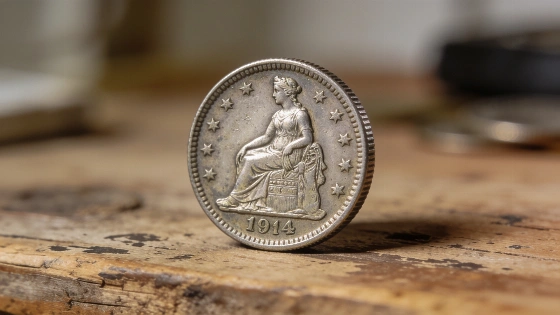
The 1866 Liberty Seated Dime features Liberty seated on a rock, holding a pole topped with a Phrygian cap and supporting a Union shield. The reverse displays the denomination "ONE DIME" within a cereal wreath of corn, wheat, maple, and oak leaves. The coin has a reeded edge, a diameter of 17.90 mm, and a weight of 2.48 grams, composed of 90% silver and 10% copper. The design, attributed to James B. Longacre, is a modification of earlier Seated Liberty motifs developed by Christian Gobrecht and others.
For collectors and historians, the 1866 Liberty Seated Dime encapsulates a moment when the United States was rebuilding its economy and monetary system. Its low mintage, distinctive die states, and survival challenges make it a key issue for those interested in the intersection of numismatics and American history.
The decision not to include the "IN GOD WE TRUST" motto on the dime in 1866 highlights the practical constraints faced by the Mint. While the motto was added to larger gold and silver coins that year, officials determined that the dime's small size made the inscription impractical. This exception illustrates how design, denomination, and historical context can intersect in the evolution of U.S. coinage.