
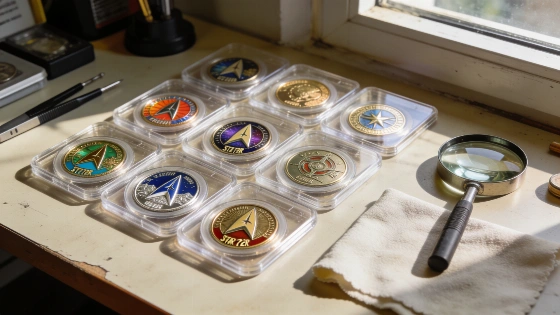
From Tuvalu to Canada, Star Trek-themed coins have become prized collectibles, blending pop culture with official currency. Explore how mints worldwide have issued legal tender coins celebrating the franchise's legacy and its impact on coin collecting
Few television franchises have left as deep a mark on global culture as Star Trek. Since its 1966 debut, the series has inspired generations with its vision of exploration, diversity, and technological optimism. While the original show struggled with ratings and was cancelled after three seasons, its syndication and devoted fan base transformed it into a lasting phenomenon. Over the decades, Star Trek expanded into multiple series, films, and a vast array of merchandise-including a remarkable range of official coins issued by mints around the world.
Star Trek's influence on numismatics is a testament to the franchise's enduring appeal and the willingness of mints to innovate with themes that reach beyond traditional historical or national subjects. The intersection of pop culture and currency has produced coins that are not only legal tender but also highly sought after by collectors and fans alike.
From TV Screens to Legal Tender
The first major Star Trek coins appeared in 2015, when the Perth Mint in Australia, under the authority of Tuvalu, issued a pair of 1 oz silver coins to mark the 50th anniversary of the original series. One featured a color image of Captain Kirk, while the other depicted the USS Enterprise NCC-1701. Both coins were legal tender in Tuvalu and came in distinctive packaging designed to resemble the show's transporter device. This set a precedent for subsequent releases, with mints embracing colorization, innovative shapes, and themed packaging to appeal to both numismatists and Star Trek enthusiasts.
The Perth Mint continued its series with coins honoring other captains and ships from the franchise, including Captain Archer and the Enterprise NX-01, Captain Janeway and the USS Voyager, Captain Picard and the Enterprise-D, and Captain Sisko with Deep Space Nine. Each release maintained a high standard of design, often featuring full-color portraits and detailed backgrounds. These coins, typically struck in 1 oz of pure silver, were issued in limited numbers and quickly became collectibles.
Canada's Royal Canadian Mint (RCM) has also played a leading role in Star Trek numismatics, leveraging the country's connection to actors like William Shatner and James Doohan. The RCM has produced a wide range of Star Trek coins, including a 2 oz silver coin in 2017 featuring all five main captains, with a glow-in-the-dark USS Enterprise and the Starfleet Delta Shield Insignia. Another standout is the 10 oz pure silver coin shaped like the original Enterprise, minted in 2017 with a mintage of just 1,000 pieces. The RCM's use of color, glow-in-the-dark effects, and unusual shapes has set new standards for commemorative coin design.
Innovation and Rarity in Modern Coinage
Star Trek coins are notable not only for their subject matter but also for their technical innovation. The world's first delta-shaped coin, issued by the RCM in 2016, was crafted from 1/2 oz of gold and featured the Starfleet Command Insignia. The Perth Mint has also experimented with antiqued finishes, as seen in its 2 oz silver coin honoring Lieutenant Worf, and with gold-plated pieces inspired by the fictional currency "Gold-Pressed Latinum" from Deep Space Nine.
Other mints have joined the trend. In 2023, the MDM Mint in Germany produced a $5 Starfleet Command coin for Samoa, finished with an antique look and blue coloration, limited to 1,701 pieces. Niue issued a 1 oz rectangular silver coin in 2025 featuring the theatrical poster for Star Trek II: The Wrath of Khan, with only 1,000 pieces minted. Even the Republic of Liberia has participated, releasing a $10 silver coin in 1997 depicting a Romulan Warbird from The Next Generation.
Many of these coins are produced in small quantities, often under 10,000 pieces, and some as few as 1,000. This scarcity, combined with the popularity of the franchise, has driven strong demand and secondary market premiums. For example, the RCM's gold delta-shaped coin has been listed for resale at prices ranging from $7,000 to over $14,000, far above its original issue price.
Facts and Figures: Star Trek Coins by the Numbers
Since 2015, at least a dozen official Star Trek coin series have been issued by national mints, with individual mintages ranging from 1,000 to 300,000 pieces. The 2017 RCM 10 oz Enterprise-shaped coin was limited to 1,000 units, while the 2016 RCM $20 silver Enterprise coin had a mintage of 300,000. The Perth Mint's 2016 gold delta-shaped coin was capped at 1,500 pieces. These figures highlight the blend of exclusivity and accessibility that characterizes the Star Trek numismatic market.
For collectors, the appeal lies not only in the coins' precious metal content but also in their artistry, innovation, and connection to a beloved cultural legacy. The use of advanced minting techniques-such as colorization, high relief, and unique shapes-has made Star Trek coins a showcase for what modern mints can achieve.
Global Reach and Cultural Impact
The international scope of Star Trek coin issues reflects the franchise's global fan base. Coins have been issued under the authority of Tuvalu, Canada, Samoa, Niue, Liberia, and others, each bringing its own approach to design and distribution. The RCM's focus on Canadian actors and the Perth Mint's emphasis on technical artistry demonstrate how national mints tailor their products to both local and international audiences.
Star Trek coins are part of a broader trend in commemorative coinage, where pop culture themes are used to attract new collectors and celebrate shared cultural milestones. This approach has parallels in other areas of numismatics, as seen in the coverage of rare and unusual coins such as the 1866 Nickel Quarter Eagle, which also blends history with collector intrigue. For more on how unique coins can spark debate and interest among collectors, see this analysis of a rare U.S. pattern coin: the story behind the 1866 Nickel Quarter Eagle.
While Star Trek coins are legal tender in their issuing jurisdictions, their primary value is as collectibles. Their prices on the secondary market are influenced by factors such as mintage, condition, packaging, and the popularity of the featured character or ship. As with all collectibles, buyers should be aware of the risks and do their research before purchasing, especially as new issues continue to appear in celebration of Star Trek's ongoing legacy.
Commemorative coins, such as those themed around Star Trek, occupy a unique space in the world of currency. Unlike circulating coins, which are produced for everyday transactions, commemorative issues are typically minted in limited quantities and sold at a premium above face value. Their legal-tender status is often symbolic, as they are rarely intended for actual spending. Instead, their appeal lies in their design, subject matter, and collectibility. National mints use these coins to showcase technical innovation, reach new audiences, and mark cultural milestones. For collectors, understanding the distinction between circulating and commemorative coins is essential, as it affects both the coins' market value and their role in the broader numismatic landscape.