
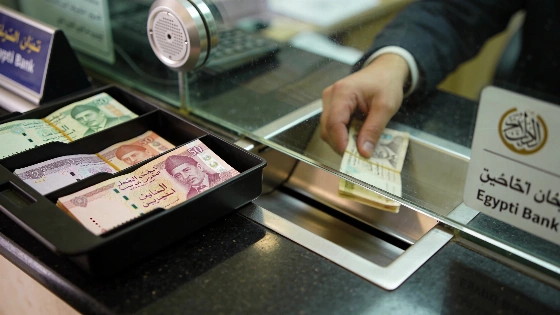
Saudi riyal cash rates in Egypt on 27 September 2026 show a notable spread between banks, with differences in both buying and selling prices affecting travelers, remittances, and cross-border payments
Walk into any Egyptian bank on 27 September 2026 with Saudi riyals in hand, and you would not get the same deal twice. The gap between the best and worst rates was hard to miss. Each bank set its own numbers for buying and selling. For travelers, people sending money home, and companies moving funds, these differences could add up fast.
There is no single fixed rate for the Saudi riyal (SAR) against the Egyptian pound (EGP). The Central Bank of Egypt gave official guidance for 23-24 September 2026, showing a tight range: about 13.72-13.75 EGP to buy, 13.71-13.84 EGP to sell. But these are just reference points. Banks are free to set their own rates. They do this based on their cash flow and what is happening in the market. The Central Bank of Egypt puts out these rates, but they do not force banks to follow them for cash deals at the counter.
Some banks stayed close to the average. Others broke away. The Industrial Development Bank posted 13.63 EGP per SAR to buy and 13.88 EGP to sell. The United Bank offered only 13.32 EGP per SAR for buying, but sold at 13.80 EGP. The National Bank of Kuwait went even higher, selling at 13.95 EGP per SAR. That was 0.17 EGP above what most banks charged.
Bank-by-bank breakdown
Recent rates show the Commercial International Bank (CIB) and Egyptian Gulf Bank both at 13.74 EGP per SAR for buying and 13.78 EGP for selling. Bank Misr and Alexandria Bank sold at 13.80 EGP per SAR, with buying rates at 13.74 and 13.72 EGP. The National Bank of Egypt and Al Baraka Bank both set buying at 13.72 EGP per SAR and selling at 13.78 EGP.
HSBC and Abu Dhabi First Bank (FABMISR) posted buying rates of 13.72 and 13.71 EGP per SAR, selling at 13.75 and 13.80 EGP. Credit Agricole paid 13.70 EGP for buying and sold at 13.79 EGP. The Arab African International Bank offered 13.66 EGP to buy and 13.80 EGP to sell. At the bottom, the Arab Egyptian Real Estate Bank paid 13.42 EGP for buying and sold at 13.78 EGP. United Bank had the lowest buying rate at 13.32 EGP per SAR.
This is not a new pattern. On 24 September 2026, Banque Misr and National Bank of Egypt, the two biggest state banks, quoted 13.65 EGP to buy and 13.71 EGP to sell. CIB posted 13.73/13.76 EGP. The spread in selling rates reached 0.05 EGP that day. This shows how banks compete and how their cash positions differ. On 23 September, some banks dropped buying rates to 13.22 EGP, while the top selling rate hit 13.76 EGP. The market was anything but uniform. See Al Borsa News for more details.
Implications for currency users
These gaps matter. A traveler changing 1,000 SAR could walk away with up to 630 EGP more or less, just by picking a different bank. For bigger transfers, the stakes are even higher. The wide range means it pays to shop around, especially for anyone moving large sums or making regular cross-border payments.
People getting remittances or paying for travel and business in Egypt should know that the rate at the counter is not always the same as the mid-market or online reference rates. Banks set their own margins. These can shift during the day, depending on how much cash they have and what the market looks like. No single rate means timing and bank choice matter. The International Monetary Fund (IMF) and Bank for International Settlements (BIS) both stress that clear rate-setting and enough liquidity are key for emerging market currencies.
Key data points
On 27 September 2026, the top buying rate for the Saudi riyal was 13.74 EGP per SAR. CIB, Egyptian Gulf Bank, and Bank Misr all offered this. The lowest was 13.32 EGP per SAR at United Bank. The highest selling rate was 13.95 EGP per SAR at National Bank of Kuwait. The lowest was 13.57 EGP per SAR at Abu Dhabi Commercial Bank and Faisal Islamic Bank. Most banks stayed between 13.74 and 13.80 EGP per SAR for both buying and selling. But the outliers made a real difference for customers.
These numbers are for cash at the branch. Card or electronic rates may be different and can include extra fees. Rates can change by the hour, by location, or by how much you want to exchange. By 25 September, the range had narrowed a bit. Most banks quoted between 13.74 and 13.80 EGP for both buying and selling. The market calmed down as the week ended.
Understanding bank rate setting
Egyptian banks set their own cash rates for foreign currencies like the Saudi riyal. They look at the interbank market, central bank advice, and their own cash needs. The mid-market rate is just a midpoint between wholesale buy and sell prices. Banks add a margin to cover costs and risk. This margin can get bigger if demand spikes, cash is tight, or the currency is jumpy. For travelers and businesses, picking the right bank is not just about saving time. It can mean real money. Central banks like the Federal Reserve and European Central Bank set policy rates and help keep markets liquid. Their moves shape global currency trends and affect how Egyptian banks set their rates.