The 1899 five dollar Silver Certificate with Running Antelope's portrait broke new ground in US currency. It set off decades of debate about identity, symbolism, and who gets shown on American money.
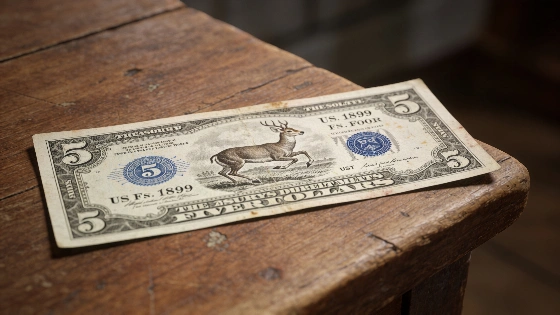
When the United States put Running Antelope, a Hunkpapa Lakota chief, on the 1899 five dollar Silver Certificate, it did more than launch a new banknote. The move set off a wave in American collecting, stirred up arguments about cultural representation, and left a complicated mark on US currency. Collectors now call it the "Chief" or "Indian Chief" note. It's one of the most prized and talked-about pieces of American paper money. This $5 Silver Certificate is one of the only US banknotes to show a real, named Native American leader. That makes it stand out in the country's monetary history, as detailed by Planet Banknote.
For years, people argued about who was actually on the note. Early collectors and writers got it wrong, sometimes calling him "Onepapa" or Hollow Horn Bear. Many missed the real reason he was chosen. This wasn't just about a name. It was about who the United States decided to put on its money during a time of big political and cultural shifts. The Federal Reserve, which later took charge of US monetary policy, has since stressed the need for accurate history in currency design. This fits with a wider push for openness in central bank communication.
The making of an icon
Putting Running Antelope front and center on the 1899 five dollar Silver Certificate was a first. Native American images had appeared on earlier US money, but this was the first time a real Native person was the main subject. The portrait came from an 1872 photo by Alexander Gardner, taken when Running Antelope visited Washington to meet President Ulysses S. Grant. But the Bureau of Engraving and Printing (BEP) changed the image. They swapped his original three-feather headdress for a bigger feathered warbonnet-likely Pawnee, not Lakota-to fit the note's design. The engraving was finished in November 1899. The change was made so the portrait would fit inside the ornate frame of the bill, according to Planet Banknote.
This artistic change blurred tribal lines and favored a generic "Indian" look over accuracy. The result was a strong but flawed symbol: a Native leader shown in regalia that probably wasn't his, on a note that spread widely while Native Americans were being forced onto reservations and their cultures were under attack. The Treasury's approach to banknote art at the time matched the government's push for assimilation and its policies toward Indigenous people.
Why Running Antelope? Collectors and historians have argued about it for years. Some say it was a gesture after the 1890 massacre at Wounded Knee. Others point to the availability of a good photo or the chief's reputation for diplomacy. The BEP had thousands of images to choose from. But Running Antelope's life-marked by negotiation and working with federal officials-fit the story policymakers wanted to tell. The Federal Reserve's later archives have shown how these design choices shaped public ideas about national identity.
Contested identity and symbolism
The note's design and subject sparked confusion and criticism. Early 1900s publications often misidentified the portrait, sometimes saying it was Hollow Horn Bear, another Sioux leader. This mistake kept showing up in numismatic books and even in obituaries, even though Gardner's photo clearly showed Running Antelope. The myth about Hollow Horn Bear grew because of his own fame and the common habit of mixing up Native identities in American culture.
The note's symbolism was also tangled up with fights over monetary policy. The 1899 five dollar Silver Certificate came out during a heated battle between gold and silver supporters. Silver certificates, which could be traded for silver instead of gold, were seen by "goldbugs" as less valuable or stable. Putting a Native American on a silver-backed note, not a gold one, reinforced old ideas about value, race, and who belonged at the top. The US monetary system was in flux. The Treasury and later the Federal Reserve had to balance bimetallism and the gold standard, as shown in the Federal Reserve's monetary policy archives.
Writers and historians have called the note both a high point in US paper money design and a sign of the era's racial ideas about strength and the "vanishing Indian." Collectors still love the portrait, but its legacy is complicated. As reported earlier, American currency history is full of mysteries and debates, and the "Chief" note is a prime example.
Market value and collector demand
The 1899 five dollar Silver Certificate has always been a top prize for collectors. The 100 Greatest American Currency Notes ranked it number ten. Auction results back this up. Circulated notes often sell for hundreds of dollars. High-grade examples have brought as much as $22,912.50 for a PCGS Gem New 67 PPQ in August 2017. Even lower-grade notes or those with common serial numbers get strong prices. The design has been copied on everything from magnets to replica sets from the US Mint. Auction records show a Gem New 66 PPQ sold for $6,600 in April 2018, showing strong demand for the best notes (Planet Banknote).
Collectors are drawn to the note's look and its story. The "Chief" note is the only US banknote series with a Native American as the main theme. Its story keeps inspiring research and debate, and it has led to corrections of old mistakes in numismatic circles. The note's appeal has lasted long after it stopped circulating. Modern auction catalogs and coin companies market it as both "beautiful and historic."
Running Antelope's life and legacy
Running Antelope was born in 1821 in what is now South Dakota. He became a leader of the Hunkpapa Lakota. He signed the Second Treaty of Fort Laramie in 1868, got a peace medal, and was known for his speeches and for working with US officials. In his later years, he grew frustrated by broken promises and the loss of the buffalo. He died between June 1896 and June 1897. He never knew his image would end up on American money, or that it would become a symbol of both recognition and appropriation. The Federal Reserve's historical research division has pointed out the importance of such figures in the bigger story of US economic and cultural change.
The story of the 1899 five dollar Silver Certificate is about more than a banknote. It's about how money, identity, and memory collide. The choices made in its design, the arguments over its subject, and its lasting value all show how currency can become a battleground for national stories and historical reckoning. As collectors keep chasing the "Chief" note, they also face the unresolved questions and contradictions it brings up.
Silver Certificates were a product of their era, created in response to the political and economic fights of the late 1800s. Unlike gold-backed notes, Silver Certificates could be traded for silver dollars. This reflected the Free Silver Movement and the ongoing debate over the country's monetary standard. Choosing to put Running Antelope on a silver-backed note, not a gold one, was no accident. It matched the attitudes of the time about value and hierarchy, and it helped cement the note's place in both collecting and the wider story of American identity. The Federal Reserve and the Treasury have since moved away from precious metal-backed money. Silver Certificates stopped being redeemable for silver dollars in March 1964, and final redemption in silver granules ended in 1968 (Planet Banknote).
Banknote design is never just about looks. Every choice-from who is pictured to the symbols and materials-carries political, cultural, and economic meaning. The 1899 five dollar Silver Certificate, with its changed portrait of Running Antelope, shows that money is both a tool for trade and a canvas for contested ideas. Its legacy lives on in collections, auction records, and in the ongoing debates about who gets shown on money, and why. Central banks around the world, like the European Central Bank and the Bank of England, still wrestle with these same questions in their own currency redesigns.
In US currency history, the "Chief" note is rare. It's one of the few times a real Native American was the main subject. Earlier notes and coins usually used generic or symbolic Native images. The 1899 five dollar Silver Certificate marked a move toward showing real people-though filtered through the design choices and cultural views of its time. The note's lasting popularity and the debates over its accuracy and meaning show how money can shape and reflect national identity.
Silver Certificates and the politics of value
Silver Certificates came about in the late 1800s during a fight over the US monetary standard. The Coinage Act of 1873, called the "Crime of '73," removed silver from official money and set off protests from miners, farmers, and others who wanted "free silver." The Bland-Allison Act of 1878 brought back silver dollars and allowed Silver Certificates, which could be traded for silver coins. The Sherman Silver Purchase Act of 1890 made the government buy even more silver and increased Silver Certificate production. The Treasury and, after 1913, the Federal Reserve, kept a close eye on these changes, tracking the money supply and inflation through the Consumer Price Index and other measures.
The 1899 five dollar Silver Certificate came out during this time of monetary change and political fights. Its design, with Running Antelope, reflected both artistic choices and the economic realities of the day. The note stayed in circulation until 1923, when a new design with Abraham Lincoln took its place. Today, the "Chief" note is a top collectible, valued for its rarity, looks, and the layered history behind it.
Banknotes are more than just payment tools. They are artifacts shaped by politics, economics, and culture. The story of Running Antelope and the 1899 five dollar Silver Certificate shows how money can become a place where identity, memory, and value are argued over. As the market for old US currency keeps changing, the lessons of the "Chief" note still matter.
Silver Certificates were a special kind of US paper money, issued from 1878 to 1964, and could be traded for silver dollars or bullion. The 1899 five dollar Silver Certificate, with Running Antelope, was made from fiscal years 1900 to 1926, except for 1919 and 1920. Top-grade examples have sold for up to $22,912.50 at auction. Even circulated notes often bring hundreds or thousands of dollars. The note was replaced in 1923 by a new design with Abraham Lincoln. The Federal Reserve's records confirm that redemption for silver dollars ended in March 1964, with final settlement in silver granules in 1968.
Banknote images have long shaped national stories and reinforced social hierarchies. Using Native American figures on US money goes back to colonial times, when designers borrowed European "Wildman" images and cast Native people as symbols of savagery or progress. The 1899 five dollar Silver Certificate broke from allegory, but its changed portrait and the debates it sparked show the ongoing tension between recognition and appropriation. Learning the history of this note gives insight into how currency design and the politics of representation work.