
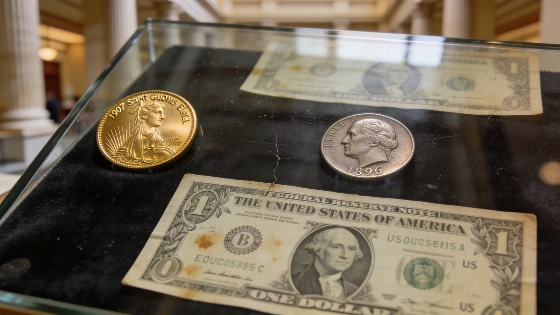
A major Washington exhibition brings together the Saint-Gaudens Double Eagle, Buffalo Nickel, and 1896 Educational Series notes, exposing the artistic ambitions and political motives behind America's most famous currency designs.
At the Milken Center for Advancing the American Dream in Washington, visitors now face a rare sight. The Saint-Gaudens Double Eagle, the Buffalo Nickel, and the 1896 Educational Series notes are on display-not just as old money, but as the result of bold artistic and political choices. For the first time, these famous pieces of American currency appear next to the original sculptures, paintings, and design sketches that shaped them. Collectors and the public are asked to look again and rethink what these objects really mean. The show is at 1503 Pennsylvania Ave NW, Washington, DC 20005. It runs from 10:00 to 17:30, closed Tuesdays and Wednesdays, according to the Milken Institute. This is the only stop for the exhibition, which was put together with the U.S. Department of the Treasury, the Bureau of Engraving and Printing, the United States Mint, and Freedom 250.
The exhibition, called Shaping American Identity: The Art of the US Department of the Treasury, opened September 19, 2026, and will run until January 18, 2027. Entry is free, but you need a ticket. The show brings together coins, banknotes, original art, wartime posters, and architectural drawings-many rarely seen together. It gives a sweeping look at how Treasury engravers, sculptors, and artists helped shape the country's image through money and public art. Original works by Norman Rockwell and N.C. Wyeth are on view, showing how fine art and federal currency design have always been linked.
Currency as national ambition
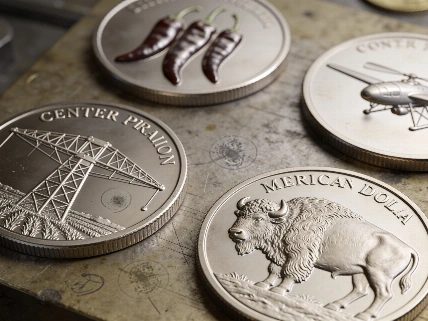
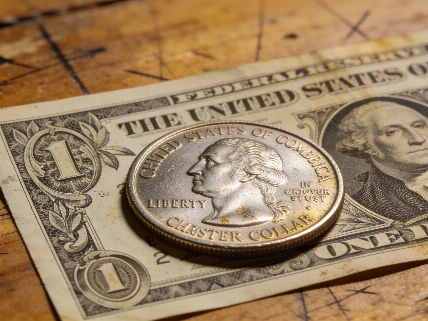
The 1907 Saint-Gaudens $20 Double Eagle and the 1935 Buffalo Nickel sit at the center of the show. Both coins changed the look of American money. President Theodore Roosevelt asked Augustus Saint-Gaudens to design the Double Eagle. He wanted a coin as beautiful as anything from ancient Greece. The high-relief Liberty and eagle were so detailed that the US Mint could only make about 12,000 of the original version before switching to a lower-relief design, according to official U.S. Mint records. Today, the Double Eagle is seen as a high point in American coin art. Its rarity draws collectors and historians. The Federal Reserve has pointed out that iconic designs like these help build public trust in the stability and legitimacy of U.S. currency. That trust still matters as digital payments and new money systems change how Americans use cash.
The Buffalo Nickel, designed by James Earle Fraser and released in 1913, brought a new realism to everyday coins. Its Native American portrait and bison became instantly familiar, and the coin stayed in production until 1938, as the U.S. Mint documents. The exhibition shows these coins with the original plaster and metal casts, making clear their roots in fine art. The images on these coins have shaped how people abroad see American money, too. The U.S. dollar's look is often discussed in international forums, including the International Monetary Fund (IMF).
Paper money gets equal attention. The 1896 Educational Series Silver Certificates-$1, $2, and $5 notes-are shown with the paintings by Will H. Low, Edwin H. Blashfield, and Walter Shirlaw that inspired their designs. These notes, with scenes like History Instructing Youth and Science Presenting Steam and Electricity to Commerce and Manufacture, are seen as landmarks in American currency. The exhibition makes it clear: before these images became engravings, they started as big, neoclassical paintings. Treasury officials once saw currency as a canvas for national ideals. The Bureau of Engraving and Printing's job of turning these artworks into secure, mass-produced notes is still a key part of U.S. anti-counterfeiting efforts, a topic that comes up often in Federal Reserve monetary policy updates.
Beyond coins and notes
The Treasury's reach went far beyond money. During both World Wars, the department ordered posters to get Americans to buy government bonds. The show includes works by James Montgomery Flagg, N.C. Wyeth, Betsy Graves Reyneau, and Norman Rockwell. Rockwell's Freedom of Speech from the Four Freedoms series helped raise nearly $133 million in war bonds during a national tour in 1943 and 1944. Reyneau's 1943 Keep Us Flying! poster, showing Tuskegee Airman Robert W. Deiz, is another highlight. The Smithsonian lists it as a Treasury-commissioned war-bond image. These posters show how Treasury art could move people to act, not just decorate money. The Federal Reserve Bank of St. Louis has studied how these campaigns affected U.S. savings rates and Treasury bond yields, showing the link between public mood and government finance during tough times.
One of the biggest pieces in the show is the 1893 World's Columbian Exposition Presentation Frame. This six-by-nine-foot gilded frame, topped with the Columbus family crest, holds copies of banknotes, stamps, and engraved scenes. It was made to show off American engraving at a time of big industrial dreams. The frame is a reminder of the pride once tied to government printing and design.
The exhibition also looks at the Treasury's role in shaping federal buildings and public art during the Great Depression. Works by Louis Lozowick, Santos Zingale, and Mitchell Jamieson, made under New Deal art programs, are shown with photos of federal buildings managed by the Treasury's Office of the Supervising Architect. Many courthouses and post offices from that era still show the mark of these programs, which aimed to make public spaces reflect American values and hopes. The Bank for International Settlements (BIS) has noted that spending on public infrastructure like this can have long-term effects on a country's economic strength and currency stability.
Numbers and legacy
The 1907 Saint-Gaudens Double Eagle's high-relief version had a mintage of about 12,000 coins before the Mint switched to a lower-relief design. The Buffalo Nickel, first issued in 1913, stayed in use until 1938. The 1896 Educational Series included $1, $2, and $5 notes, each with detailed allegorical art. During the 1943-1944 national tour of Norman Rockwell's Four Freedoms paintings, nearly $133 million in war bonds were sold, according to the Franklin D. Roosevelt Presidential Library and Museum. These numbers show just how much the public engaged with Treasury projects, which have shaped both savings rates and demand for U.S. government securities, as tracked in Treasury auction results.
For collectors and historians, the exhibition is a rare chance to see these objects in their full artistic and historical setting. The Milken Center's approach recalls the kind of deep dives seen in earlier breakdowns of numismatic puzzles, but here the focus is on how official images shaped what Americans think about money itself.
Currency as cultural infrastructure
The Milken Center calls Shaping American Identity the first show to bring together this group of publicly funded artworks. It also ties in with the Center's permanent displays, which include wampum, Civil War currency, and a rai stone, widening the story of what counts as American money. The Center will add to its programming with Be the People, an exhibition opening October 2, which will look at moments that shaped American ideas of liberty and citizenship, including research on Thomas Jefferson's edits to the Declaration of Independence. The Center has also started hosting US naturalization ceremonies, with 50 people taking part on September 17, Constitution Day and Citizenship Day.
By putting coins, notes, posters, and public art into one story, the exhibition pushes back against the idea that money is just for trade. It shows how the US Treasury used its power not just to make currency, but to shape the country's look and civic identity. For anyone interested in art, politics, or finance, this is a rare look at how American money is made-and a reminder that every coin and note carries a story much bigger than its face value.
The US Treasury's approach to currency design has always gone beyond technical needs or anti-counterfeiting. From the bold relief of the Saint-Gaudens Double Eagle to the sweeping allegories of the Educational Series notes, these pieces were meant to show ideals of liberty, progress, and unity. Treating currency as public art was a choice-one shaped by politics, artists, and big ambitions. Now, as digital payments and new forms of money change how value moves, these designs remind us that the meaning of money is never set. It is argued over, changed, and, above all, designed.