
A 2026 Donald J. Trump $1 coin featuring an unannounced 'July 4th' privy mark has been found ahead of the US Mint's public launch, raising questions about mintage, distribution, and collector value as the Semiquincentennial approaches
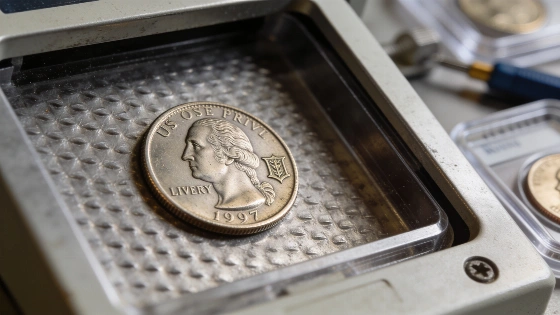
Collectors received an unexpected surprise days before the US Mint's scheduled release of the 2026 Donald J. Trump $1 coin. According to CAC Grading, Heritage Auctions numismatist Rene Alvarenga discovered a previously unannounced version of the coin featuring a 'July 4th' privy mark. This discovery, made inside an Advanced Delivery roll, was certified by CAC as MS64 and labeled as the 'July 4th Privy,' 'Discovery Coin,' and 'Advanced Delivery.' Heritage Auctions has announced plans to donate this specific coin to the American Numismatic Association (ANA), giving it a unique provenance before the standard coins even reach the public.
Privy Mark Details and Design
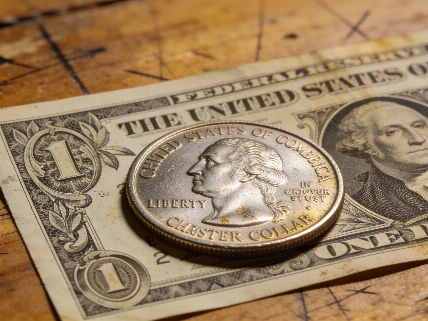
The 'July 4th' privy mark appears on the obverse, positioned to the left of Donald J. Trump's portrait, directly above a five-pointed star. The small, two-line inscription reads 'JULY 4th' and is recessed into an area that remains blank on the standard issue. The rest of the obverse follows the regular 2026 design, with 'LIBERTY' arcing above the portrait, 'IN GOD WE TRUST' at the right, and the dual date '1776 ~ 2026' along the lower edge. The obverse was designed by US Mint Chief Engraver Joseph Menna, based on an official White House photograph by Daniel Torok. The reverse features the Presidential Seal, with an eagle clutching an olive branch and arrows, and a shield marked '250.' Inscriptions include 'E PLURIBUS UNUM,' 'UNITED STATES OF AMERICA,' and 'ONE DOLLAR.' CAC's images confirm that the reverse design remains unchanged for the privy-marked coin.
Unanswered Questions on Mintage and Distribution
The timing of this discovery is significant. Alvarenga found the coin before the Mint's planned September 2 public launch of standard Trump dollar rolls and bags. CAC Grading has indicated that only a limited number of these privy-marked coins will be released alongside regular issues, but the US Mint has not yet provided details on the total mintage or distribution method for the 'July 4th' privy dollars. As of August 26, the Mint's product information does not specify how many of these coins will be produced or whether they will appear in both rolls and bags. Collectors are advised to treat early marketplace listings and mintage estimates with caution until official figures are released.
The standard 2026 Donald J. Trump $1 coin will be available to collectors in 25-coin rolls priced at $61 and 100-coin bags at $154.50, with product limits of 150,000 rolls and 50,000 bags. However, these limits apply only to the standard coin and do not clarify the number of 'July 4th' privy coins. The coins are produced at the Philadelphia Mint without a mint mark, using a manganese-brass alloy (6% zinc, 3.5% manganese, 2% nickel, balance copper) and carry a circulating finish. Despite their golden color, they contain no gold and remain legal tender.
Context: Semiquincentennial Coin Programs
This is not the first time the US Mint has introduced a special 'July 4' coin for the Semiquincentennial. Earlier in 2026, the Mint struck 250,000 Declaration of Independence Quarters with a similar privy mark, distributing them randomly through Federal Reserve shipments and sparking a nationwide search. However, there is no confirmation that the Trump dollar privy will follow the same distribution model or mintage. The precedent set by the quarter does not guarantee a similar approach for the dollar coin, and collectors should avoid assuming a 250,000-coin mintage or identical release strategy.
The discovery also coincides with the ANA's 2026 World's Fair of Money, held from August 25 to 29 in Pittsburgh, Pennsylvania. Heritage Auctions, an ANA event partner, will donate the first-discovered privy dollar to the ANA, placing this coin at the center of the numismatic community's attention during the year's most prominent coin gathering. The 'Discovery Coin' label applies only to this specific MS64 example, as it documents the first reported instance of the variety. Other 'July 4th' privy dollars, even if identical in design, will not share this unique provenance.
Market Implications and Collector Risks
At this stage, the market has little information about the supply or distribution of the 'July 4th' privy Trump dollars. Collectors have not yet had the opportunity to examine standard September 2 products in significant numbers, and early offers for such modern rarities often reflect initial excitement rather than established value. The eventual importance of these coins will depend on confirmed mintage, distribution channels, and how frequently collectors encounter them. Certified condition and population reports from grading services like PCGS, NGC, and CAC Grading will also influence long-term interest.
For now, the main significance lies in the appearance of a new variety before the standard coin's public launch, directly tied to the United States' 250th anniversary and the Mint's ongoing experimentation with special circulating coinage. This development echoes other high-profile numismatic events, such as the upcoming gathering of all 1933 Double Eagles at the World's Fair of Money, which will showcase over $100 million in rare coins and currency and highlight the evolving landscape of American coin collecting (see coverage of the 1933 Double Eagles event).
As the September 2 launch approaches, collectors and dealers will be watching closely for further details from the US Mint regarding the 'July 4th' privy program. Until then, caution is warranted when interpreting unofficial figures or early market prices.
The distinction between product limits and mintage limits is crucial for understanding modern US coin releases. A product limit refers to the maximum number of units (such as rolls or bags) the Mint offers for sale under a specific product code, while a mintage limit sets the total number of coins produced for a given design or variety across all products. These figures are not interchangeable, and confusion between them can lead to misunderstandings about rarity and collector value. For special issues like the 'July 4th' privy Trump dollar, only official Mint disclosures can clarify how many coins exist and how they will be distributed.