A single 1894 S Barber dime has sold for 1.25 million dollars at auction, highlighting the extreme rarity and enduring intrigue of this historic US coin. The Norweb specimen's return to the market after 36 years has reignited debate among collectors
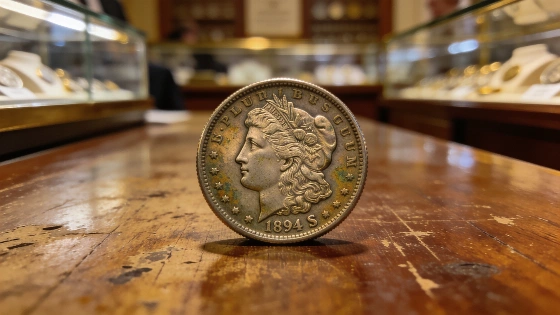
The Norweb specimen of the 1894 S Barber dime has sold for $1,250,500 at Stack's Bowers Galleries' Summer 2026 Global Showcase Auction. This is the first time in more than 30 years that this particular coin has come to public auction, drawing immediate attention from collectors and investors (Smithsonian Magazine).
Only 24 of these dimes were struck at the San Francisco Mint in June 1894. Three were set aside for assay, leaving just 21 released. Today, only nine are confirmed to exist. This makes the 1894 S Barber dime one of the rarest coins in American numismatics, a reputation recognized by Stack's Bowers and the Smithsonian. Even experienced dealers rarely see one in person.
Why the 1894 S Barber Dime Stands Out
The Norweb specimen is graded Proof-63 by the Professional Coin Grading Service and has approvals from both the Certified Acceptance Corporation and Certified Market Quality. It had been privately held for decades, most recently in the Charles Litman collection, which explains its long absence from the auction scene (Smithsonian Magazine). Its return after 36 years has renewed interest in the story behind the original 24 coins.
Collectors have debated for years why so few 1894 S Barber dimes were made. Some suggest accounting quirks at the San Francisco Mint, while others think they may have been struck as gifts for bankers or officials. No clear answer has emerged, and the coin's origins remain a topic of discussion among numismatists. The Federal Reserve has noted that such unusual coin issues are rare but not unheard of in US monetary history.
Market Impact and Collector Interest
The $1,250,500 sale puts the Norweb specimen among the most valuable US dimes ever sold. The 1894 S Barber dime ranks No. 4 in Jeff Garrett and Ron Guth's 100 Greatest U.S. Coins, reflecting its ongoing appeal. Stack's Bowers reports that only five examples have come to market since 2005, with prices ranging from about $1.3 million to $2.16 million. The coin's value has consistently outpaced inflation, showing both its rarity and the strong competition among collectors for pieces like this (Smithsonian Magazine).
In the world of rare coin auctions, the sale of the 1894 S Barber dime joins other high-profile events, such as the million-dollar Eisenhower dollar covered in our earlier breakdown. These sales show that buyers are willing to pay large sums for coins with unique stories and clear provenance, even as the market for more common coins stays quiet. The International Monetary Fund (IMF) has observed that collectibles like rare coins often serve as alternative stores of value during times of currency volatility or low bond yields.
Facts and Figures
Of the 24 dimes struck in 1894 at the San Francisco Mint, only nine are confirmed to survive as of 2026. The Norweb specimen's Proof-63 grade puts it among the best-preserved examples, with only a few others in similar or better condition. The $1,250,500 sale is a major jump from previous auction results: the coin last sold in 1990 for $93,500 and in 1987 for $77,000 (World Journal). Its value has grown much faster than the Consumer Price Index over the past 30 years. Official CPI data is available from the US Bureau of Labor Statistics in the CPI database.
Understanding Numismatic Rarity
In coin collecting, rarity depends on more than age or denomination. It's shaped by how many were made, how many survive, and how much collectors want them. The 1894 S Barber dime is a clear example: very few were minted, even fewer survive, and its story continues to attract attention. Unlike coins that become rare over time, the 1894 S was rare from the start, and every auction appearance is a major event.
The high price for the Norweb specimen will likely spark more debate and speculation, but it also shows that the rare-coin market is driven by story and provenance as much as by metal content or face value. For collectors, the 1894 S Barber dime remains a top prize-not just for its scarcity, but for the mystery that still surrounds its creation and survival. The Bank for International Settlements (BIS) has noted that scarcity, provenance, and market psychology can push asset prices far beyond their intrinsic value, as seen in this record-setting sale.
The story of the 1894 S Barber dime shows how numismatic value is built from history, documented ownership, and collector psychology. Unlike bullion coins, whose value follows metal prices, ultra-rare collectibles like this dime are valued for their unique mix of supply, demand, and story. As long as questions about its origins remain and so few examples exist, the 1894 S Barber dime will continue to draw attention and high prices whenever it appears.