

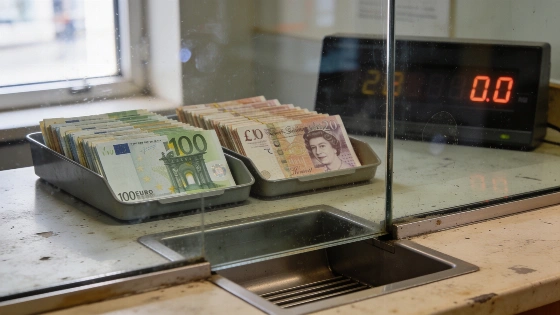
The British pound slipped against the euro after UK inflation data failed to boost Sterling, while persistent Eurozone price pressures reinforced expectations that the European Central Bank could maintain a tighter policy stance.
The British pound lost ground against the euro on Wednesday, with the GBP/EUR exchange rate falling to 1.1654 by the close. This move reversed much of Sterling's recent gains, as the euro found renewed support from firm inflation data in the Eurozone. In contrast, the latest UK inflation figures offered little to strengthen the case for further Bank of England tightening, leaving the pound exposed to shifts in market sentiment.
Inflation Data and Central Bank Expectations
July's UK inflation report showed headline consumer prices rising from 2.6% to 2.9% year-on-year, in line with market forecasts. However, the details revealed that services inflation eased and producer input prices dropped sharply, suggesting that underlying price pressures may be moderating. Combined with a recent labour-market report showing unemployment steady at 4.9% and private-sector wage growth cooling, the data did little to shift expectations for Bank of England policy. Analysts noted that these figures are unlikely to prompt a change in the central bank's current stance.
Meanwhile, the euro benefited from confirmation that Eurozone inflation remained at 2.9% in July, with core inflation at 2.5%. These figures reinforced the view that the European Central Bank may need to keep policy tighter for longer to contain persistent price pressures. As a result, market participants continued to expect the ECB to maintain a cautious approach, supporting the euro against its major peers.
Exchange Rate Movements and Market Drivers
According to live market data, the GBP/EUR rate declined by 0.32% to 1.165621, while the euro also strengthened against the US dollar, with EUR/USD rising 0.87% to 1.167575. The pound's performance against the dollar was more resilient, with GBP/USD up 0.55% at 1.36095. The drop in GBP/EUR brought the pair close to its August low, after spending much of the previous week near 1.1700. Analysts observed that Sterling's earlier support from carry demand-where investors seek higher-yielding currencies-was not enough to offset the impact of softer UK data and firmer eurozone inflation.
Looking ahead, the near-term direction of GBP/EUR will likely depend on upcoming economic releases. UK retail sales data due Friday is expected to show a 0.5% decline, while manufacturing and services PMIs are forecast to soften. In the euro area, German producer prices and flash PMIs from France, Germany, and the wider Eurozone will be closely watched, alongside updated wage data. A combination of weak UK spending and resilient Eurozone activity could push GBP/EUR towards 1.1600, while stronger UK figures or softer Eurozone data could see the pair rebound towards 1.1720. A sustained move below 1.1650 would signal a more defensive outlook for the pound against the euro.
Key Figures and Economic Context
On Wednesday, the GBP/EUR exchange rate closed at 1.1654, down 0.32% on the day. UK headline inflation for July was 2.9% year-on-year, matching expectations, while Eurozone inflation also stood at 2.9%. The euro's gains were supported by core inflation holding at 2.5%, reinforcing expectations that the European Central Bank may keep policy tight in the coming months. UK unemployment remained at 4.9%, and private-sector wage growth continued to cool, reducing pressure on the Bank of England to raise rates further.
For readers tracking currency movements, it is important to note that the rates cited here reflect interbank or reference rates, which may differ from the rates available to consumers or businesses making international payments. Actual conversion rates for cash, card, or transfer transactions typically include additional margins or fees.
Inflation data plays a central role in shaping expectations for central bank policy, which in turn influences currency values. When inflation remains above target, central banks may be more likely to keep interest rates higher to contain price growth. However, if underlying pressures appear to be easing, policymakers may pause or slow further tightening. In the case of the pound and euro, the relative outlook for Bank of England and European Central Bank policy remains a key driver of the GBP/EUR exchange rate, alongside broader economic trends and market sentiment.