Bank of America forecasts the Polish zloty will gain ground against major currencies from the fourth quarter, as the US dollar is expected to lose strength. The outlook highlights key policy factors and intervention risks for PLN watchers.
Bank of America anticipates that the Polish złoty (PLN) will begin to appreciate against major currencies in the final quarter of 2026, as the US dollar (USD) is expected to weaken after the third quarter. According to a report from Bank of America, the main driver behind this outlook is the anticipated shift in global currency dynamics, with the dollar likely to lose momentum as US monetary policy enters a new phase. The bank's analysis suggests that the interest rate gap between the National Bank of Poland (NBP) and the European Central Bank (ECB) is already reflected in current market pricing, reducing the likelihood that further rate moves will significantly affect the EUR/PLN exchange rate in the near term.
Policy Factors and Market Expectations
Both the NBP and the ECB have adopted relatively hawkish stances in recent months, with markets already pricing in the possibility of further tightening. However, Bank of America argues that these expectations are now largely embedded in the EUR/PLN rate, limiting the scope for additional currency movement based solely on policy divergence. Instead, the bank points to the broader trend of a weakening US dollar as the primary factor that could support the złoty's appreciation later in the year. This view aligns with recent developments in other currency pairs, such as the British pound's gains against the dollar, which have been supported by shifting yield differentials and changing investor sentiment. For example, the recent rise in the pound sterling against the US dollar has been attributed to similar factors involving interest rate expectations and global monetary policy shifts.
Intervention Risks and Short-Term Uncertainty
While the medium-term outlook for the złoty appears constructive, Bank of America notes that concerns about potential interventions by Bank Gospodarstwa Krajowego (BGK), Poland's state development bank, could limit near-term weakness in the currency. BGK has a mandate to support government policy objectives, and its actions in the foreign exchange market can influence short-term PLN volatility. As a result, the risk of intervention may discourage aggressive positioning against the złoty, even if short-term pressures emerge. The bank maintains a bullish stance on the Polish currency but cautions that the timing and scale of any appreciation will depend on how global and domestic factors evolve through the remainder of 2026.
Facts and Figures: Recent PLN Performance
In the first half of 2026, the EUR/PLN exchange rate has traded within a relatively narrow range, with the złoty fluctuating between 4.25 and 4.40 per euro based on daily reference rates published by the National Bank of Poland. Against the US dollar, the PLN has shown resilience, with the USD/PLN rate moving from around 4.10 at the start of the year to approximately 3.95 by late June. These movements reflect both domestic monetary policy and broader shifts in global risk appetite, as well as the evolving outlook for US interest rates.
Understanding Central Bank Influence
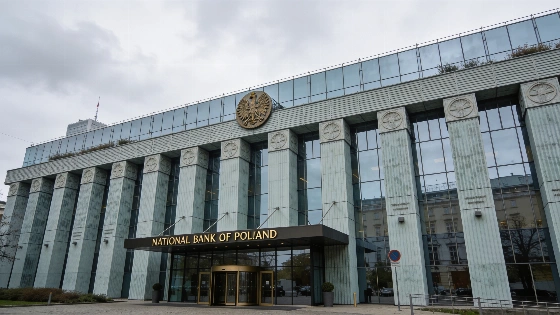
Central banks play a critical role in shaping currency values through their policy decisions, communication, and, in some cases, direct intervention. The National Bank of Poland sets the country's main policy rate and provides guidance on future monetary conditions, while the European Central Bank does the same for the euro area. When both institutions signal similar policy directions, the impact on the EUR/PLN exchange rate may be muted, as markets have already adjusted to the expected path. However, unexpected changes in policy, or interventions by institutions such as Bank Gospodarstwa Krajowego, can introduce volatility and alter the currency's trajectory. Understanding these mechanisms is essential for anyone tracking the Polish złoty's performance in the months ahead.