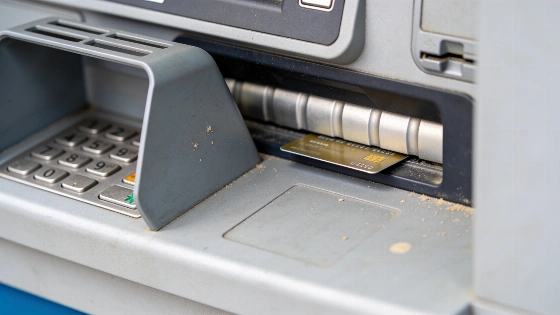
Emirates NBD Egypt is telling its customers to keep their cards and PINs safe at ATMs. The bank warns that giving your card to anyone you don't know could lead to theft or loss of your money.
Handing your bank card to a stranger at an ATM puts your account at risk. Emirates NBD Egypt has sent a direct warning to its customers: never give your card to anyone you don't know, especially at cash machines. The message is simple-protect your card and your PIN, or you could lose your money and your data. This warning matches what the Central Bank of Egypt has said many times. The regulator has told cardholders not to let anyone else handle their cards or watch them enter their PIN at ATMs, as shown in recent Central Bank warning.
Many people think ATM transactions are always safe. That's not true. Criminals often target people who are distracted, offering fake help or trying to see their PIN. Emirates NBD Egypt says customers need to stay alert, especially in busy or unfamiliar places where card theft and data theft are more likely. The Central Bank of Egypt has stepped up its anti-fraud campaigns. These now cover not just ATM risks, but also digital scams like phishing and fake calls from people pretending to be bank staff. More details are in the regulator campaign details.
Protecting card data at ATMs
The bank's advice is not just about not handing over your card. Customers should make sure no one is close enough to see them enter their PIN. Covering the keypad and blocking the screen can stop people from spying or using hidden cameras. Emirates NBD Egypt says never share your PIN with anyone, no matter what. This matches global advice from the Bank for International Settlements (BIS) and the International Monetary Fund (IMF), which both say that customer awareness is the first defense against payment fraud.
ATM fraud is still a problem in Egypt and around the world. Industry data shows that unauthorized withdrawals and card skimming go up during busy times, like holidays or salary days. Emirates NBD Egypt hasn't shared its own numbers, but the warning fits a wider pattern of rising card risks in the region. The Central Bank of Egypt keeps telling people not to share card numbers, PINs, CVV codes, or one-time passwords. Any suspicious activity should be reported straight to the bank through official channels. You can find more in the official guidance.
Customer responsibility and bank security
Emirates NBD Egypt puts a lot of responsibility on customers to keep their payment details safe. The advice is clear: watch your surroundings, don't accept help from strangers at ATMs, and report anything odd to the bank right away. These steps help stop money loss and keep your data from being misused. The Federal Reserve and the European Central Bank have both said in recent policy statements that teaching customers is key to payment system security, especially as more people use cards and digital payments.
If your card is compromised, the fallout can be serious. You might not notice unauthorized withdrawals right away, and getting your money back can take time. The bank's warning is a reminder that even a quick mistake can cost you. With Egypt's inflation still high and the pound unstable against other currencies, protecting your money matters even more. The IMF and the Central Bank of Egypt have both reported on these economic pressures.
Facts and data
Emirates NBD Egypt hasn't published detailed ATM fraud numbers. But industry reports show Egypt's payment card market has grown fast, with millions of debit and credit cards now in use. This growth has brought more attempts at card fraud, especially at unattended ATMs. The Central Bank of Egypt has called for better security and more public awareness to fight these risks. The regulator also tracks how currency swings and inflation affect how people use cards and cash.
Understanding ATM security mechanisms
ATMs use several security layers, like encrypted PIN entry, anti-skimming devices, and cameras. But these only work if customers follow the rules. Criminals look for moments when people are distracted or confused, especially if they don't know the machine or the area. By refusing to hand over your card and keeping your PIN secret, you help stop fraud. Banks can block cards and check suspicious transactions, but the first defense is always the cardholder's attention at the ATM. The Bank of England and the European Central Bank have both said in recent reviews that strong customer habits are vital for payment system safety.