
A single national bank once served Netcong, New Jersey, issuing collectible notes that now attract currency enthusiasts. The story of this small town's financial past reveals how industry, transport, and immigration shaped its unique monetary footprint.
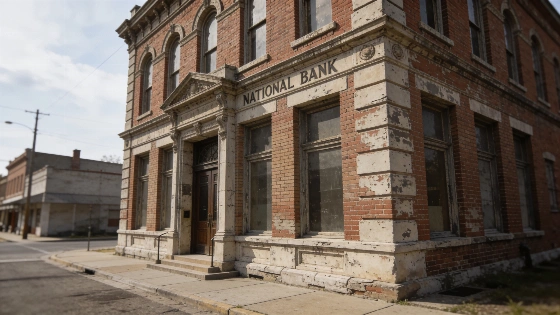
Walk down Main Street in Netcong, New Jersey, and you'll spot a brick building that outlasted the era of local banks. That's the old Citizens National Bank of Netcong. It was the only national bank the town ever had. Today, collectors hunt for its rare notes. The building's current use is unclear. No official records confirm its preservation. But its place in banking history is certain. This story fits into the bigger picture of early 20th-century American community banks, as detailed in Federal Reserve history.
Netcong's currency story stands out for its simplicity. The town has just 3,375 people, according to the 2020 U.S. Census. One national bank was enough. Yet the notes from Citizens National Bank-big Series of 1902 bills and smaller Series of 1929 notes-are now prized. Only 19 large-size notes and about 30 small notes are known to survive. These numbers come from collectors, not from official numismatic registries or federal records. No one has fully verified them. Tracking rare notes is tough. Archival data is thin.
Industrial roots and a singular bank
Netcong's growth followed the tracks and the water. The town sits by Lake Musconetcong, at a crossroads of highways and rail lines. It started as a cluster of homes near the Musconetcong Iron Works. Then the Morris and Essex Railroad arrived in the 1850s. Netcong became a key stop on the Delaware, Lackawanna & Western Railroad. Factories and shops sprang up. This was the pattern across America as the country shifted from farms to factories. The Federal Reserve System came in 1913 to steady the currency and banking system.
Citizens National Bank of Netcong opened in 1903. By then, the town was drawing workers, many from Italy. They came for jobs in steel and on the railroad. The bank's Main Street address showed off the town's prosperity. Old postcards and photos from 1907 and 1925 captured its presence. The building still stands, now painted white. But there's no independent proof of its current use or protected status in town or state records.
Notes that outlasted the era
The bank issued every type of Series of 1902 note, plus both Type 1 and Type 2 Series of 1929 small-size notes. At its busiest, it put $1.1 million in currency into circulation. By 1935, only $2,755 in large notes were still out there. Collectors often cite these numbers, but official Federal Reserve and Comptroller of the Currency archives do not confirm them. The notes stand out for their bold pen signatures. H. Griggs signed as cashier. H.H. Nelden signed as president. Collectors look for these names. One $5 note from the first sheet of Type 2 $5s lists D.S. Drake as president, according to Heritage Auctions. The full story and census of these notes is still being pieced together by numismatists.
Netcong's currency story is a snapshot of bigger trends. The bank changed its name to Citizens National Bank of Morris County in 1964. In 1971, it merged with First National State Bank of Northwest Jersey. The notes didn't disappear. They moved from cash registers to collectors' hands. This shift mirrors the wave of community bank mergers across the U.S. Regulatory changes and new monetary policies drove that trend, as shown in BIS banking statistics.
From canal to collectible
Transport shaped Netcong's fate. The Morris Canal, finished in the 1830s, brought coal and iron ore through town. Lake Musconetcong, built in 1846 as a canal reservoir, powered industry and gave locals a place to relax. Industry faded in the twentieth century, but Netcong's spot at the crossroads of highways and rails kept it on the map. The 1903 railroad station still serves NJ Transit riders. Main Street still looks much as it did a century ago.
Today, Netcong draws people with its small downtown, old buildings, and lakeside views. The Palace Theater, built in 1919, is another piece of the past. Remnants of the Morris Canal and its towpath are close by. But for currency fans, the real prize is the bank's legacy. Some collectors first get hooked by spotting an old tin sign advertising "3 ½% Savings" on accounts. Back then, $1 could open a savings account. Interest rates were a real draw. The Federal Reserve's policy rate has swung wildly over the last hundred years. It started in the single digits, dropped near zero after the 2008 crisis and again during COVID-19, then rose again to fight inflation. The numbers tell the story.
Facts and figures
The Citizens National Bank of Netcong, charter #6692, ran from 1903 until its 1971 merger. It issued all Series of 1902 notes and both types of Series of 1929 small-size notes. Total currency issued: $1.1 million. By 1935, only $2,755 in large notes were still outstanding. Today, 19 large-size notes (one with a red seal) and about 30 small notes are known. These counts are not confirmed by federal or state banking authorities.
Collecting and context
Netcong is just one stop for rare currency collectors. As reported earlier, auction prices for rare coins and notes keep climbing. People want a piece of history they can hold. Netcong's notes are scarce. The town's industrial and immigrant roots make them special. The U.S. dollar is still the world's main reserve currency. The Federal Reserve and U.S. Treasury keep a close eye on cash supply and its effect on the money system.
For those who study how local stories fit into national finance, Netcong proves that even small towns can leave a mark. The bank's notes, once used for daily business, now open a window into a time when one bank could shape a town's economy.
National bank notes in the U.S. were issued by individual banks with federal charters. Each note carried the name and signatures of local officers. This system ran from the 1860s to the mid-1900s. It created a patchwork of notes with local flavor. Most are gone. The few that remain-especially from small towns like Netcong-give collectors and historians a direct link to the money and life of their era.