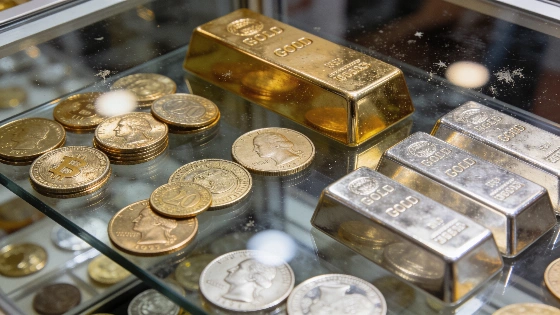
The National Coin & Bullion Association's 2026 awards dinner in Pittsburgh put legislative fights over sales-tax exemptions for coins and bullion at the center of the US numismatic industry's agenda
When the National Coin & Bullion Association (NCBA) gathered in Pittsburgh for its annual awards dinner, the spotlight fell not on rare coins or market prices, but on the high-stakes legislative campaigns that determine whether coins and bullion are taxed as collectibles or recognized as financial assets. The 2026 ceremony, held alongside the American Numismatic Association's World's Fair of Money, became a referendum on the future of sales-tax exemptions for precious metals in the United States.
At the heart of the evening was the newly renamed Patrick A. Heller Legislative Champion Award, presented to Patrick A. Heller himself-a figure whose decades of volunteer advocacy have shaped state-level tax policy from Alabama to Wyoming. Heller's influence is not theoretical: in the past year alone, he has been directly involved in campaigns in Alaska, Colorado, Maryland, Nebraska, New York, and Virginia, targeting the patchwork of state tax codes that can add significant costs to coin and bullion transactions.
Legislative Advocacy and Industry Stakes
For dealers and collectors, the stakes are concrete. In states where coins and bullion are subject to sales tax, buyers face higher transaction costs, and local businesses risk losing customers to out-of-state or online competitors. The NCBA's awards this year recognized not only individual advocates but also organizations that coordinated grassroots efforts to defend or expand exemptions. Ashley Sandoval was honored for leading Colorado's successful campaign to preserve its exemption, while the Colorado Professional Numismatists Association received recognition for orchestrating local advocacy. In Maryland, Brett Stelfox and Whitman Expos were credited for their roles in passing Senate Bill 309, which expanded the state's exemption statewide.
Efforts in Nebraska and New York also drew attention. Pat Moran was recognized for defending Nebraska's exemption during debate over Legislative Bill 1244, while Scott Hunt and William "Bill" Panitch were honored for their opposition to New York Senate Bill S7875, which threatened to impose new taxes on numismatic sales. In Virginia, John Brush's leadership helped secure an extension of the state's bullion and legal-tender exemption, reinforcing the trend toward broader tax relief for collectors and investors.
Industry Leadership and Market Impact
The evening's final award, the James U. Blanchard Lifetime Achievement Award, went to Terry Hanlon, whose nearly sixty-year career includes building Dallas Gold and Silver and launching Dillon Gage Metals. Under Hanlon's leadership, Dillon Gage became one of the largest diversified precious-metals firms in the US, and his tenure as NCBA chairman from 1995 to 1998 set a precedent for industry engagement in legislative affairs. Hanlon remains an NCBA board member, underscoring the association's continuity and institutional memory.
According to NCBA executive director David Crenshaw, the individuals and organizations recognized this year have played a direct role in shaping the legal and commercial environment for coins and bullion nationwide. Their advocacy has tangible effects: in states with exemptions, buyers avoid sales tax that can range from 4% to over 8%, depending on the jurisdiction. For a $10,000 bullion purchase, that difference can mean hundreds of dollars in savings or added cost. The uneven landscape of state tax policy continues to drive both consumer behavior and business strategy in the numismatic sector.
Context: Tax Policy and Numismatic Events
The NCBA's annual dinner is more than a social gathering-it is a strategic checkpoint for an industry that relies on favorable tax treatment to remain competitive. The timing of the event, held during the ANA World's Fair of Money, ensures that legislative advocacy is front and center for dealers, collectors, and policy influencers. This year's focus on tax exemptions echoes themes from other major numismatic events in Pittsburgh, such as the reported earlier gathering of rare 1933 Double Eagles, which highlighted the intersection of monetary history and regulatory policy.
For those tracking the evolution of US coin and bullion markets, the NCBA's awards serve as a barometer of where the industry's energy is directed: not just toward collecting and trading, but toward the legal frameworks that define what is possible. The association's legislative initiatives, detailed at ncbassoc.org, continue to shape the rules of engagement for buyers, sellers, and investors across the country.
Sales-tax exemptions for coins and bullion are not uniform across the United States. As of 2026, more than 40 states offer some form of exemption, but the scope and eligibility criteria vary widely. Some states exempt only certain types of bullion or transactions above a minimum threshold, while others apply exemptions to all numismatic sales. Legislative changes can occur rapidly, with new bills introduced or existing exemptions challenged in state legislatures each year. Buyers and dealers must monitor both current law and pending proposals to avoid unexpected tax liabilities.