The 1652 Pine Tree Shilling was Massachusetts' answer to a currency shortage and royal neglect, sparking a monetary experiment that left a mark on American coinage and still commands record prices among collectors
When Massachusetts Bay Colony struck its first silver shillings, it did so in open defiance of English royal authority-a move that would eventually draw the Crown's ire and help define the boundaries of colonial independence. The Pine Tree Shilling, stamped with the date 1652 but often minted years later, stands as a physical record of a colony that refused to wait for London's permission to solve its own money problems.
Today, a single Pine Tree Shilling can fetch over $75,000 at auction, with some specimens reaching six-figure territory. But the coin's value is not just in its rarity or age. It is the story of a colony that minted its own silver, set its own standards, and risked royal punishment to keep its economy moving. The Pine Tree Shilling is more than a collectible-it is a statement of monetary self-determination.
Colonial Shortages and a Radical Solution
By the mid-1600s, Massachusetts Bay's economy was growing, but its supply of reliable money was shrinking. English coins were scarce, and those that did arrive often left again to pay for imports. Colonists made do with barter, foreign coins, and even wampum, but none provided the stability needed for expanding trade. Spanish-American silver entered circulation, but a scandal at the Potosí Mint and widespread counterfeiting eroded trust in foreign coins.
In May 1652, the Massachusetts General Court authorized a mint in Boston, appointing silversmiths John Hull and Robert Sanderson to produce shillings, sixpences, and threepences. Residents could bring silver bullion, plate, or Spanish coins to be melted and recast as standardized Massachusetts money. This was a bold assertion of local authority-coinage was a royal prerogative, and Massachusetts had no explicit permission from England to mint its own currency.
The timing was strategic. England was in its Interregnum, with no king on the throne after the execution of Charles I. Massachusetts seized the opportunity to act while royal oversight was at its weakest.
Design Choices and Monetary Policy
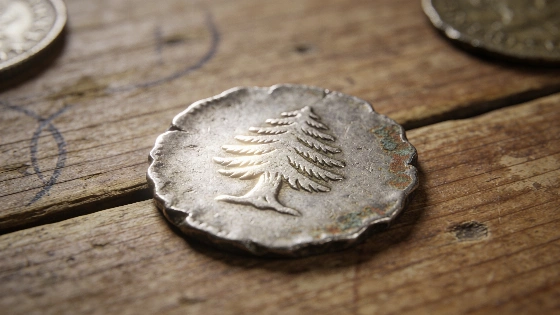
The first coins from the Boston mint were crude: simply stamped "NE" for New England and the denomination in Roman numerals. These early pieces were easy to clip, so the design evolved-first to the Willow Tree, then the Oak Tree, and finally, around 1667, to the now-iconic Pine Tree. The Pine Tree Shilling featured a bold tree at its center, the words MASATHVSETS IN, and the date 1652, even though production continued until 1682.
Massachusetts deliberately set its shilling at 72 grains of sterling silver, lighter than the English shilling's 92.9 grains. This made the coin less attractive for export as bullion, encouraging it to circulate locally. The colony's approach was an early experiment in monetary policy: create a trustworthy coin that would stay in the local economy, even if it meant bending the rules of imperial finance.
Nearly all Pine Tree Shillings bear the date 1652, regardless of when they were actually struck. Some historians argue this was a political maneuver-by freezing the date to the year of the mint's authorization, Massachusetts could claim its coins were a product of the kingless Interregnum, not a challenge to royal authority after the monarchy's restoration. Others see it as a simple commemoration of the mint's founding. Either way, the fixed date has become one of the great curiosities of American numismatics.
Production Methods and Collector Appeal
Collectors distinguish between Large Planchet and Small Planchet Pine Tree Shillings. Early Large Planchet coins, typically produced between 1667 and 1674, were struck using a rocker or roller press, often leaving the coins with a distinctive wave or bend. Later Small Planchet coins, made from about 1675 to 1682, used a screw press and thicker blanks. Irregular shapes and clipped edges are common, sometimes the result of mint workers trimming coins to the authorized weight rather than dishonest circulation.
Market prices for Pine Tree Shillings depend on more than just grade. Centering, strike, planchet quality, die variety, color, and especially pedigree all play a role. For example, a Noe-1 Large Planchet specimen with a storied provenance sold for $76,375, while another high-grade coin with a different pedigree brought $66,000. The collecting community values not just the coin, but its documented journey through the hands of major numismatists and institutions.
One coin's story can span centuries and continents, connecting colonial Boston to modern auction rooms. This echoes the journey of other historic coins, such as the previous investigation into the 1861-O Half Dollar, which linked Civil War-era mints to present-day collectors.
Royal Backlash and the End of the Mint
Massachusetts' monetary independence did not go unnoticed. After Charles II reclaimed the throne in 1660, royal officials demanded the colony shut down its mint, arguing that coinage was a royal right. Massachusetts resisted, and John Hull continued production for nearly two decades. But by 1682, mounting pressure from London forced the mint to close. The closure was part of a broader crackdown on colonial autonomy, not just a reaction to the shilling itself. Two years later, the original Massachusetts charter was revoked, ending a chapter of colonial self-rule.
The Pine Tree Shilling's legacy is not just its survival, but its role as a symbol of early American resistance to imperial control. It was the first locally produced silver coinage in what would become the United States, and its physical imperfections-curved planchets, clipped edges, reversed letters-are evidence of a mint operating at the edge of legality and technology.
Specifications and Historical Impact
The Pine Tree Shilling was authorized at 72 grains of sterling-standard silver, with Large Planchet coins measuring around 30 mm and Small Planchet coins about 24 mm in diameter. The obverse featured a pine tree and MASATHVSETS IN, while the reverse read NEW ENGLAND, AN DOM, 1652, and XII for the denomination. The total mintage remains unknown, but production is estimated to have run from roughly 1667 to 1682.
For collectors and historians, the Pine Tree Shilling is more than a rare artifact. It is a tangible record of a colony that refused to let monetary policy be dictated from across the Atlantic. The coin's continued desirability-reflected in auction prices and scholarly attention-demonstrates the enduring appeal of objects that capture moments of economic and political transformation. The Pine Tree Shilling is not just a piece of silver; it is a piece of the story of how America learned to make its own money, on its own terms.
Understanding the Pine Tree Shilling requires recognizing the risks Massachusetts took by minting its own coins. Coinage was a symbol of sovereignty, and by striking silver without royal approval, the colony asserted a degree of independence that would later become central to American identity. The fixed 1652 date, the lighter weight, and the evolving designs all reflect a pragmatic approach to local needs and external threats. The coin's irregularities are not flaws-they are evidence of a society inventing its own rules in the absence of imperial support. For anyone tracing the origins of American monetary policy, the Pine Tree Shilling is a starting point that still resonates more than three centuries later.