A rare bronze medal, once thought never to exist, has surfaced as the unofficial 130th entry in the Society of Medalists series. Its story exposes the turbulent fate of a historic US mint and the collectors who chase its legacy.
When a Pennsylvania engraver quietly sold a bronze medal and its original plaster to a collector in early 2025, neither party expected to upend the accepted history of American medallic art. Yet this obscure transaction has revealed a lost chapter in the story of the Society of Medalists-a series long believed to have ended in 1995 with its 129th issue. The emergence of a 130th medal, struck but never released, now challenges the official record and raises new questions for collectors and institutions alike.
For decades, the Society of Medalists was a fixture in US numismatic circles, commissioning two medals per year from leading sculptors and making their work accessible to a broad audience. The series, founded in 1929 by Clyde Curlee Trees and George Dupont Pratt, produced 129 regular issues before rising costs and business turmoil forced its closure. The published record stopped there-until now.
The Unreleased 130th Issue
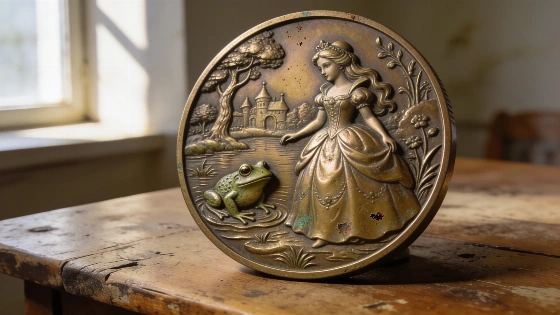
The newly surfaced medal, designed by Steve Adams, was intended as the Society's 130th entry. Adams, a veteran die engraver and sculptor, drew inspiration from The Princess and the Frog fairy tale. The obverse features a princess in medieval dress reaching toward a frog by a pond, framed by intricate botanical details and a distinctive keyhole-shaped opening through the tree at the center. The reverse depicts the transformed prince and princess walking hand in hand toward a castle, the same keyhole now forming the castle's open gate.
Struck in bronze at 75mm diameter, the medal carries edge inscriptions reading "THE SOCIETY OF MEDALISTS 130TH ISSUE 2018 STEVE ADAMS SC" and "2018 MEDALCRAFT MINT - GREEN BAY, WI - BRONZE." According to Adams, only about a dozen examples were produced before the project was abruptly canceled. The medals never reached the public, and their existence remained undocumented for years.
The project's collapse was not an isolated event. The Medallic Art Company (MACO), which had produced the Society's medals for decades, changed hands multiple times in the 21st century. After Robert and Connie Hoff sold MACO to Northwest Territorial Mint in 2009, the new owner, Ross Hansen, was later indicted for fraud and the company declared bankruptcy in 2016. MACO's assets were split: the American Numismatic Society (ANS) acquired the historic archive for $420,000, while Medalcraft Mint in Wisconsin purchased the tradename, customer lists, and certain dies and equipment.
How the Medal Was Found
The Adams medal might have remained a footnote if not for a collector's chance encounter. While researching modern hobo nickels for a reference book, the collector interviewed Adams, who offered the original plaster and a first-strike proof medal from his workshop. Only after acquiring these pieces did the collector realize their significance. A subsequent visit to the ANS headquarters in New York revealed a variant of the Adams medal-lacking the keyhole and with a different finish-displayed without knowledge of its intended role as the Society's 130th issue. The medal had arrived as part of the MACO archive, its backstory unknown to staff.
For context, the Society of Medalists was not the only US institution to rely on a rotating cast of artists for its official issues. The United States Mint's Artistic Infusion Program, for example, has selected dozens of artists to shape the future of American coins, as reported earlier. But unlike the Mint's public programs, the Society's final medal was nearly erased by business failure and internal decisions.
Business Turmoil and Collector Impact
The failed revival of the Society of Medalists under Medalcraft Mint highlights the vulnerability of private mints to financial and legal shocks. The 2018 attempt to restart the series was championed internally by a longtime MACO employee, but Medalcraft's ownership halted production soon after it began. The medals were struck, edge-marked, and then shelved-never distributed, never catalogued, and nearly forgotten.
For collectors, the Adams medal is now among the rarest items associated with the Society. Its edge inscription formally designates it as the 130th issue, yet its status remains unofficial. The medals were produced by the entity holding the Society's tradename and assets, using traditional techniques and professional engraving. The only barrier to recognition is the abrupt cancellation and lack of public release.
Numismatic records show that the Society of Medalists produced 129 regular issues between 1930 and 1995, with special editions occasionally supplementing the main series. The 130th medal, struck in 2018, was never included in official catalogues or price guides. With only an estimated dozen examples known, its rarity far exceeds that of earlier issues, which were typically produced in runs of several thousand.
What Makes a Medal Official?
The Adams medal's ambiguous status raises a practical question: what defines an official issue in a discontinued series? The medals were struck by the legal successor to MACO, bear the correct edge inscription, and follow the Society's artistic tradition. Yet without public distribution or formal announcement, their legitimacy is left to the judgment of collectors, institutions, and cataloguers.
For now, the Adams medal stands as a testament to the unpredictable fate of private mints and the fragility of numismatic history. Its discovery forces a reassessment of what constitutes the end of a series and who gets to write that final chapter. The fact that such a piece could remain hidden for years, only to surface through a combination of personal networks and institutional happenstance, is a reminder that even in a field built on documentation, gaps and surprises persist.
In the world of medallic art, the line between official and unofficial is often blurred by business realities, legal transfers, and the decisions of a handful of individuals. The Adams medal, with its intricate design and vanishingly small mintage, now occupies a unique place in US collecting-a piece both inside and outside the canon, its story shaped as much by bankruptcy courts and boardrooms as by artists and collectors.
Medallic art refers to the creation of medals as objects of artistic expression, distinct from circulating coins or official decorations. Medals are typically struck in limited numbers, often for collectors or commemorative purposes, and may feature high-relief designs, unusual shapes, or experimental finishes. Unlike coins, which must meet strict standards for denomination, weight, and composition, medals offer artists greater freedom in subject and form. The Society of Medalists was one of the longest-running US medal series, and its legacy continues to influence both public and private mints. The Adams medal's emergence illustrates how the boundaries of official numismatic history can shift with new discoveries and changing institutional fortunes.