
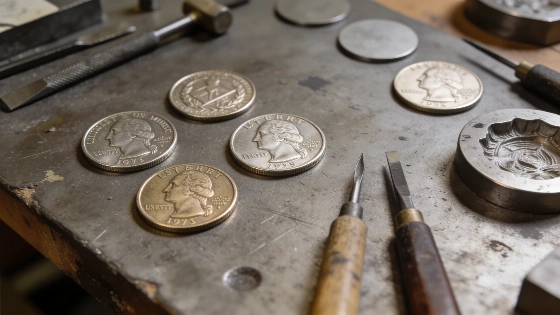
The United States Mint has chosen 37 artists, including four new participants, for its 2026 Artistic Infusion Program. Their designs could soon appear on circulating coins, commemoratives, and official medals across the US.
The United States Mint has announced the selection of 37 American artists for its 2026 Artistic Infusion Program (AIP), a move that will influence the look and feel of US coins and medals for years to come. This latest roster, revealed on August 31, 2026, includes both established designers and four first-time participants: Kristine Campbell, Donovan Corcoran, Gian Galang, and James Martin. These newcomers were chosen from a nationwide pool of applicants based on the strength of their artistic portfolios and professional experience.
Each new US coin or medal begins as a concept, which must then be translated into a design that works at a small scale and in metal. The AIP was established in 2003 to bring fresh perspectives and diverse artistic backgrounds into the Mint's design process. Artists in the program work from their own studios under contract, submitting candidate designs as finished drawings. For each assignment, the Mint pays $3,000, with an additional $5,000 awarded if a design is selected for production. Beyond financial compensation, artists gain recognition through historical documentation, Certificates of Authenticity, and, in most cases, their initials engraved on the final coin or medal.
Newcomers Join Veteran Designers
The 2026 AIP roster features a mix of returning talent and new voices. Notable veterans such as Peter Beck and Robert J. Clarke have contributed to previous cycles, while the four new artists-Kristine Campbell, Donovan Corcoran, Gian Galang, and James Martin-bring fresh approaches to the program. The Mint's selection process requires applicants to be US citizens, at least 18 years old, and to demonstrate professional artistic experience in fields such as illustration, graphic design, animation, or concept art. This broad definition allows the Mint to draw from a wide pool of creative talent, extending well beyond traditional coin engraving.
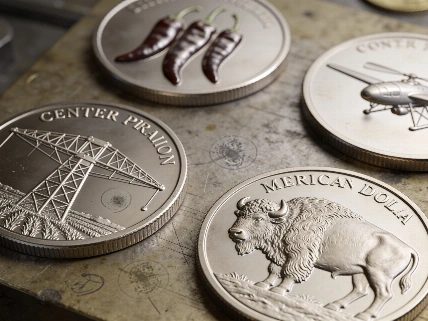
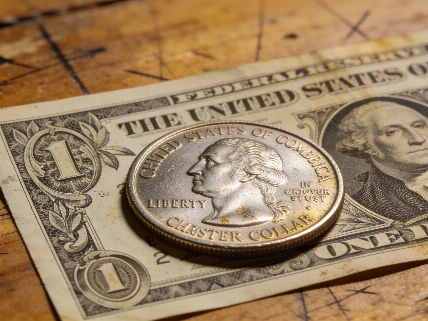
For collectors and the general public, the impact of AIP artists is significant. A single design can reach millions of Americans through everyday coins, or become a lasting part of numismatic history on commemorative issues and Congressional Gold Medals. The collaborative process involves close work with Mint staff, including the Chief Engraver and Medallic Artists, to ensure that each design not only communicates its intended message but also functions technically as a coin-balancing relief, depth, negative space, and the transition from two-dimensional drawing to three-dimensional sculpture.
Designs That Travel Through Millions of Hands
The Mint's approach emphasizes both artistic innovation and practical constraints. Designs must remain legible and impactful at a small scale, and artists must consider how their work will translate into metal. The AIP's influence is visible in circulating coins, commemoratives, and special medals, such as the recent Freedom 250 Race Medal issued for the Washington IndyCar event-a project that also highlighted the Mint's ongoing engagement with contemporary American themes (see coverage of the Freedom 250 Race Medal release).
According to the Mint, the 2026 AIP roster includes: Esao Andrews, Peter Beck, Tasha Beckwith, Kristine Campbell, Sean Cheetham, Robert J. Clarke, Francis Cook, Donovan Corcoran, Chris Costello, Emily Damstra, Lucas Durham, Donald Everhart, Barbara Fox, Jamie Franki, Dennis Friel, Kimberly Fulton Orozco, Gian Galang, Elana Hagler, Jesse Hernandez, Christina Hess, Thomas Hipschen, Kathryn Hudson, Robert Kraiza, James Martin, Matthew Molen, Sean Murray, Laurie Musser, Walter O'Neal, Christopher Polentz, Paul Romano, Ronald Sanders, Andrew Sides, Benjamin Sowards, Gennady Spirin, Matthew Swaim, Sara Tepes, and Beth Zaiken. The four first-time participants are highlighted for their entry into this influential program.
Facts and Figures: The Artistic Infusion Program
Since its creation in 2003, the Artistic Infusion Program has brought more than 60 artists into the Mint's design process. Under the current contract terms, each AIP artist receives $3,000 per assignment, with a $5,000 bonus if their design is selected for production. The 2026 Call for Artists ran from January 8 to February 9, 2026, and resulted in the addition of four new artists to the program. Many AIP designs have appeared on circulating coins, commemorative issues, and Congressional Gold Medals, making the program a key driver of modern US coinage aesthetics.
The AIP's collaborative model ensures that artists do not work in isolation. Each design is reviewed and refined in partnership with Mint staff, including the Chief Engraver and Medallic Artists, to meet both artistic and technical requirements. This process helps maintain the balance between creative expression and the practical demands of coin production, such as durability, clarity, and manufacturability.
While the AIP is open only to US citizens with professional artistic backgrounds, the range of eligible disciplines is broad. The Mint accepts experience in illustration, graphic design, animation, concept art, comics, collectibles, poster art, street art, tattoo art, and other design-driven fields. This inclusivity has allowed the program to evolve alongside changes in American art and culture, ensuring that new coins and medals reflect a wide spectrum of influences.
Designing for coins and medals presents unique challenges. Unlike paintings or large-scale illustrations, coin designs must communicate meaning within a space often less than an inch across. Artists must consider how their work will be reproduced in metal, how it will wear over time, and how it will be perceived by millions of users. The AIP's structure and selection process are designed to address these challenges while encouraging innovation and diversity in US coinage.
The Artistic Infusion Program stands out in the American art world for its combination of creative freedom, technical rigor, and historical significance. By bringing together artists from varied backgrounds and disciplines, the Mint ensures that the nation's coins and medals continue to evolve-both as objects of everyday use and as pieces of enduring cultural heritage.