At the 2026 ANA World's Fair of Money in Pittsburgh, Jānis Strupulis received an award for medallic sculpture and ANS librarian David Hill was honoured for numismatic writing.
When Latvia restored the lats in 1993, its new coinage gave sculptor Jānis Strupulis a hand in shaping the country's renewed identity in everyday life.
CoinWeek reported that Strupulis received the Numismatic Art Award for Excellence in Medallic Sculpture. David Hill, librarian and historian at the American Numismatic Society (ANS), received the Burnett Anderson Memorial Award for Excellence in Numismatic Writing. The American Numismatic Association's (ANA) 135th Anniversary Awards Banquet took place on August 28, 2026, at the Westin Pittsburgh during the World's Fair of Money. CoinWeek published its report on October 15, 2026.
Designing Latvia's coinage
Born in 1949, Strupulis graduated from the Art Academy of Latvia in 1973. He has built an international reputation in sculpture and medallic art. Graphic design is another part of his practice, but his contribution to modern Latvian currency remains among his best-known work.
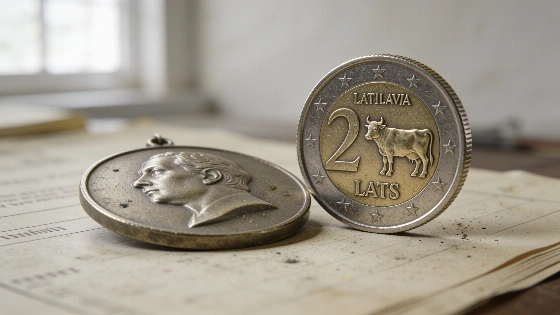
Working with graphic artist Gunārs Lūsis, Strupulis helped develop sculptural models for modern Latvian coins. One was the distinctive 1999 bimetallic 2-lats coin. Its reverse shows a cow, a traditional symbol of Latvia's agricultural heritage; the obverse carries the country's coat of arms.
He also contributed to 1-lat designs dated 1999 and 2001, along with other circulation and commemorative coins. Outside currency, his work includes medals and portraits. He has made commemorative plaques honouring historical figures in Riga and elsewhere.
Strupulis has received international recognition at Baltic medal art triennials and Dante medal art biennials in Italy. He belongs to the Artists' Union of Latvia and the International Art Medal Federation (FIDEM). He has also served as president of the Latvian Arts Medal Club.
Established in 1966, the ANA award recognises lifetime achievement in medallic design and sculpture. Gilroy Roberts and Frank Gasparro are among its past recipients. John Mercanti has received the honour as well, placing Strupulis's work in a field where artistic choices become part of a country's circulating visual record.
Research in the archives
Hill works with a different kind of numismatic evidence. He became ANS librarian in 2014, after serving as the society's archivist. Before joining the ANS, he spent about two decades working with libraries and historical collections. He also worked with archival institutions.
His articles for ANS Magazine, the society's quarterly publication, draw on primary sources held in the archives. The subjects can reach beyond coin dates and mintages. Hill also examines auction records and the people behind the documents. He has said archival materials often lead him towards subjects that demand further exploration.
The Baltic region's monetary past also appears in accounts of medieval silver finds, evidence of a different kind from Strupulis's modern coin designs. Hill's work also relies on material records, with a focus on the stories those sources can support.
Hill says he aims to leave well-documented research that others can use and build on. Correspondence and institutional records give researchers a basis for revisiting familiar subjects. Overlooked documents can do the same.
The Burnett Anderson Memorial Award was established in 1999 to honour the journalist's legacy in numismatic writing. It recognises sustained contributions to numismatic knowledge. The ANA and the American Numismatic Society participate in selecting the recipient. The Numismatic Literary Guild also takes part.