The Davenport bank issued 215,236 national bank notes worth $2,924,170 between 1864 and 1931. It opened for business 12 days before Philadelphia's Charter 1 bank.
Austin Corbin and his partner, Tristam Dow, applied to the Treasury Department for a charter on February 24, 1863. President Abraham Lincoln signed the National Banking Act the next day.
Articles of association arrived from the Comptroller of the Currency in May. They set out the bank's operating rules. Public subscriptions opened on May 25 to meet the required capital threshold. Within three days, about 80 local citizens had subscribed the required $100,000.
The First National Bank of Davenport opened on June 29, 1863, in the three-story Marble Bank building on West Second Street. Deposits reached $80,000 on its first day.
The Comptroller had assigned the Davenport stockholders Charter No. 15 on June 22 and authorized them to begin business. Philadelphia's First National Bank held Charter No. 1, but it did not open until July 11, twelve days after Davenport. Davenport was the first bank to open under the National Banking Act of 1863.
On opening day, a $12.60 check written by Henry Hess became the first check to clear under the new national banking system. Austin Corbin was named the bank's first president. For a short period, it was the only bank operating under the act in the United States.
Official records show circulation of $18,500 by late 1864. Total resources stood at $629,814.14. By the first quarter, shareholders had earned a 5% dividend.
From bonds to bank notes
The new system tied note issuance to federal debt. A nationally chartered bank bought U.S. government bonds and could issue standardized national bank notes against that collateral. The arrangement aimed to replace the fragmented circulation of state banknotes with a more uniform national currency.
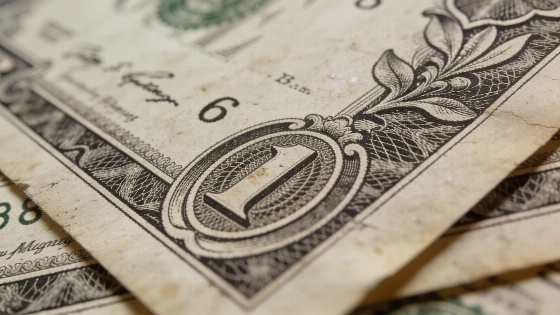
Common denominations included $5 notes. $10 notes also circulated. The system issued $20 notes, along with $50 notes. $100 notes were another denomination.
National bank notes circulated well beyond the issuing bank's home state. They reached communities across the country, including in Alaska. They also circulated in Hawaii and Puerto Rico. Davenport's notes were part of this federally standardized currency system.
On January 21, 1864, the bank received and issued its first notes from the U.S. Treasury Department's Bureau of Engraving and Printing. The shipment contained 5,200 $5 bills, arranged in sheets of four notes each. In January 1865, Davenport received and circulated the first $1 and $2 bills.
Charter 15 begins
The bank's original national charter ran for 20 years. When Charter 15 expired in 1882, Charter 2695 replaced it so the bank could continue operating. On May 22, 1911, the bank regained Charter 15.
National bank notes traveled far beyond the communities where they were issued. An article in the Bismarck Daily Tribune on October 9, 1907, described a check cashed in Bismarck and paid with notes from banks in other states. The article also mentioned Treasury notes. It separately noted silver certificates.
A national circulation
Between 1864 and 1931, Charter 15 issued 185,428 large-size notes and 29,808 small-size notes. Together, the 215,236 notes had a face value of $2,924,170. That figure counts cumulative issuance over the period, not the notes still circulating when the bank was absorbed.
From 1863 to 1935, thousands of banks across the country issued national bank notes in multiple denominations. As of January 1, 1929, about 24,000 banks were operating in the United States. Roughly 7,600 were national banks.
Five national banks were chartered in Davenport during the note era. All five issued national bank notes.
In April 1931, The First National Bank of Davenport was absorbed by Union Savings Bank and Trust Company, ending its operations under the original 1863 identity.