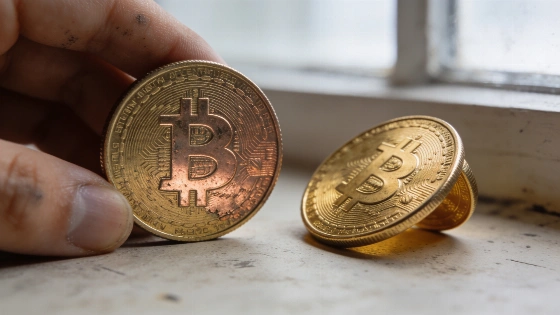
Error specialist Mike Byers has accepted two more 1776-2026 Trump dollars as missing-clad-layer examples. Neither is certified; an NGC-graded 6.1-gram coin remains the only certified example in CoinWeek's three-coin roster.
Florida collector P. Dolan found a suspicious Trump dollar in a 100-coin bag bought directly from the United States Mint. The coin reportedly weighs 6.0 to 6.1 grams, well below the normal 8.10 grams. Mint error specialist Mike Byers later identified it as a genuine missing-clad-layer example.
Dolan's coin is one of two new reports. Both remain uncertified, bringing CoinWeek's roster to three examples of the 1776-2026 dollar with an apparent missing metal layer. The first discovery was authenticated by Numismatic Guaranty Company, or NGC, and graded MS 65 with the Advance Releases designation.
Three reports, with one key distinction
The first coin has an exposed copper obverse and a golden-colored reverse. NGC certified its weight at 6.1 grams. Dolan reported a similar weight for his coin, which he found in the Mint bag. That bag also held four Trump dollars with the special July 4th privy mark. According to information supplied to CoinWeek, Byers reviewed Dolan's example and accepted it as a missing-clad-layer error. Dolan has not offered it for sale.
A third collector, Tyrone Kemp, sent photographs of his dollar to Byers. Byers said the coin met the diagnostics for the error. Kemp's example is also raw, meaning it has not received third-party certification, and has not been offered for sale.
The first discovery has independent grading-service authentication. Byers assessed the other two, but neither has been certified. These reports do not establish how many such coins exist.
How the metal can separate
The Trump dollar contains no gold, despite its golden appearance. Its construction uses a pure copper core between two outer layers of manganese brass. The U.S. Mint introduced this three-layer design with the Sacagawea dollar in 2000. The Mint lists the coin's composition as 88.5% copper, 6% zinc, 3.5% manganese and 2% nickel; the gold-like color comes from the alloy, not precious metal. The coins were struck at the Philadelphia Mint with a circulating finish. U.S. Mint specifications describe the dollars as legal tender that had not been placed into ordinary circulation when initially sold.
Normally, the layers stay bonded through production. An imperfect bond or another manufacturing problem can let an outer layer separate from the copper core. Separation may happen before the planchet, the prepared metal blank, reaches the striking press. A weakly bonded layer may also detach afterward. NGC includes both possibilities in its missing-clad-layer error category.
A planchet missing an outer layer is thinner than intended when struck. The resulting coin may show weak design details, particularly near the rims. On the certified Trump dollar, exposed copper beneath the obverse design contrasts with the normal golden-colored reverse. The missing metal also explains why the coin weighs substantially less than a standard example.
NGC's Dave Camire authenticated the first coin and called it a striking example of the error type. He considered its MS 65 grade impressive given the effect of the thinner planchet on the strike.
Color alone is not proof
Copper-colored or bronze-colored Trump dollars have also surfaced in online collector discussions. Byers cautions that most are not missing a clad layer. Many weigh about 8 grams, close to the normal specification, so color alone does not establish the error.
Improper annealing is one possible explanation for some off-color coins. Annealing heats blanks to soften the metal before striking; the blanks are then cleaned and dried. Problems in that process can affect a coin's appearance. NGC has documented improperly annealed Presidential dollars with surfaces ranging from dark brown to copper red. That record does not establish the cause of any particular Trump dollar.
Byers suspects production or quality-control problems may have contributed to the unusual number of discolored examples reaching collectors. CoinWeek has not established that production was rushed, that an improper alloy was used or that a specific equipment failure occurred. Those explanations require technical evidence or information from the Mint.
Weight offers a useful clue. A normal dollar weighs 8.10 grams; the reported missing-layer examples weigh about 6.0 to 6.1 grams, a difference of roughly two grams. Byers estimates that some unusual, normal-weight examples might trade for $50 to $100. That estimate does not apply to every discolored coin and does not confirm that a coin is a mint error.
The first NGC-certified error was offered through Mike Byers Inc. at an asking price of $25,000. That is a dealer's asking price, not a confirmed sale. Byers expects genuine examples could command substantial premiums if few survive. Their eventual value will depend on collector demand and condition, as well as certification and the number of further discoveries.
What collectors can check
The Mint began selling 1776-2026 Trump dollars in 25-coin rolls and 100-coin bags on September 2, 2026. The rolls cost $61; the 100-coin bags cost $154.50, both above face value. The Mint also distributed 250,000 dollars bearing a July 4th privy mark randomly among those products. The anniversary coin program includes a 2026 Mint proof set, a separate release from the rolls and bags now being searched for errors.
The design marks the 250th anniversary of the United States and bears the dates 1776 and 2026. It features a portrait of Donald Trump, LIBERTY and IN GOD WE TRUST. Collectors examining Mint-purchased dollars can check for a copper-colored face opposite a normal golden-colored side, then weigh the coin on a digital scale accurate to at least 0.01 gram. A reading near 6.0 to 6.1 grams warrants further examination, but neither weight nor color alone proves authenticity. The edge can offer additional evidence of the coin's layered construction.
Do not clean or polish a suspected error, and avoid scraping or otherwise altering it. Keep its original Mint packaging and purchase documentation. Collectors with a possible example can send Mike Byers clear photographs of both faces and the edge, along with the measured weight and information on where the coin came from, at mike@mikebyers.com. CoinWeek asks owners to report discoveries for its roster and says it will identify an owner publicly only with permission.
As of October 15, 2026, CoinWeek's roster lists one NGC-certified coin and two raw examples assessed by Byers.