
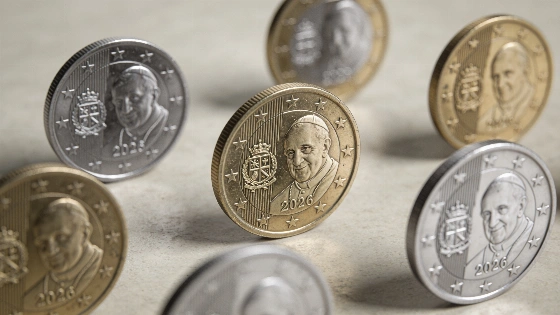
The Vatican's 2026 euro coins break with recent precedent by featuring both Pope Leo XIV's portrait and his coat of arms across different denominations, marking a nuanced return to centuries-old numismatic traditions
For years, Vatican euro coins followed a single pattern. That changed in 2026. The new series splits the spotlight between Pope Leo XIV's portrait and his coat of arms. Each appears on different coins. The Vatican did not pick one over the other. Instead, both traditions now share space in the nation's pocket change. This move breaks from the uniform look of recent years. It also nods to the Vatican's long, tangled coin history. But as of October 2026, neither the Vatican nor the European Central Bank (ECB) has published official confirmation about the release, denomination breakdown, or launch date for these coins. Recent Vatican updates focus on stamps and special postmarks, not coins. The ECB's latest bulletins talk about digital euro projects, not new physical coins. Details are on the ECB homepage.
Speculation ran high for months. Would Leo XIV stick with Francis's plain style or bring back the papal portrait? The answer came in July 2026. The 1, 2, and 5 cent coins show the papal coat of arms. The 10, 20, and 50 cent, 1-euro, and 2-euro coins carry Leo XIV's profile. The 2-euro coin stands out. It merges the pope's image with symbols from his life: the lily and the flaming heart of the Augustinian Order. Still, official Vatican News for 2026 only confirms commemorative stamps with euro values (0.10, 0.15, and 2.55 euros). Coins are not mentioned. Caution is needed when reading numismatic news. See Vatican News, 2026 for details.
Portraits and symbols share the spotlight
Artist Daniela Longo drew the new portrait. Leo XIV faces right, wearing the zucchetto. The style is simple and realistic. Gone are the grand gestures and heavy robes of old coins. The design borrows from classic ruler portraits but keeps things understated. The 2-euro coin is different. It blends the portrait with the coat of arms, the lily, and a flaming heart pierced by an arrow above an open book. These symbols point to the Augustinian tradition and the pope's motto, "In Illo uno unum." Yet, the Vatican and the Holy See Press Office have not released any official statements about coin design approval or artist involvement for 2026.
The copper-colored cent coins focus on the full papal coat of arms. The miter and crossed keys are there. On the left, a silver lily sits on blue. On the right, a flaming heart appears on a pale background. These images tie Robert Francis Prevost's religious roots to the symbols of the papal office. The packaging and overall look reinforce this heraldic theme. The set feels unified, even with its split design.
The Vatican calls this split between portrait and coat of arms a first for the euro era. But history tells a different story. In 1929, the Vatican's first coin series also divided denominations between the pope's portrait and his coat of arms, though the split was different. The new approach honors tradition and meets modern needs. Small coins need clear, bold symbols. Larger coins can show more detail, like a portrait.
Historical shifts in papal coin imagery
Papal coin design has never followed a straight line. The first real papal portrait appeared in 1483. Sixtus IV's face was engraved by Emiliano Orfini. Later popes mixed personal images with family symbols. Alexander VI's coins paired his profile with the Borgia arms. Julius II and Clement VII used portraits to show their power as Renaissance rulers. Even Benvenuto Cellini shaped Clement VII's features in metal.
The Papal States stopped making coins in 1870. That changed after the Lateran Treaties of 1929. The new Vatican City State issued lira coins. Designers Aurelio Mistruzzi and Attilio Silvio Motti split the series between Pius XI's portrait and his coat of arms. The backs showed religious and symbolic scenes. Later popes, like Pius XII and John XXIII, kept switching between portraits, arms, and Christian images. Each series became a set of pictures, not a uniform set.
Not every pope appeared on coins. John Paul I's short reign in 1978 produced only a commemorative 1,000-lire coin. Paul VI dropped his portrait for the coat of arms in the late 1960s. John Paul II's long rule put his face on the front, but the backs told stories from his life and world events. The euro era brought sameness. From 2002 to 2005, all eight coins showed John Paul II's left-facing profile. Benedict XVI's portrait followed from 2006 to 2013.
Francis's break and Leo XIV's return
Pope Francis changed course in 2017. He removed his portrait from all regular coins. Only the coat of arms remained. He wanted simplicity and humility. European authorities agreed. Paul VI had done something similar before. The Vatican never gave a full public explanation. But the change was clear. The ECB oversees coin design and approval for all eurozone members, including microstates like Vatican City.
After Francis died, the 2025 Sede Vacante got a special 2-euro coin. It showed the coat of arms of Camerlengo Kevin Joseph Farrell. European rules no longer allow a full Sede Vacante coin set. The Vatican had fewer ways to mark the change between popes.
Leo XIV's arrival brought a new mix. The Vatican did not erase the individual pope or hide him behind the institution. Larger coins show his portrait. Smaller coins use the coat of arms. The 2-euro coin brings both together. It shows how person and office are linked in Vatican imagery. But as of October 2026, there is still no official word from the ECB or Vatican about mintage, design approval, or artist credit for these coins. The only confirmed Vatican euro issues for 2026 are commemorative stamps (Vatican News, 2026).
Numismatic logic and collector impact
This split design is not just for show. Small coins need bold, simple images. Big coins can handle detailed portraits. The Vatican's 1929 lira coins used the same logic, though the images were spread differently. The new euro coins do not settle the old debate: should a pope appear as a person or as a symbol? The Vatican chose not to pick a side. Both matter.
Collectors will notice. The return of the papal portrait, especially in a mixed format, will spark interest. This matches trends in other recent coin releases, as reported earlier. New designs and changes in denominations have drawn fresh attention to the coin market. Meanwhile, the ECB keeps an eye on euro area inflation, which was 2.7% year-on-year in September 2026. The Governing Council sets monetary policy, shaping the value and flow of all euro coins and notes.
The 2026 Vatican euro set splits its eight coins like this: 1, 2, and 5 cents show the papal coat of arms. The 10, 20, and 50 cent, 1-euro, and 2-euro coins show Leo XIV's portrait. The 2-euro coin combines both. It reflects the pope's Augustinian roots and his motto. The Vatican calls this a first for the euro era, but it echoes the lira period. Still, with no official confirmation from the ECB or Vatican, collectors should watch for future updates and releases.
Vatican coin design always balances personal power and institutional tradition. By splitting coins between portrait and coat of arms, Leo XIV's series honors both the man and the office. It also meets the technical needs of modern coins. This is not a full return to the past. It is not just more of the same. It is a careful blend. Millions across Europe will see it in their change.
In coin design, the choice between portrait and coat of arms is not just about looks. It raises questions about leadership, tradition, and how institutions adapt. The Vatican's 2026 coins show that even as cash use drops and digital payments rise, the images on coins still matter. They carry history and identity in metal.