
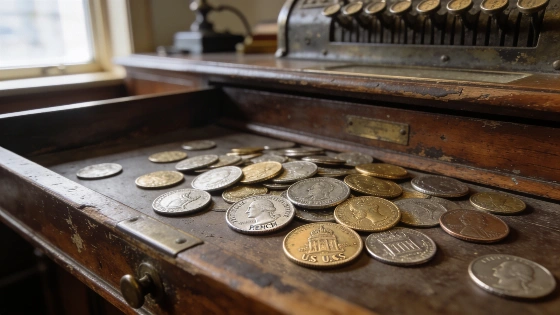
Foreign coins once played a central role in U.S. commerce, with legal status and circulation rules evolving over time. This article examines how these coins entered, influenced, and eventually exited the American monetary system
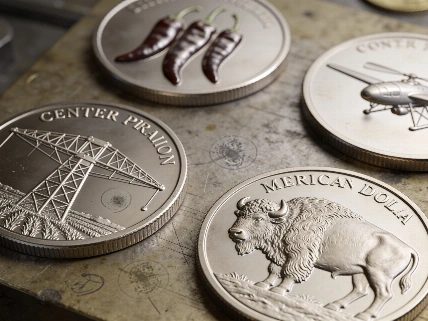
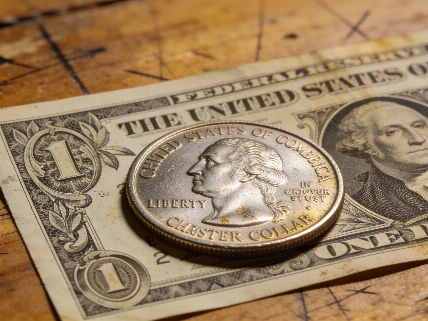
Before the mid-19th century, foreign coins were a routine part of daily transactions in the United States. With limited domestic silver production and a young national mint, coins from France, Great Britain, Portugal, Spain, and Spanish colonial America filled the gap in circulating money. The Act of Feb. 9, 1793, formally recognized many of these foreign silver and gold coins as legal tender, allowing them to be used for government payments and debts. Once received by the U.S. Mint, these coins were often melted down and re-coined into official U.S. currency, helping to build the nation's monetary base.
Legal Tender and Policy Shifts
The reliance on foreign coins was not without controversy. By the 1830s, policymakers began to question whether depending on foreign money was appropriate for a growing nation. A U.S. Senate report from Jan. 11, 1830, argued that the United States should establish its own coinage system and move away from foreign coins, which had been a necessity during colonial times but were now seen as inconsistent with national identity. This sentiment paved the way for legislative changes that would eventually end the legal-tender status of foreign coins.
Official records from the U.S. Mint confirm that a significant portion of early American gold and silver coinage was produced from foreign bullion. Annual reports from the mint director detail how these coins were systematically collected, melted, and transformed into U.S. denominations. The process was essential for maintaining a stable supply of coinage in an era when domestic sources of precious metals were limited.
End of Foreign Coin Circulation
In 1857, the United States revoked the legal-tender status of foreign coins, aiming to standardize the nation's currency and reinforce the use of U.S.-minted money. However, the transition was gradual rather than immediate. Mexican silver 8-reale coins, for example, continued to circulate in the western United States and were even traded at a premium by merchants involved in commerce with China during the 1860s and 1870s. Some banks in the western states still processed checks and drafts denominated in Mexican dollars well into the 1870s, illustrating the persistence of foreign coin use even after official demonetization.
For collectors and historians, the legacy of foreign coins in the U.S. is not just a matter of legal status but also of numismatic intrigue. The distribution of certain commemorative coins, such as the 1935 Old Spanish Trail half dollar, has been the subject of scrutiny. The coins were distributed exclusively by L.W. Hoffecker of El Paso, Texas, who managed their release in a way that left many coins in private hands for decades. In 1987, 63 additional coins surfaced from his estate, highlighting the complexities of coin distribution and the challenges collectors face in tracing provenance.
Numismatic Challenges and Scarcity
Some U.S. gold coins, particularly the $2.50 and $5 Indian Head issues, are notably difficult to find in high grades. The unique incuse design-where the main features are sunken below the coin's surface-means that the flat field is actually the highest point, making these coins especially vulnerable to wear and bag marks during storage and transport. As a result, truly pristine examples are rare, and collectors often pay significant premiums for coins in gem condition.
According to annual U.S. Mint reports from the early 19th century, the majority of silver and gold coins produced before 1857 originated from foreign bullion. For example, in the 1830s, the mint processed thousands of Spanish colonial and Mexican coins each year, converting them into U.S. dollars, half dollars, and smaller denominations. This reliance on foreign coinage gradually declined as domestic mining expanded and the mint's capacity increased, but the transition was not complete until the legal-tender status was formally withdrawn in 1857.
The story of rare and historic coins continues to attract attention among collectors and historians. Events such as the gathering of all 11 government-owned 1933 Double Eagles at the 2026 World's Fair of Money in Pittsburgh, as covered in a recent feature on American monetary history, underscore the enduring fascination with the origins and journeys of U.S. coinage.
The evolution of coin circulation in the United States highlights the interplay between legal frameworks, economic necessity, and national identity. The gradual shift from reliance on foreign coins to a standardized national currency was shaped by both practical constraints and policy ambitions. Understanding the mechanisms behind legal-tender status, coin melting, and the eventual withdrawal of foreign coins provides insight into how monetary systems adapt to changing economic and political realities. For collectors, the physical characteristics and distribution histories of coins add another layer of complexity, making numismatics a field where history, law, and material culture intersect.