
A $7 million lineup of five 1907 Saint-Gaudens Double Eagles will headline the Great American Coin & Collectibles Show, offering collectors a rare look at the technical and artistic journey behind one of America's most iconic gold coins
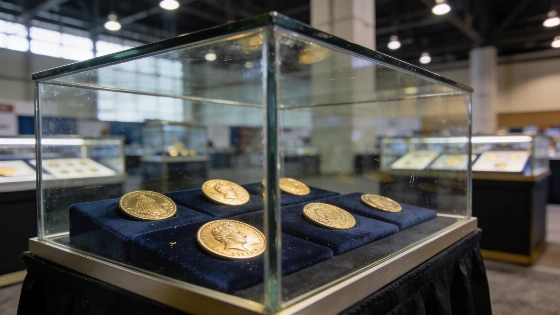
Five of the rarest 1907 Saint-Gaudens Double Eagles will soon go on public view at the Great American Coin & Collectibles Show in Rosemont, Illinois. These coins, together worth about $7 million, are more than just gold. They show the real struggle between art and production that shaped US coinage. The Elite Collection brings them to the Donald E. Stephens Convention Center from October 1 to 3, 2026. Visitors will see, step by step, how the United States Mint turned Augustus Saint-Gaudens' bold idea into a coin that could actually be used in daily life.
The star of the show is the 1907 Extremely High Relief, Lettered Edge Double Eagle. It's graded PCGS Proof-68 with CAC approval. Collectors call it the Ultra High Relief. Only about 15 of these coins exist. This one has a long history, passing through the hands of Colonel E.H.R. Green, J.F. Bell, and Bob R. Simpson. GreatCollections bought it for $4.75 million in a private deal in 2021. It's still a centerpiece of the Elite Collection. The coin's deep sculpted relief shows exactly what Saint-Gaudens wanted before the Mint had to lower the relief for mass production. Numismatic records show only 22 Ultra High Relief coins were made in 1907. About 15 survive. That makes them extremely rare and technically challenging to produce, as detailed by Tangible Investments Inc..
From artistic ideal to circulating coin
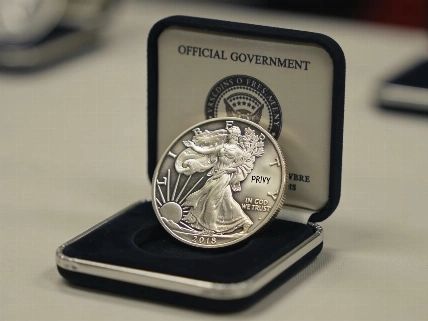
President Theodore Roosevelt personally asked Augustus Saint-Gaudens to redesign the $20 Double Eagle and $10 Eagle. Roosevelt wanted coins that looked as strong as ancient Greek money. Saint-Gaudens answered with Liberty striding forward, torch and olive branch in hand, the US Capitol behind her, and an eagle flying above the rising sun on the back. The motto E PLURIBUS UNUM went on the edge. That left the main surfaces open for bold relief, as described by CoinWeek.
The Mint's presses in 1907 could not handle such deep relief. That led to a year of trial and error. The Rosemont display tracks this journey. It starts with the breathtaking but impractical Extremely High Relief. Next come two types of the famous MCMVII High Relief: Wire Edge and Flat Edge. The final step is the Arabic Numerals version, which could be made in large numbers. The Wire Edge happened when metal squeezed into a gap between die and collar. The Flat Edge came after the Mint fixed this. In total, the Mint struck 12,367 MCMVII High Relief Double Eagles before switching to the lower-relief Arabic Numerals type. That last version saw 361,667 coins made in 1907. The Mint's presses needed several strikes for each high-relief coin. That forced a choice: keep the art or make coins fast. This same problem still shows up in modern currency design, as Federal Reserve research on coinage efficiency points out.
Among the five coins, the 1907 MCMVII High Relief Wire Edge is graded PCGS MS-67+ CAC. The Flat Edge version is PCGS MS-68+ CAC. Both are among the best known. They let collectors see the Mint's technical hurdles up close. The fourth coin, a 1907 Arabic Numerals Double Eagle graded PCGS MS-67+ CAC, marks the final compromise. It lost some sculptural depth but could be made quickly and entered circulation in December 1907. The fifth coin, a 1907 High Relief PCGS Specimen-66+ CAC, is a special strike. Its Specimen label shows the Mint was still experimenting.
Elite Collection and numismatic milestones
The Elite Collection has set the pace in Saint-Gaudens Double Eagle collecting for years. Its 61-coin set, shown to the public in 2023, included 53 coins made for circulation and eight proofs. Of these, 35 are the best known or tied for best in their PCGS Set Registry group. The most famous coin in the collection is the 1933 Saint-Gaudens Double Eagle. It's the only one legal for private ownership. Sotheby's sold it in June 2021 for $18,872,250. GreatCollections now values it at over $30 million. The 1933 coin is still part of the Elite Collection, according to its inventory.
Collectors and historians will find the five coins in Rosemont a rare chance to study the Mint's most famous gold-coin experiment all in one place. Each coin marks a clear step from artistic dream to practical money. The $7 million price tag is only part of the story. These coins are proof of a turning point in US monetary history. The United States Mint still honors this chapter. In 2026, it will release a Saint-Gaudens High Relief $20 Gold Coin for $5,490 to mark the nation's 250th anniversary, as reported by CoinNews.
Technical data and historical context
The 1907 Extremely High Relief, Lettered Edge Double Eagle is graded PCGS Proof-68 with CAC approval. Only about 15 are known. The 1907 MCMVII High Relief Wire Edge is PCGS MS-67+ CAC. The Flat Edge is PCGS MS-68+ CAC. The 1907 Arabic Numerals Double Eagle, with 361,667 coins made, is PCGS MS-67+ CAC. The fifth coin, a 1907 High Relief Specimen, is PCGS SP-66+ CAC. The Mint's move from Roman numerals (MCMVII) to Arabic numerals (1907) was the last step for mass production. The public can see these coins from October 1 to 3, 2026, at the Donald E. Stephens Convention Center in Rosemont, Illinois. This is confirmed by the official events calendar and PCGS attendance listings.
The world of rare coins is full of mysteries. One puzzle still unsolved is why some early US quarters have an E or L above Liberty's head. Collectors are still searching for answers, as reported earlier.
Why the Saint-Gaudens Double Eagle still matters
The Saint-Gaudens Double Eagle's path from artist's model to real coin shows the clash between creative vision and factory limits. Every change-relief, edge lettering, date style-was the Mint's answer to making coins both beautiful and practical. The coins in Rosemont are more than rare. They are pieces of a time when US currency design pushed boundaries. Anyone interested in art, technology, or money history will find this exhibit a direct look at the choices that shaped coins in American pockets for decades.
To understand the Saint-Gaudens Double Eagle, you have to see how coin-making technology and artistic goals can collide. High-relief coins like the first 1907 design needed several strikes and careful handling. That made them hard to use in daily life. The Mint's switch to lower relief and Arabic numerals was not just about looks. It was needed for fast, efficient production. This trade-off between vision and what's possible comes up again and again in currency history. Every coin is shaped by both creative ambition and the limits of manufacturing. Central banks like the Federal Reserve still face these choices. They balance anti-counterfeiting, production costs, and public trust in money. For more on how central banks handle these issues, see the Federal Reserve's monetary policy resources.