
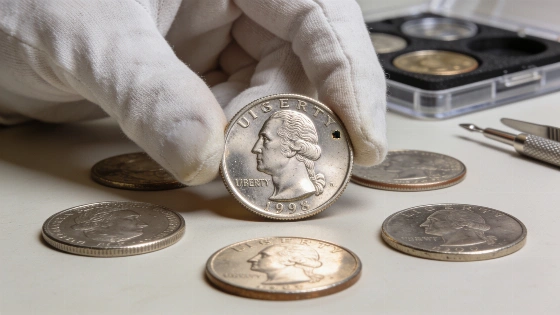
A 2026 Donald J. Trump dollar with a July 4 privy mark has been certified before official release, launching a scramble for 250,000 hidden coins mixed into standard Mint rolls and bags
The first 2026 Semiquincentennial President Donald J. Trump $1 Coin bearing the July 4 privy mark has surfaced and been certified by Professional Coin Grading Service (PCGS)-days before the U.S. Mint even opened public sales. This early appearance has ignited a nationwide hunt among collectors, who now know that only 250,000 of these marked coins exist, all randomly distributed in standard Mint packaging.
PCGS confirmed it received the coin on August 24, 2026, through an advance-release submission, more than a week before the Mint's official launch on September 2. The coin's arrival ahead of public access immediately raised questions about distribution and transparency, but the Mint verified the timeline and the unique status of the July 4 privy-marked dollars.
Privy Mark and Distribution Strategy
Unlike typical commemorative issues, the U.S. Mint did not sell the July 4 privy-marked Trump dollars as a separate product. Instead, all 250,000 coins-struck at the Philadelphia Mint on July 4, 2026-were mixed at random into the regular 25-coin rolls and 100-coin bags of the 2026 Trump dollar. Buyers could not order the special version directly; finding one depends entirely on chance. This approach mirrors the Mint's strategy for previous limited releases, but the precise mintage and single-day production make this issue especially targeted by collectors.
For context, the Mint priced a 25-coin roll at $61 and a 100-coin bag at $154.50, with a two-per-household limit for the first 24 hours. All coins have a circulating finish but were not released into everyday commerce. Instead, they remain legal tender, available only through collector channels. PCGS assigned a First Discovery Special Label to the initial certified coin, and its CoinFacts database now lists this variety under PCGS number 1020602.
Design and Legal Framework
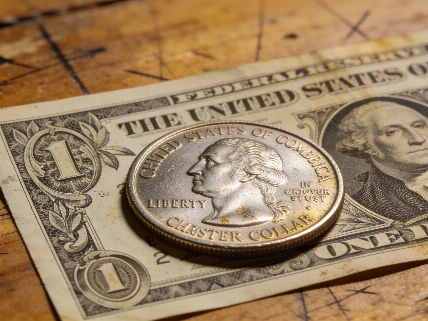
The 2026 Trump dollar is part of the broader Semiquincentennial coin program, authorized by the Circulating Collectible Coin Redesign Act of 2020. The law permits a one-year $1 coin honoring the United States' 250th anniversary. The obverse, designed by United States Mint Chief Engraver Joseph Menna, features a portrait of President Donald J. Trump based on an official White House photograph. The reverse, by former Chief Engraver Frank Gasparro, displays the Presidential Seal with an eagle, shield, and the number 250. Inscriptions include LIBERTY, IN GOD WE TRUST, 1776 ~ 2026, UNITED STATES OF AMERICA, and ONE DOLLAR.
Each July 4 privy-marked coin is composed of 88.5% copper, 6% zinc, 3.5% manganese, and 2% nickel, weighs 8.100 grams, and measures 26.49 mm in diameter. The edge is plain, and no mint mark appears on the Philadelphia-struck coins. The Mint confirmed the entire batch of 250,000 was produced on July 4, 2026, and distributed without any way for buyers to distinguish rolls or bags containing the special coins.
Certification and Collector Impact
The early certification by PCGS has set a new benchmark for modern U.S. coin collecting. With the Mint's confirmation of the exact mintage and the random distribution method, collectors now face a statistical challenge: only a fraction of the millions of 2026 Trump dollars will carry the July 4 privy mark, and their discovery depends on opening sealed Mint products. The first certified coin's appearance before public sales began has only intensified interest and speculation about how many will be found in high grades.
For comparison, previous U.S. coin releases with hidden rarities-such as the Massachusetts Pine Tree Shilling, which defied royal authority and was reported earlier-have driven similar collector frenzies, but the transparent mintage and legal-tender status of the 2026 Trump dollar set it apart in the modern era.
Key Figures and Timeline
According to the United States Mint, all 250,000 July 4 privy-marked Trump dollars were struck on July 4, 2026, at the Philadelphia Mint. Public sales of the 2026 Trump dollar rolls and bags began on September 2, 2026, at noon EDT. The Mint did not disclose which rolls or bags contained the special coins, and no additional privy-marked coins will be produced. PCGS received and certified the first known example on August 24, 2026, before the official sales window opened.
The Mint's approach-announcing the exact number of special coins but offering no way to target them-has created a transparent but unpredictable chase. Collectors must rely on luck, persistence, and grading services to confirm their finds. The legal-tender status ensures these coins remain part of the official currency system, even as their collector value diverges from face value.
Randomized distribution of limited-mintage coins is not new, but the 2026 Trump dollar's combination of a fixed production date, precise mintage, and legal-tender status makes it a case study in how modern mints can engineer scarcity and excitement. The Mint's decision to avoid separate packaging or advance notice for the July 4 privy mark has ensured that the search for these coins will remain competitive and unpredictable, with grading services like PCGS playing a central role in verifying discoveries and setting market benchmarks.
Privy marks-small symbols or inscriptions added to coins to denote a special event, date, or production run-have become a favored tool for mints seeking to create limited editions without launching entirely new products. In the case of the 2026 Trump dollar, the July 4 privy mark not only commemorates the nation's 250th anniversary but also transforms an otherwise standard issue into a high-stakes collectible. The Mint's strategy of random insertion, combined with public disclosure of the mintage, balances transparency with the thrill of the hunt, ensuring that both casual buyers and dedicated collectors remain engaged long after the initial release.