A rare 1879 Liberty Head Quintuple Stella gold coin, one of only five known, will be offered at Heritage Auctions in 2026. With just four examples in private hands, this sale highlights the coin's unique place in American numismatic history
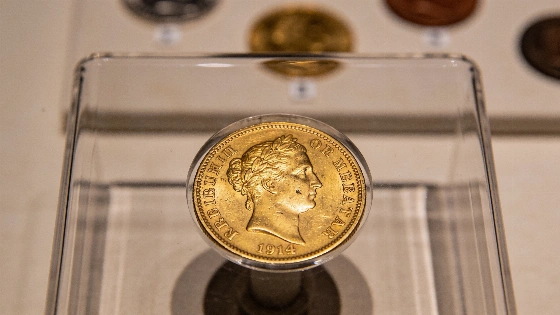
One of the rarest experimental gold coins ever produced by the United States Mint is set to return to the auction market in 2026. The 1879 Liberty Head Quintuple Stella, a $20 gold pattern coin, will be offered by Heritage Auctions as part of the Bob R. Simpson Collection during the ANA U.S. Coins Signature Auction scheduled for August 31 through September 5, 2026. Only five examples of this coin are known to exist, with one held permanently by the Smithsonian Institution and the remaining four in private collections. The coin to be auctioned is the highest-graded specimen, certified PR64+ Deep Cameo by PCGS, and has not appeared on the market for 18 years.
Origins of the Quintuple Stella
The Quintuple Stella was born from late 19th-century efforts to align U.S. coinage with international gold standards. In the 1870s, American officials explored the idea of creating coins that could circulate more easily alongside European gold denominations. The $4 Stella, proposed at seven grams, was intended to match the value of the Austrian eight-florin piece. The Quintuple Stella multiplied this concept by five, resulting in a 35-gram, $20 gold coin. While former congressman John A. Kasson advocated for the project, later research credits Dr. William Wheeler Hubbell for promoting both the metric system and the goloid alloy used in these experimental coins. Ultimately, the Philadelphia Mint struck only five Quintuple Stellas in gold, and official correspondence from 1880 confirmed that the dies were destroyed after production.
Market Rarity and Auction History
Heritage Auctions has traced all five known Quintuple Stellas: one is held by the Smithsonian, and four remain in private hands. The Simpson specimen, graded PR64+ Deep Cameo by PCGS, is considered the finest. The coin last changed hands in 2008, when Bob R. Simpson acquired it as part of the Southern Collection. Its rarity and condition have made it a centerpiece for collectors, and previous sales have reached seven-figure sums. In August 2025, Heritage sold another Quintuple Stella, graded PR64 Deep Cameo, for $2.16 million. Simpson had previously owned that coin as well but retained the higher-graded example now coming to auction.
The upcoming ANA U.S. Coins Signature Auction #1396 will feature this Quintuple Stella alongside other notable rarities, including Stellas, Carson City coins, early gold issues, Proof Lincoln cents, and a newly discovered 1795 large cent overstrike. The auction catalog is already available, and realized prices will be published after the sale concludes. For collectors, the sale of the Simpson Quintuple Stella represents a rare opportunity to acquire a piece of American numismatic history that is unlikely to appear again soon.
Facts and Figures
The 1879 Liberty Head Quintuple Stella is catalogued as Judd-1643, Pollock-1843, and is classified as Low R.7, indicating extreme rarity. Only five gold examples were struck at the Philadelphia Mint, and official records confirm that no further pieces were produced after the dies were destroyed in 1880. The coin weighs 35 grams and carries a face value of $20. The most recent public sale of a Quintuple Stella, in August 2025, achieved a price of $2.16 million for a PR64 Deep Cameo specimen.
Experimental Coins and Collecting Debates
The Quintuple Stella is part of a broader tradition of experimental and pattern coins in U.S. history. These coins were often produced in extremely limited numbers to test new designs, alloys, or denominations, and their legal status as patterns or mint errors can be a subject of debate among collectors. For example, the recent auction of an 1866 Liberty Head Quarter Eagle struck in nickel-not gold-has reignited discussion over whether such pieces were intentional patterns or accidental mint errors. Readers interested in the complexities of pattern coin classification can explore the ongoing debate in this area through this detailed analysis of the 1866 nickel Quarter Eagle.
Understanding the distinction between pattern coins and regular issues is essential for collectors and historians. Pattern coins are typically produced as prototypes or proposals for new designs, denominations, or alloys, and are not intended for general circulation. Their rarity and experimental nature often make them highly sought after, but their legal status and collectibility can vary depending on how and why they were produced. The Quintuple Stella, as a deliberate experiment in international coinage alignment, stands as a prime example of how monetary innovation and collector interest can intersect in the world of rare coins.