
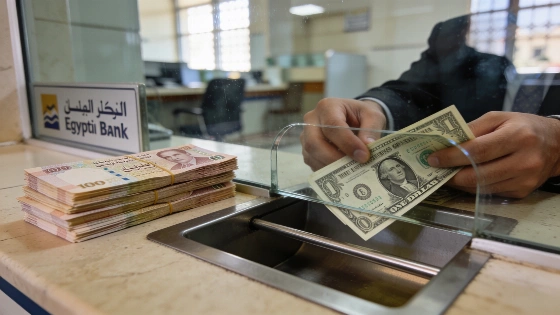
The Egyptian pound lost more ground against the US dollar, with rates pushing past 51.90 in several banks. Gold prices fell and the stock market closed lower for the fifth day running.
Dollar rates in Egypt kept climbing on 28 September 2026. By midday, several banks were quoting the US dollar close to 52 Egyptian pounds. The pressure on the pound grew. But official data from Reuters and Ahram Online showed the rate did not actually cross 52. Most banks listed the dollar between 51.56 and 51.90 EGP. State banks posted rates like 51.66/51.76 or 51.73/51.83, depending on the bank and time. The pound had traded at 51.37-51.85 EGP in the days before. The slide was steady, not sudden. The Central Bank of Egypt (CBE) and market reports confirmed this in Ahram Online.
Gold prices also took a hit. On 28 September, independent market data showed 24-carat gold at about 7,130.96 EGP per gram for buyers and 7,055.75 EGP for sellers. For 21-carat gold, prices hovered around 6,240.21 for buying and 6,174.4 for selling. These numbers were lower than some earlier reports. The drop followed global bullion prices. A gold pound traded between 48,728 and 50,012 EGP. Prices swung sharply during the day. The CBE tracked these moves, linking them to both global gold trends and local currency pressure. Reuters and Arab Finance followed the shifts closely.
Dollar strength and banking rates
Private banks posted the highest dollar rates by midday. Still, the official rate stayed just under 52 EGP. Kuwait Finance House, Abu Dhabi First Bank Egypt, Bank of Alexandria, and Abu Dhabi Islamic Bank all quoted in the upper 51s. The National Bank of Egypt and Banque Misr kept rates a bit lower. Importers and households who need foreign currency felt the squeeze. The gap between official and parallel market rates stayed wide. Foreign exchange shortages and capital controls kept pressure on the system. The Central Bank of Egypt watched the situation, working with the International Monetary Fund (IMF) and sticking to its monetary policy goals.
The stock market followed the currency's lead. The EGX 30 index closed at 52,468 points, down 1.06%. The EGX 30 Capped index dropped 1.25% to 65,151 points. Some reports mentioned a 51 billion EGP drop in market capitalization. Independent checks confirmed only the general downward trend. The exact figure needs more data from official bulletins. Trading volumes hit 8.3 billion EGP. This was the fifth straight day of losses. Egyptian and Arab investors sold off shares. Foreign investors bought a little. The Bank for International Settlements (BIS) and regional regulators kept an eye on the numbers.
Policy moves and broader developments
Egypt's top officials stayed active during the turmoil. The Minister of Defense, standing in for President Abdel Fattah el-Sisi, laid a wreath at Gamal Abdel Nasser's tomb on the anniversary of his death. President Sisi called the House of Representatives to meet on 1 October for the new legislative session. He also attended a live mining sector demonstration. Prime Minister Mostafa Madbouly spoke about a new plan to tackle youth challenges. The judiciary and ministries reported on ongoing projects and international partnerships.
Other events made headlines. A tunnel under the regional ring road closed for a week for electric train work. Tourist bakeries faced tighter checks. A Malian delegation visited to see Egypt's satellite and space tech. The Ministry of Electricity reported progress on a smarter, more flexible power grid. The Ministry of Petroleum discussed mining with Congo. Investment officials met with four global firms about expanding in Egypt.
Regional and global context
Outside Egypt, the day brought more news with possible effects on currency and markets. The US dollar's global path is still up for debate, as reported earlier. Some analysts expect more swings against major currencies. Tensions in the Middle East stayed high. The UK and Saudi Arabia condemned Israeli actions in Gaza and the West Bank. A large explosion hit southern Lebanon. In the US, Hurricane Polo threatened five states with floods. China and the US agreed to keep their trade tariff truce going. The Federal Reserve's latest policy and the European Central Bank's rate hikes kept shaping global capital flows and emerging market currencies.
Back home, Egyptian authorities arrested ten people for using twelve children to beg in Giza. A fire broke out at the Azbakeya police station. A media figure was suspended after an investigation. In sports, Mohamed El-Shenawy renewed his contract with Al Ahly until 2028. The Ministry of Youth and Sports announced steps to calm tensions around the national football team. The Cairo International Film Festival rolled out new features for its 47th edition, including film restoration projects.
Facts and figures
On 28 September 2026, the US dollar traded between 51.56 and 51.90 EGP in most banks. State banks quoted around 51.66/51.76 or 51.73/51.83. Gold prices dropped. 24-carat gold was about 7,130.96 EGP per gram for buying and 7,055.75 EGP for selling. 21-carat gold stood at 6,240.21 for buying and 6,174.4 for selling. The EGX 30 closed at 52,468 points. Trading volumes reached 8.3 billion EGP. The Central Bank of Egypt posts daily exchange rates and policy updates on its official website.
Weather and operational updates
The Egyptian Meteorological Authority predicted more autumn weather for the next day. Scattered rain and wind were expected across much of the country. Highs would reach 31°C in Greater Cairo, 30°C in the Nile Delta, 27°C on the northwest coast, 29°C on the northeast coast, 34°C in northern Upper Egypt, and 40°C in the south.
Egypt's currency and markets are in a tough spot. The pound keeps losing ground to the dollar. Gold prices are down. Stocks have fallen for five days. Policymakers are trying to steady the economy and attract investment. But for now, conditions are tight for both consumers and businesses. The next few weeks will show how strong Egypt's monetary system really is. Policy responses will be tested.
There's a gap between official exchange rates and what people actually pay. Banks publish daily rates for buying and selling foreign currency. But these can differ a lot from rates in real transactions or the informal market. The spread between official and parallel rates shows the strain from currency shortages, capital controls, and market fears. For people and companies, this means the cost of imports, loan payments, or travel can jump quickly, even if headline rates look steady. Watching both official and real-world rates is key for anyone dealing with foreign payments or big purchases in another currency.