
Minya governorate has told all local centers to start a six-month extension for state land regularization and building violation settlements, giving residents more time to finish legal paperwork.
Minya's local government wasted no time after Egypt's cabinet signed off on a six-month extension for state land regularization and building violation settlements. The order resets the clock for thousands of property owners and businesses who still face unresolved legal issues. This move is part of a wider national push. On October 7, 2026, the Egyptian Cabinet approved presidential and prime ministerial decrees to keep the doors open for applications to legalize private holdings on state land and settle building violations. The extension follows Law No. 187 of 2023 and its executive rules under Prime Ministerial Decree No. 1121 of 2024, as reported by Khaberni.
Local officials have been told to keep their offices open every day and speed up the intake of new applications. The goal is to avoid a pileup that could leave property owners stuck in legal limbo. The extension covers two main areas: requests to legalize privately held state land and applications to settle building code violations. Both had looming deadlines. The Central Bank of Egypt (CBE) has pointed out that regularizing property helps banks improve collateral quality, which can affect credit growth and the stability of the Egyptian pound in currency markets.
New deadlines and immediate action
The cabinet's order, issued on a Wednesday, gives a fresh six-month window for people to submit land regularization requests on state-owned properties they hold privately. The previous deadline had just expired, which would have shut out anyone who hadn't finished the process. At the same time, the period for building violation settlements has also been pushed back by six months, starting from 5 November 2026. That means the new cutoff for building violation settlements is now 5 May 2027. This follows the earlier six-month period set by Prime Ministerial Decree No. 1098 of 2026, which ran from 5 May to 5 November 2026, according to Al-Shorouk.
Minya's governor, اللواء عماد كدوانى, has ordered the heads of all nine local centers to roll out these changes right away. The governorate says the aim is to make sure anyone who missed the old deadlines can now get their paperwork in order and bring their properties into line with the law. Technology centers in Minya are now open daily to handle the expected rush, with the governor's office keeping a close eye on progress.
What this means for residents and businesses
For property owners, this extension is more than just a paperwork shuffle. Many people and businesses struggled to pull together the right documents or navigate the bureaucracy before the original cutoff. The new window gives them a real shot at finishing what's needed, lowering the risk of fines, demolition, or losing property rights. The Central Bank of Egypt's monetary policy committee has stressed that legal property status is tied to getting formal credit, which matters for small business growth and household finances. The International Monetary Fund (IMF) has also pointed out that formal property rights can help steady the broader economy and keep inflation expectations in check.
Shabaan El-Ashry, deputy head of the Al-Adwa center, said the rollout started right after the cabinet's announcement. Local technology centers are now working daily to keep things moving and cut down on delays, with direct oversight from Minya's governor to make sure the process stays on track.
Numbers and deadlines
The new six-month extension for building violation settlements kicks in on 5 November 2026. The same goes for state land regularization, though the exact start date depends on when the last deadline ended. These extra months are meant to give people one last chance to sort out legal issues and avoid penalties. Official statements make it clear that the extension comes from presidential and prime ministerial acts approved by the Cabinet, not from any local governor's decision. So far, no official numbers have been released on how many people have applied or how much has been paid in settlements.
Egypt has used similar deadline extensions before to manage big property regularization drives in other regions and sectors. For example, a recent report showed how regulatory changes can affect financial access and property rights for Egyptians.
How legalization and compliance work
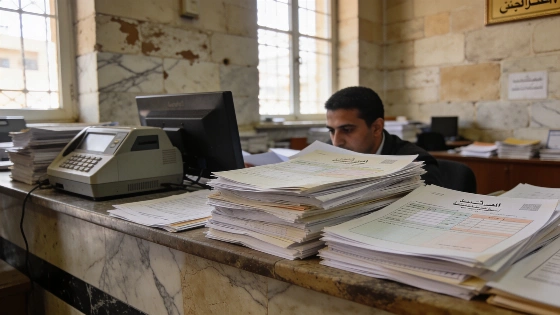
The government's approach is to set up a legal path for regularizing properties that were outside the law. By giving more time, officials hope to bring more buildings and land into the formal economy, which gives owners legal certainty and can boost tax revenue. Applicants have to submit detailed paperwork and, in many cases, pay fees or fines to get compliant. The Central Bank of Egypt has said that formalizing property assets can make monetary policy work better, especially since the Egyptian pound has swung sharply against the US dollar in recent years. The official exchange rate moved from about 15.7 EGP per dollar in early 2022 to over 30 EGP per dollar by mid-2024, based on Bloomberg data.
The extension gives property owners some breathing room, but it also signals that the government expects them to act fast. Anyone who misses the new deadline could face tougher enforcement, including demolition or losing legal title. The daily operation of technology centers shows that officials are pushing for speed and access during this period.
Egypt's push to regularize property fits a wider pattern in emerging markets, where governments try to bring informal holdings into the legal system and tackle widespread building violations. The real challenge is matching administrative capacity with fair, accessible ways for people to comply. In Minya, this extension will test how quickly local government can respond and whether the public is willing to engage with the legal process. The Bank for International Settlements (BIS) has noted that these formalization efforts can deepen financial markets and cut informality, which often ties back to currency swings and higher inflation risk.
Deadlines for settlement and regularization keep coming up in Egypt's property scene. These windows are meant to chip away at decades of informal construction and unregistered land deals. By opening up compliance periods now and then, the government can slowly bring more properties into the legal fold. But it's rarely smooth. Bottlenecks, missing documents, and public doubt can all slow things down. In the end, how well these extensions work depends on clear communication, fast processing, and whether property owners step up before the next deadline hits.