
Egypt is stepping up its role in Red Sea and Horn of Africa stability, with President Sisi naming South Korea as a key partner and doubling down on Egypt's stance over sovereignty and navigation rights.
President Abdel Fattah el-Sisi is moving to tighten Egypt's grip on the Red Sea and Horn of Africa. He has put South Korea at the heart of a new push for deeper cooperation. For Egypt, the stakes are clear: keeping control over shipping lanes, defending sovereignty, and protecting the economic future of more than 100 million people. The Central Bank of Egypt is watching foreign exchange flows closely. The Egyptian pound (EGP) remains exposed to swings in trade and investment, especially as the Federal Reserve and other major central banks keep global monetary policy tight.
Sisi's latest meeting with his South Korean counterpart was more than a diplomatic handshake. Egypt is making it known that it wants to set the rules for Red Sea access and maritime security. International partnerships are now part of that plan. Sisi made it plain: Egypt will not accept any deal that weakens the sovereignty of Red Sea states or threatens their borders. He repeated this message at a joint press conference in Seoul, stressing that only countries bordering the Red Sea should handle its security. This echoes principles recognized by the International Monetary Fund (IMF) on sovereign rights over strategic corridors, as reported by Ahram Online.
Red Sea security and economic lifelines
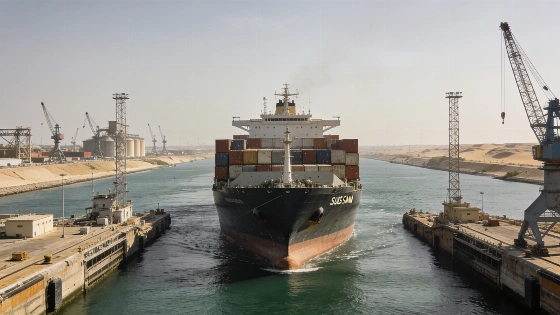
The Red Sea sits at the center of Egypt's strategy. It is a vital route for global trade and energy. Sisi insists that only the countries along its shores should be in charge of its security and management. This position comes as regional tensions and rival interests keep pressure on access to shipping lanes and resources. The Suez Canal, run by Egypt, is still a main artery for world shipping. Its revenues are a major source of foreign currency, tracked by the Central Bank of Egypt.
Egypt's policy goes beyond its own borders. The government is backing stability in the Horn of Africa, a region often shaken by political splits and outside interference. By teaming up with South Korea, Egypt is looking for more than just investment and technology. It wants a diplomatic ally to help defend its maritime and territorial interests. During Sisi's visit to Seoul, Egypt and South Korea signed or renewed 12 memoranda of understanding. These cover economic, industrial, energy, technology, and cultural projects. Both sides also plan to work together in defense, artificial intelligence, and cybersecurity, according to AGBI.
Nile water and existential priorities
Sisi left no room for doubt about the Nile's importance. He called the river an existential issue for Egyptians, saying it is the country's main source of life. This framing is meant to strengthen Egypt's hand in ongoing disputes over water rights and regional development. Both the IMF and World Bank have flagged water security as a risk for Egypt's economy. If Nile flows drop, inflation and food import costs could jump.
Egypt's partnership with South Korea is set to go beyond trade and investment. Technology, infrastructure, and joint efforts to protect navigation and resource access in the Red Sea and nearby regions are on the table. Sisi again called for a Korean industrial zone inside the Suez Canal Economic Zone. The goal is to draw more investment into oil and gas, mining, renewables, green hydrogen, smart grids, and energy storage, as reported by Aawsat.
Regional context and international partnerships
Egypt's tough line on Red Sea governance comes as outside interest in the region grows. Gulf states, African countries, and global powers are all trying to secure their own share of maritime trade and security. As reported earlier, Middle East-Asia partnerships are now shaping how capital and technology move through these corridors. The Bank for International Settlements (BIS) notes that such alliances can sway currency stability and capital flows, especially in emerging markets like Egypt.
With a population topping 100 million, Egypt's economic strength depends on steady Nile access and safe shipping routes. The government's focus on sovereignty and regional stability is not just about national pride. It is a practical move to keep the economy and society on track. The Central Bank of Egypt's monetary policy committee is still weighing the impact of outside shocks on the EGP. Recent inflation numbers and sovereign bond yields show the pressure from both inside and outside the country.
Facts and figures
The Red Sea ranks among the world's busiest shipping corridors. A large share of global trade moves through the Suez Canal. Egypt's population, now over 100 million, relies on the Nile for nearly all its water. The country's economic and security plans are tied to the stability of the Red Sea and Horn of Africa, both of which have seen repeated conflict and outside intervention in recent years.
Egypt and South Korea have started official talks on a Comprehensive Economic Partnership Agreement (CEPA) to lock in and grow trade. In January-June 2026, bilateral trade hit $640.3 million, down 8.7% from $701.2 million a year earlier. But Egyptian exports to South Korea rose 11.2% to $44.6 million, while imports from South Korea dropped 9.9% to $595.7 million. South Korean investment in Egypt jumped to $736.3 million in the first half of the 2025/26 fiscal year, up 853.8% from $77.2 million in the same period the year before, according to Ahram Online. For the first nine months of 2025, total trade turnover was $995.3 million, compared to $1.2 billion in 2024. Egyptian exports reached $56.1 million, while imports from South Korea stood at $939.2 million, as reported by Zawya.
Egypt's push for exclusive control by Red Sea states fits a wider pattern of regional players trying to take charge of key waterways. The aim is to keep outside powers from setting new rules that could threaten sovereignty or borders. The European Central Bank (ECB) and Bank of England (BoE) have both pointed out that stable shipping routes are crucial for global supply chains and currency markets in their latest policy updates.
Understanding sovereignty over maritime corridors is key to Egypt's position. Under international law, littoral states-those with direct coastlines-usually get the main say over a body of water's security and management. But the Red Sea's strategic value has sparked frequent disputes over access, navigation, and resources. Egypt's policy is to make sure only states with direct stakes set the rules for these waters, pushing back against any outside attempts to change the balance.