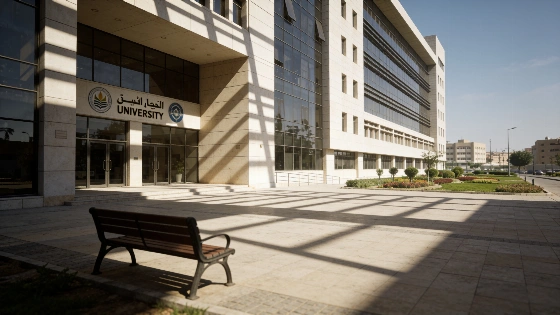
Egypt's Ministry of Planning is set to renew and expand its work with ESLSCA University, aiming to give public sector leaders and staff advanced training through globally accredited academic programs.
Egypt's Ministry of Planning and Economic Development is moving to lock in a new phase of its partnership with ESLSCA University. The goal: give state administrators sharper management skills and recognized international credentials. Dr. Ahmed Rostom, who leads the Ministry, wants to build on several years of joint work that has already put hundreds of government employees through specialized training and academic programs. This push fits into Egypt's wider economic overhaul, which the International Monetary Fund (IMF) and the Central Bank of Egypt (CBE) have tracked closely. Both institutions have kept a close eye on Egypt's currency swings and rising inflation, especially as global markets shift.
The Ministry is betting that modernizing Egypt's administrative core depends on people, not just policy. Leadership and management training now sit at the center of its reform plan. The aim is to bring the public workforce up to speed with the demands of today's government work and the fast-changing global policy scene. The Central Bank of Egypt has tried to steady the Egyptian pound (EGP) by making several key interest rate moves in recent years. Inflation hit double digits in 2023, according to official CBE inflation data.
International accreditation and program impact
One major step in this partnership is the international accreditation of ESLSCA University's Master of Business Administration (MBA) program. The program recently earned EFMD Accredited status. No other MBA in Egypt or the Middle East holds this distinction. This isn't just a mark of quality. It means Egyptian public sector staff now have access to training that meets tough global standards. The partnership began in 2016 under a five-year protocol with the Ministry of Higher Education. It was set up to prepare government leaders through a dedicated Government MBA track, a direct answer to the changing needs of Egypt's public sector as reported by Al Bawaba News.
Since 2016, the program has produced 12 graduating classes of government professionals and handed out 1,500 scholarships for the Government MBA. These scholarships have helped a new wave of public sector leaders pick up advanced management knowledge and practical skills. The program reaches staff across many government agencies, not just one ministry. This broad approach matches international best practices. The Bank for International Settlements (BIS) points out that building human capital is key to stronger institutions and better governance.
Strategic renewal and broader scope
The Ministry of Planning is not standing still. Dr. Ahmed Rostom has called for renewing and expanding the partnership with ESLSCA University, pointing to the strong results so far and the need to keep up with new administrative challenges. The next phase is expected to bring even more advanced academic and training options, pushing international best practices deeper into Egypt's public sector. ESLSCA University has said it is ready to keep offering scholarships to help government employees build their skills. This comes as Egypt continues to adjust its fiscal and monetary policies to fix external imbalances and support the EGP's stability.
Dr. Ali El Meligi and his team at ESLSCA University have restated their commitment to backing Egypt's government with targeted scholarships and program upgrades. Their focus on building capacity lines up with the state's goal of preparing staff for bigger roles and higher performance. The real test of the partnership is not just how many people graduate, but whether government bodies actually work better. This is especially important as the Central Bank of Egypt keeps a close watch on foreign exchange reserves and manages liquidity in response to global market swings, as shown in recent monetary policy meeting minutes.
Data and context
Since the five-year protocol started in 2016, the ESLSCA-Egypt government partnership has delivered 1,500 Government MBA scholarships, 12 graduating classes, and the only EFMD Accredited MBA program in Egypt and the Middle East. The program's academic and training tracks have reached staff from a wide range of government entities, showing a broad push for stronger institutions. In August 2017, Egypt set up the National Training Academy (NTA) by presidential decree to further professionalize the public sector and prepare young people for leadership. This move works alongside the ESLSCA partnership and supports Egypt's long-term economic plans as covered by Ahram Online.
Egypt's approach to public sector training fits a wider regional trend. More governments are teaming up with international academic partners to modernize their administrative systems. The same pattern shows up in the financial sector. As reported earlier, Egyptian banks have also chased international recognition for digital upgrades and service quality. The Central Bank of Egypt's ongoing work to raise regulatory standards and promote financial inclusion is under close watch by the IMF and other global bodies. This highlights the need for strong institutional frameworks.
Building sustainable administrative capacity
Egypt's renewed focus on academic partnerships marks a shift in how it tackles public sector reform. Instead of relying on internal training or one-off workshops, the government is putting money into structured, internationally recognized programs that can show real gains in leadership and operations. This approach could set a new standard for other countries in the region looking to professionalize their civil services and match global benchmarks. The European Central Bank (ECB) has also stressed the value of international cooperation and capacity building in its policy updates, showing how closely linked institutional development and economic stability have become.
By weaving international accreditation and advanced management education into its reform plans, Egypt is getting ready to handle the demands of modern governance. The ESLSCA University partnership shows that lasting institutional change takes more than policy statements. It depends on giving people the skills, knowledge, and credentials to drive change from within.
International accreditation in higher education, like EFMD Accredited status, acts as a quality check that measures academic programs against global standards. For public sector training, this means participants get both advanced management theory and practical tools recognized worldwide. Such accreditation can boost the credibility of government training, open doors for international cooperation, and make it easier for graduates to move in the global job market. In Egypt's case, these factors help build a more agile, skilled, and future-ready public sector workforce.