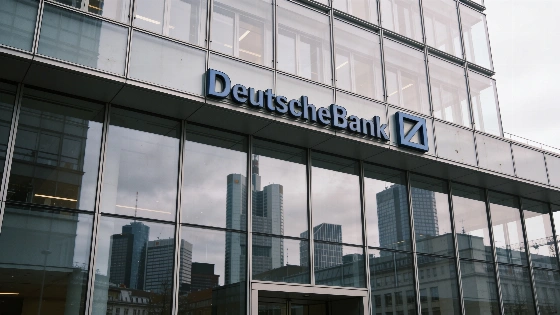
China has appointed Deutsche Bank as the first European renminbi clearing bank, giving European businesses and financial institutions direct access to China's onshore payment and settlement systems for cross-border transactions
Deutsche Bank has become the first European financial institution to be designated by China as an official renminbi clearing bank, a move that will allow European banks and businesses to process and settle cross-border payments in renminbi (CNY) directly through China's domestic financial infrastructure. The appointment, announced by Deutsche Bank, marks a significant step in the ongoing internationalization of the Chinese currency and reflects China's efforts to expand the global use of the renminbi beyond Asia.
Previously, European institutions seeking to settle transactions in renminbi typically relied on correspondent banking relationships, which often involved additional intermediaries, longer processing times, and higher costs. With Deutsche Bank now serving as a direct clearing bank, European clients will be able to access China's onshore payment systems, including capital markets and liquidity facilities, without routing payments through offshore hubs or third-party banks. This change is expected to streamline cross-border trade and investment flows between Europe and China, reducing friction and potentially lowering transaction costs for businesses operating in both regions.
Expanding Renminbi's International Role
The decision to grant Deutsche Bank clearing bank status is part of a broader Chinese strategy to promote the renminbi as a global currency and reduce reliance on the U.S. dollar in international payments. In recent years, China has introduced a series of measures to encourage the use of its currency in global trade, investment, and financial markets. In June, Chinese authorities announced new policies aimed at making it easier for foreign institutions to access renminbi liquidity and settle cross-border transactions. Shortly after, Standard Bank and Industrial and Commercial Bank of China were jointly named as the "Renminbi Clearing Bank of Africa," covering 19 African countries.
According to data from the Society for Worldwide Interbank Financial Telecommunication (SWIFT), the renminbi ranked as the fifth most-used currency for global payments in 2025, accounting for approximately 3.5% of total transaction value. While this remains well below the U.S. dollar and euro, the share of renminbi payments has grown steadily over the past decade, reflecting both policy support and increased demand from international businesses trading with China.
Implications for European Businesses and Banks
For European companies engaged in trade or investment with China, the new clearing arrangement offers several practical benefits. Direct access to China's payment and settlement systems can improve transaction speed, reduce operational risk, and provide more transparent pricing for cross-border payments. Financial institutions in Europe may also find it easier to offer renminbi-denominated products and services, such as trade finance, cash management, and investment solutions, to their clients.
However, the effectiveness of the new clearing bank arrangement will depend on how quickly European banks and businesses adapt their systems and processes to take advantage of direct renminbi settlement. Regulatory requirements, compliance standards, and technical integration with China's payment infrastructure may present initial challenges. Additionally, the broader adoption of the renminbi in Europe will continue to be influenced by factors such as currency volatility, capital controls, and the relative attractiveness of Chinese assets to international investors.
China's Strategy to Diversify Global Payments
China's push to expand the international use of the renminbi is closely linked to its goal of reducing dependence on the U.S. dollar-dominated global payment system. By establishing official clearing banks in key financial centers, China aims to make it easier for foreign institutions to settle transactions in renminbi, thereby supporting the currency's role in global trade and finance. The appointment of Deutsche Bank as the first European renminbi clearing bank is a notable milestone in this strategy, signaling China's willingness to deepen financial ties with Europe and offer alternatives to established payment routes.
According to SWIFT, the renminbi's share of global payments has increased from less than 1% in 2012 to over 3% by 2025, with much of the growth driven by trade settlement and investment flows between China and its major trading partners. The expansion of official clearing banks outside Asia is expected to further support this trend, although the renminbi's path to becoming a true global reserve currency remains gradual and subject to ongoing policy developments.
Clearing banks play a central role in international payment systems by providing direct access to a currency's domestic settlement infrastructure for foreign institutions. In the case of the renminbi, official clearing banks outside China can process payments, clear transactions, and provide liquidity in CNY without relying on offshore intermediaries. This arrangement can reduce settlement risk, improve efficiency, and support the broader use of the currency in cross-border trade and finance. However, the effectiveness of such arrangements depends on regulatory alignment, technical integration, and the willingness of market participants to adopt new payment channels.