
The Danish krone has slipped against the euro, but Bank of America argues this move is driven by temporary capital flows rather than any threat to Denmark's currency peg. The bank sees intervention risks but expects the peg to hold.
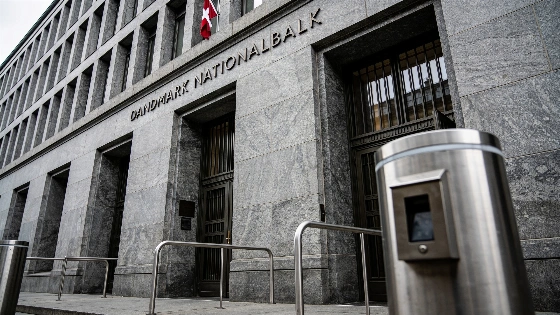
The recent drop in the Danish krone against the euro has sparked talk about the future of Denmark's currency peg. Bank of America, however, sees the situation differently. The bank points to a wave of capital outflows as the main reason for the krone's weakness, not any real risk to the peg itself. Danmarks Nationalbank has kept its commitment to the peg, using both monetary policy and targeted interventions to steady the currency.
Bank of America attributes the krone's decline to short-term flow pressures rather than a deeper policy change or structural problem. These outflows are tied to shifts in how Danish income is paid out abroad, not to a drop in Denmark's ability to generate external surpluses. The bank expects these pressures to ease and advises clients not to chase further declines at current levels. Denmark's current account surplus jumped to 44.4 billion kroner in July 2026, up from 29.0 billion in June-the largest monthly increase on record-highlighting the country's strong external position, according to Danmarks Nationalbank.
Flow dynamics and central bank response
Denmark's external accounts remain solid, but the primary income balance has narrowed as more income earned in Denmark is paid to non-residents. This shift has reduced the net inflow that usually supports the krone, even though the overall current account stays positive. The European Central Bank and Danmarks Nationalbank both raised key policy rates by 0.25 percentage points to 2.10% on September 10, 2026, following a similar move in June. These rate hikes are a direct response to currency pressures and are meant to keep the peg to the euro intact. By matching ECB moves, Danmarks Nationalbank signals its readiness to act if needed (Bloomberg, ECB).
Further central bank action is still possible. Danmarks Nationalbank has a track record of intervening in the foreign exchange market to defend the krone's peg, and investors are watching its next steps closely. This is not the first time the krone has come under pressure-similar episodes have happened before and were resolved without changing the peg. Bloomberg reports that the central bank has already intervened in 2026 to support the krone, but analysts surveyed by Bloomberg do not expect more unscheduled rate hikes in the next year. Most expect Nationalbanken to continue following the ECB's lead.
Data and market context
In the first half of 2026, the Danish krone weakened by about 1.2% against the euro, with the EUR/DKK rate moving from 7.44 to 7.53. This happened even though Denmark's current account surplus stayed above 6% of GDP, pointing to capital flows-not trade imbalances-as the main driver. The narrowing of the primary income balance has come alongside higher dividend and interest payments to foreign investors, increasing outflows and putting pressure on the krone. Trade fundamentals remain strong: in July 2026, exports rose by 4.5% while imports fell by 6.9%, lifting the goods surplus to 33.4 billion kroner from 22.0 billion in June, according to Nationalbanken's monthly data.
Bank of America's view differs from recent market worries about a possible peg break. The bank recommends that companies hedge at current levels, expecting the krone's weakness to be temporary and the peg to hold unless there is a major shift in external conditions. Danmarks Nationalbank's regular publication of balance and rate data, available on its official calendar, lets market participants track developments affecting the EUR/DKK rate closely.
Operational implications for businesses
For Danish companies and international firms with DKK exposure, the current situation brings both risks and opportunities. Bank of America suggests hedging at current rates could secure favorable terms if the krone rebounds as flow pressures ease. Still, the risk of further central bank intervention remains, so companies should keep a close eye on Danmarks Nationalbank's actions. Recent events in other currency markets, such as the yen's weakness and the policy debate in Japan, show how quickly market sentiment can change. Central banks-including the Bank of Japan and the ECB-often have to balance market expectations with domestic needs, and Denmark faces similar challenges.
While Denmark's peg to the euro has weathered many tests over the years, the current episode highlights the need to understand what drives currency moves. Flow-driven weakness can be sharp but often corrects itself if the underlying external position is strong. Distinguishing between temporary capital outflows and deeper structural problems is key to judging the stability of Denmark's currency regime.
Understanding currency pegs and flow pressures
A currency peg is when a central bank commits to keeping its currency at a fixed exchange rate to another currency, usually by buying or selling foreign currency as needed. Denmark's peg to the euro is managed by Danmarks Nationalbank, which intervenes to keep the krone within a set range. Flow pressures-like large capital outflows or changes in income payments-can push the currency away from its target for a time, but as long as the central bank has enough reserves and the external balance is healthy, the peg can be defended. The difference between flow-driven moves and structural imbalances matters: the former may cause short-term swings, while the latter can force a rethink of the peg. In Denmark's case, the evidence points to temporary flows, not a structural problem.